Visual Learning Word Problems Worksheets for Ages 3-6
5 filtered results
-
From - To
Discover our engaging Visual Learning Word Problems Worksheets, specially designed for children aged 3-6. These interactive worksheets enhance mathematical understanding through vibrant visuals and relatable scenarios, making complex concepts easy and enjoyable for young learners. Our resources encourage critical thinking and problem-solving skills, fostering a love for math from an early age. Each worksheet provides age-appropriate challenges that support cognitive development and visual recognition. Perfect for home or classroom use, these word problems help children connect math to real-world situations, ensuring a solid foundation for future learning. Explore our collection today and transform math practice into a fun and captivating experience!
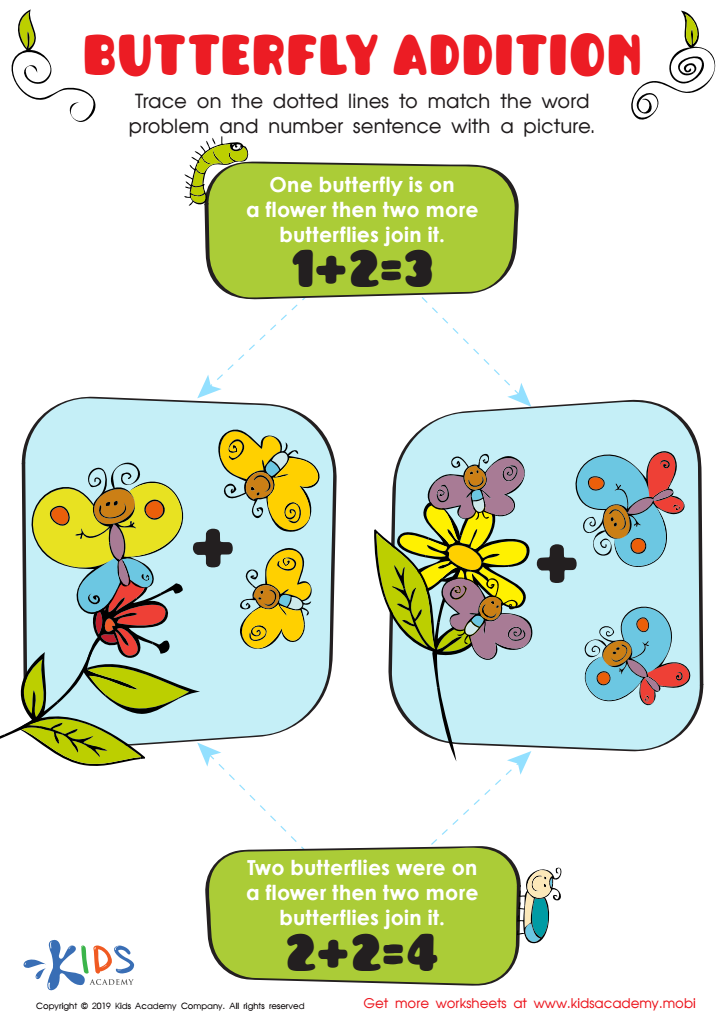
Butterfly Addition Worksheet
 Assign to My Students
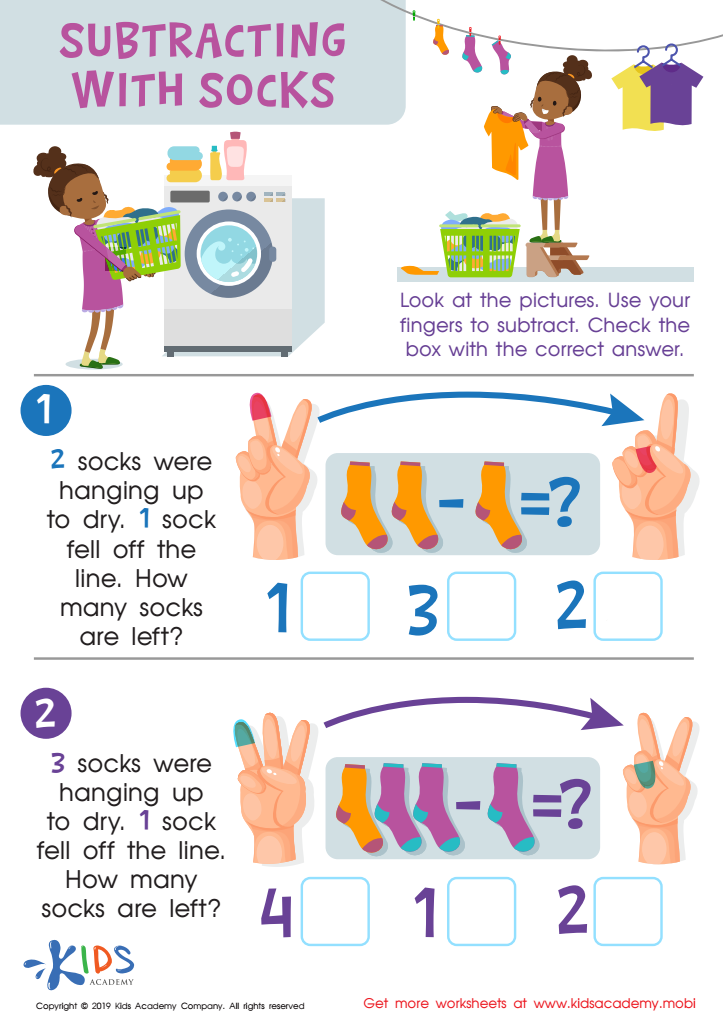
Subtracting Socks Worksheet
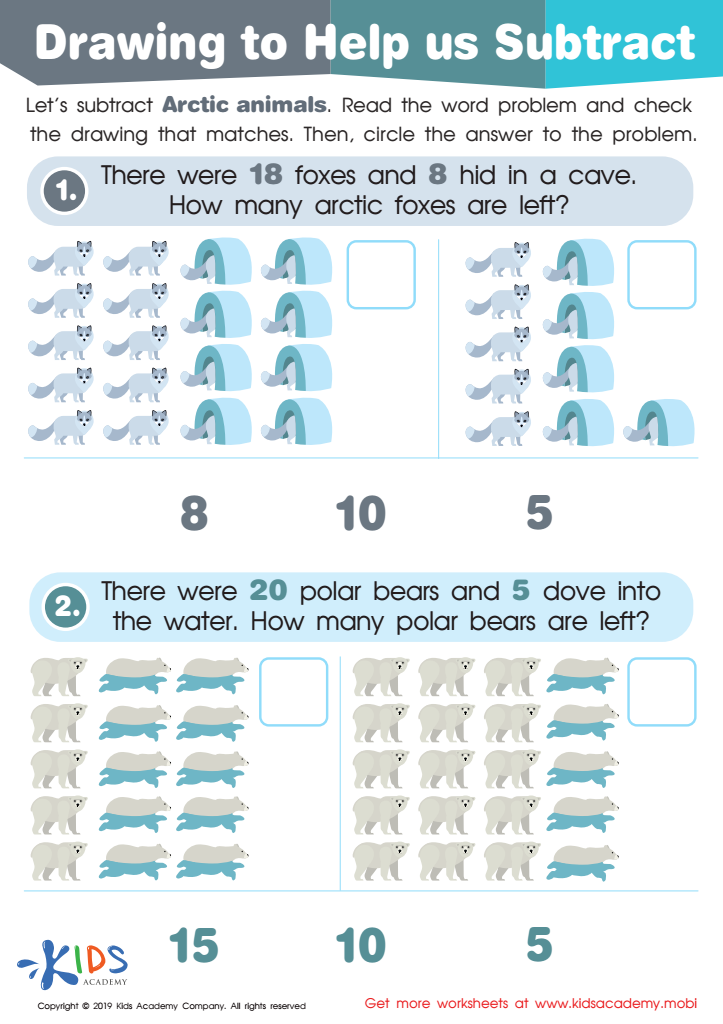
Drawing to Help Us Subtract Worksheet
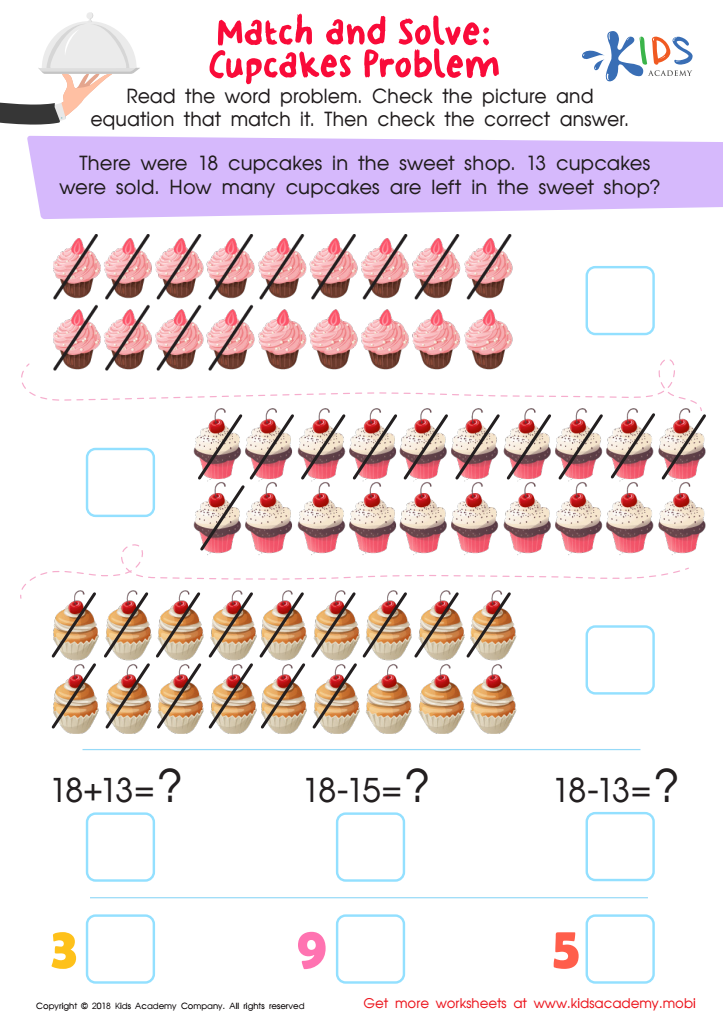
Match and Solve: Cupcakes Problem Worksheet
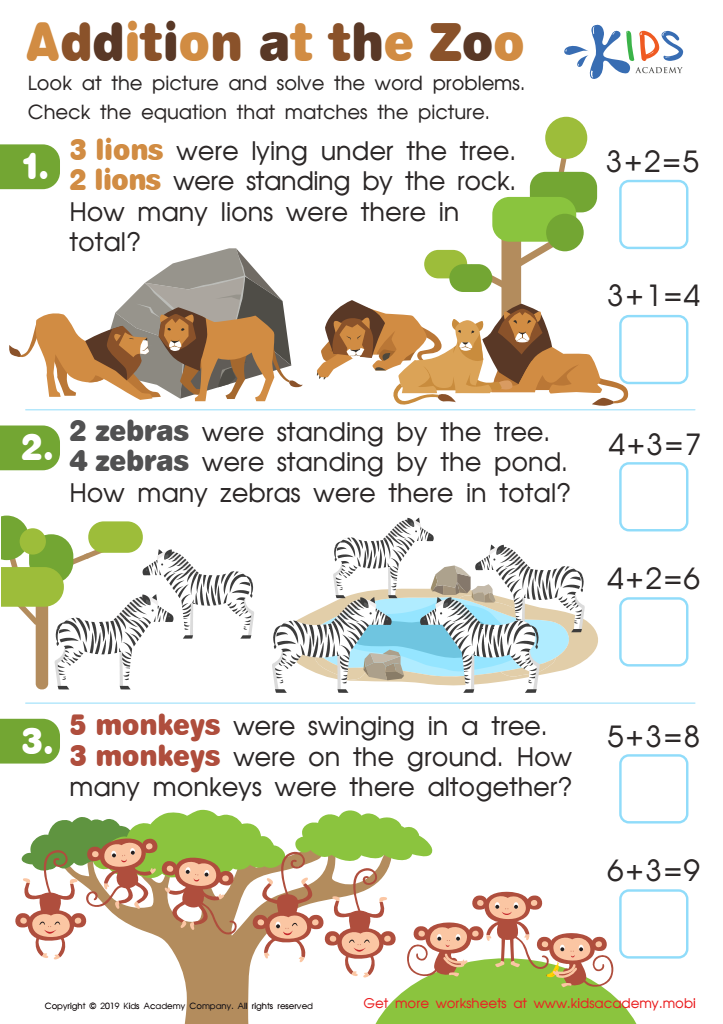
Addition at the Zoo Worksheet








Visual learning word problems are crucial for children aged 3-6 as they lay the foundation for essential cognitive and problem-solving skills. At this age, children are naturally inclined to process information visually; hence, incorporating visuals into learning helps them grasp complex concepts more easily. By using images, diagrams, or physical objects, children can visually parse word problems, making abstract mathematical ideas tangible.
Parents and teachers should care about this approach because it addresses multiple learning styles and encourages engagement. Visual learning fosters better understanding and retention. Children can explore topics like addition, subtraction, and spatial relationships through relatable, real-world scenarios presented visually. Furthermore, this method promotes critical thinking as children learn to decode information, draw conclusions, and solve problems on their own.
Additionally, focusing on visual learning aids in language development, as it allows children to connect words to meanings and context. This method promotes discussion and enhances vocabulary when children describe and analyze visual aids. By adopting visual learning in problem-solving, educators and caregivers can facilitate a love for learning and build confident mathematicians, setting the stage for academic success in later years. Investing in this approach benefits children's holistic development and nurtures lifelong skills.








