Contextual understanding Building Vocabulary Worksheets for Ages 3-6
6 filtered results
-
From - To
Discover our engaging "Contextual Understanding Building Vocabulary Worksheets" designed specifically for children aged 3-6. These worksheets foster crucial vocabulary development by helping young learners comprehend words in context. By incorporating fun illustrations and relatable scenarios, our resources enhance children's language skills while promoting critical thinking and comprehension. Each worksheet is crafted to inspire creativity and make learning enjoyable, supporting early literacy through playful activities. Encourage your little ones to explore vocabulary aspects actively, giving them a solid foundation for effective communication. Ideal for classrooms or home learning, our worksheets will guide your child's growth in reading and language comprehension. Start their journey today!
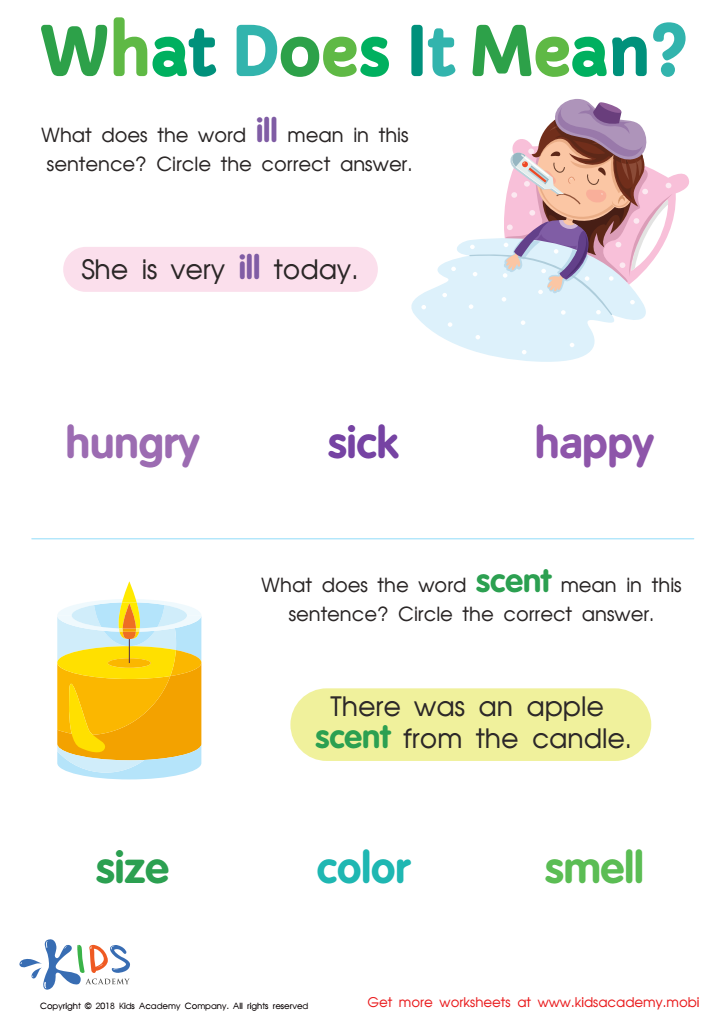
What Does It Mean? Worksheet
 Assign to My Students











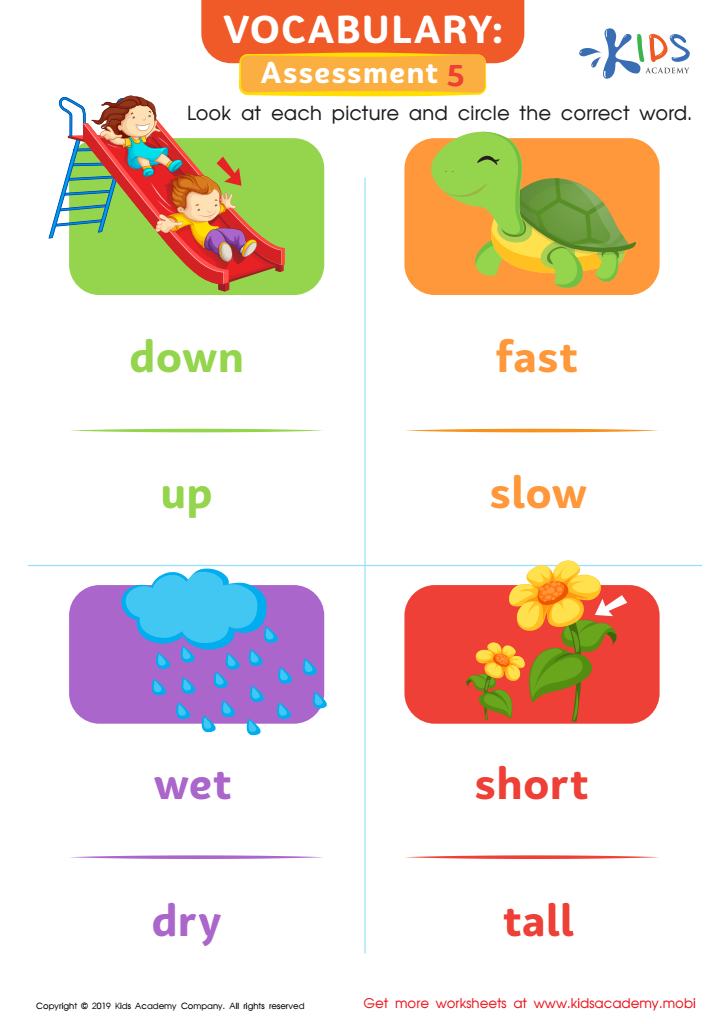
Vocabulary: Assessment 5 Worksheet
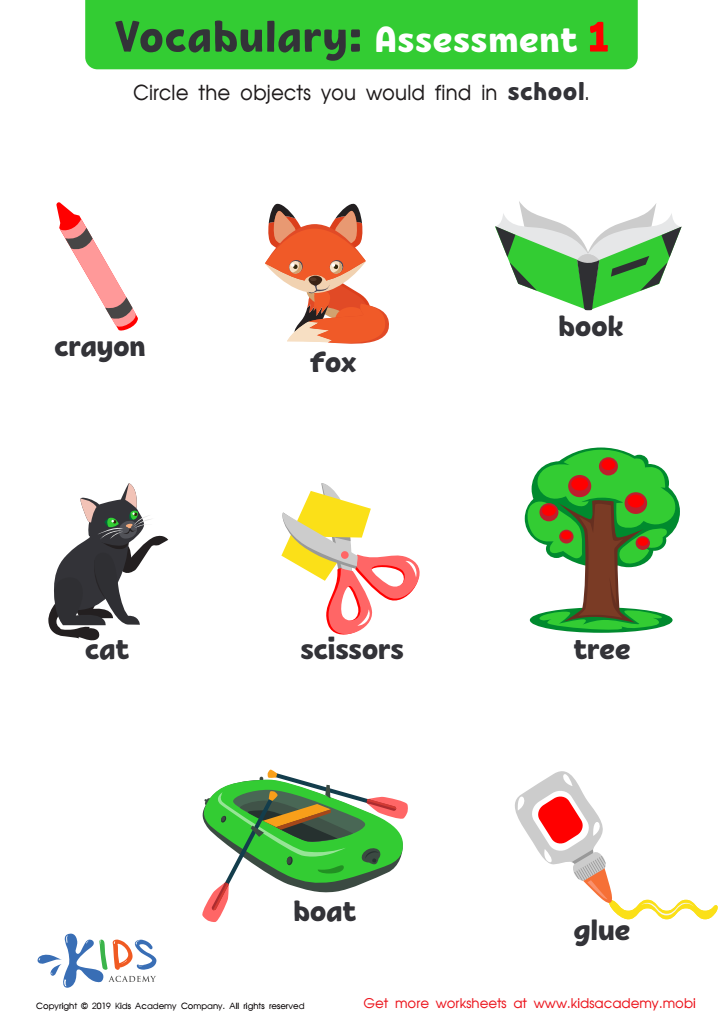
Vocabulary: Assessment 1 Worksheet
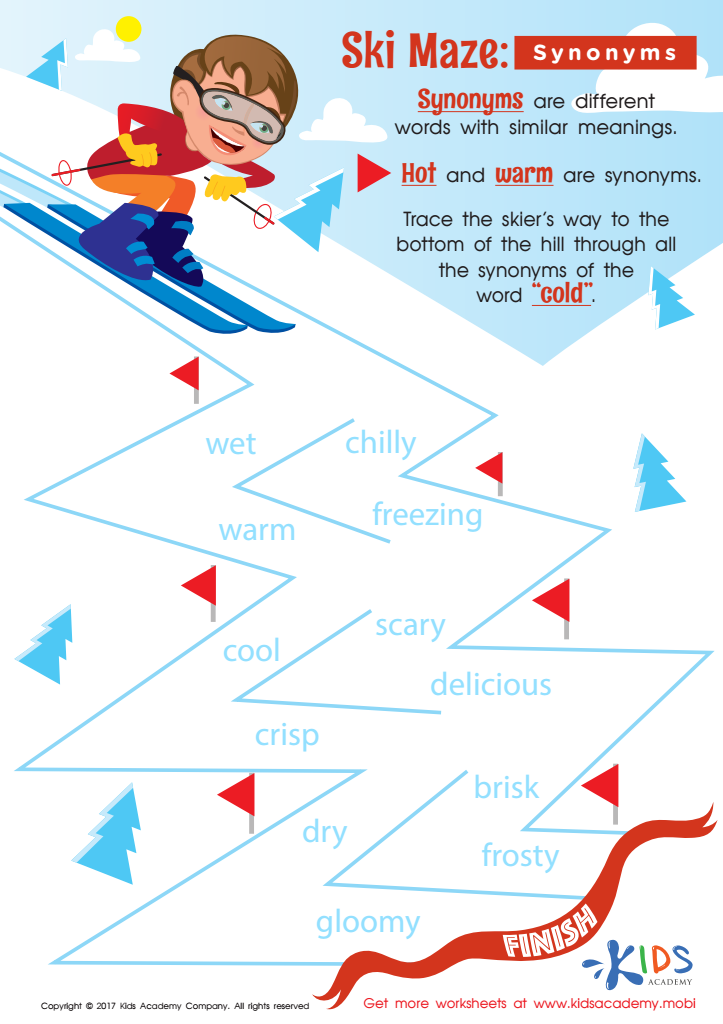
Free Printable Synonym Worksheet
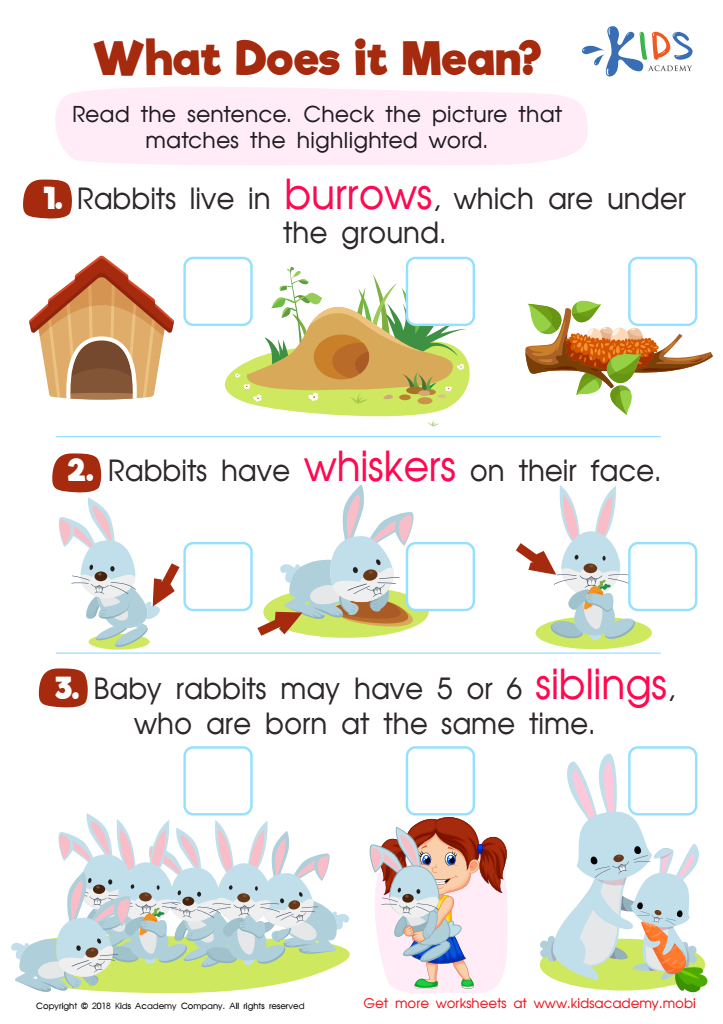
What Does It Mean? Worksheet
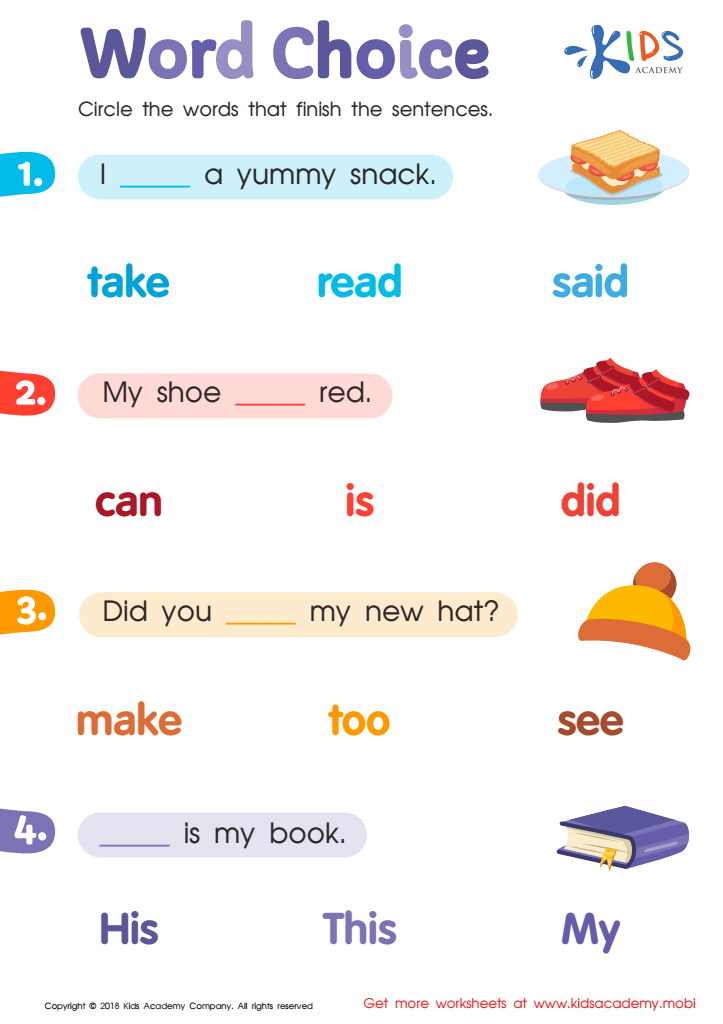
Word Choice Worksheet


.jpg)



.jpg)

Contextual understanding and vocabulary building for children aged 3-6 are crucial steps in early literacy development. This age is foundational for language acquisition, where children learn to communicate effectively and express their thoughts. When parents and teachers emphasize vocabulary development within context, children grasp the meanings of words not just as isolated terms, but as part of everyday situations. This connection enhances comprehension, making it easier for children to understand stories, instructions, and social interactions.
Moreover, vocabulary development is directly linked to academic success. A rich vocabulary equips children with the tools to engage in conversations, ask questions, and articulate their ideas, fostering critical thinking and confidence. When children encounter words in meaningful contexts—through storytelling, play, or real-life situations—they are more likely to retain and use them correctly.
Teachers and parents play a vital role by introducing new words in relatable contexts, asking open-ended questions, and encouraging conversations. Through consistent support, they help children make connections between words and their meanings, nurturing not only language but also cognitive and social skills. This focus on contextual understanding enriches a child’s overall learning experience, setting them up for future success in academics and beyond.








