
Enhancing vocabulary Building Vocabulary Worksheets for Ages 3-6
5 filtered results
Difficulty Level
Grade
Age
-
From - To
Subject
Activity
Standards
Enhance your child's language development with our engaging Vocabulary Building Worksheets for ages 3-6 at Kids Academy. Designed to stimulate young minds, these printable activities nurture essential reading skills through fun and interactive exercises. Our carefully curated worksheets help expand your child's vocabulary, promoting better communication and comprehension. From colorful picture-based tasks to exciting word games, each activity is crafted to make learning enjoyable and effective. Support your preschooler's cognitive growth and set the foundation for future academic success with Kids Academy's enriching vocabulary materials. Explore now and watch your child's language skills flourish!
Favorites
With answer key
Interactive
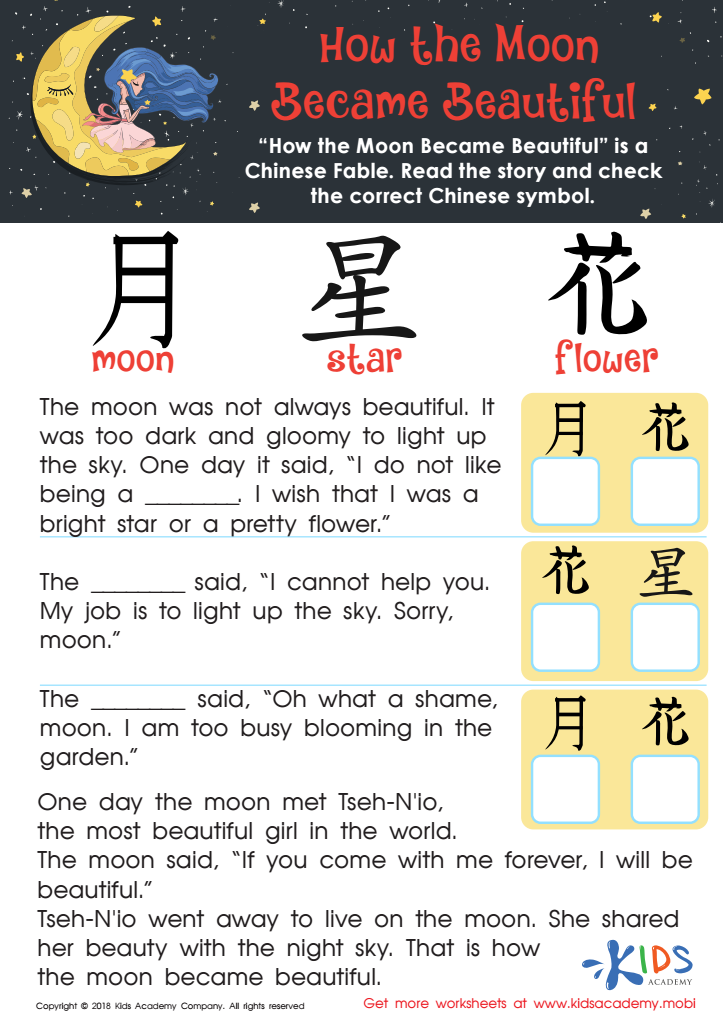
How the Moon Became Beautiful Worksheet
Fables are a great way for kids to learn! This Chinese fable about the moon's beauty is educational and entertaining. The PDF worksheet provides the English translations and symbols associated with the story. Kids can fill in the blanks with the correct symbols and have fun learning a new language!
 Assign to My Students
How the Moon Became Beautiful Worksheet
Worksheet











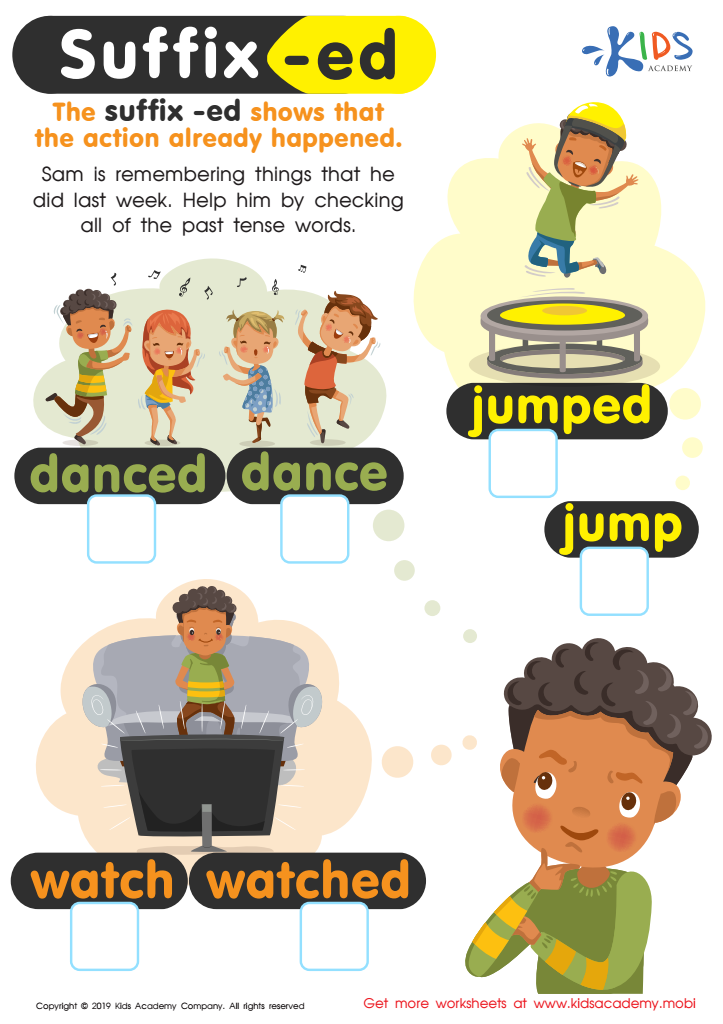
Suffix-ed Worksheet
Ask your kids if they know what suffixes are, and explain they are words added to the end of another word which changes the meaning. This worksheet focuses on the suffix -ed which shows something already happened. Help the kid in the picture find the past tense words.
Suffix-ed Worksheet
Worksheet
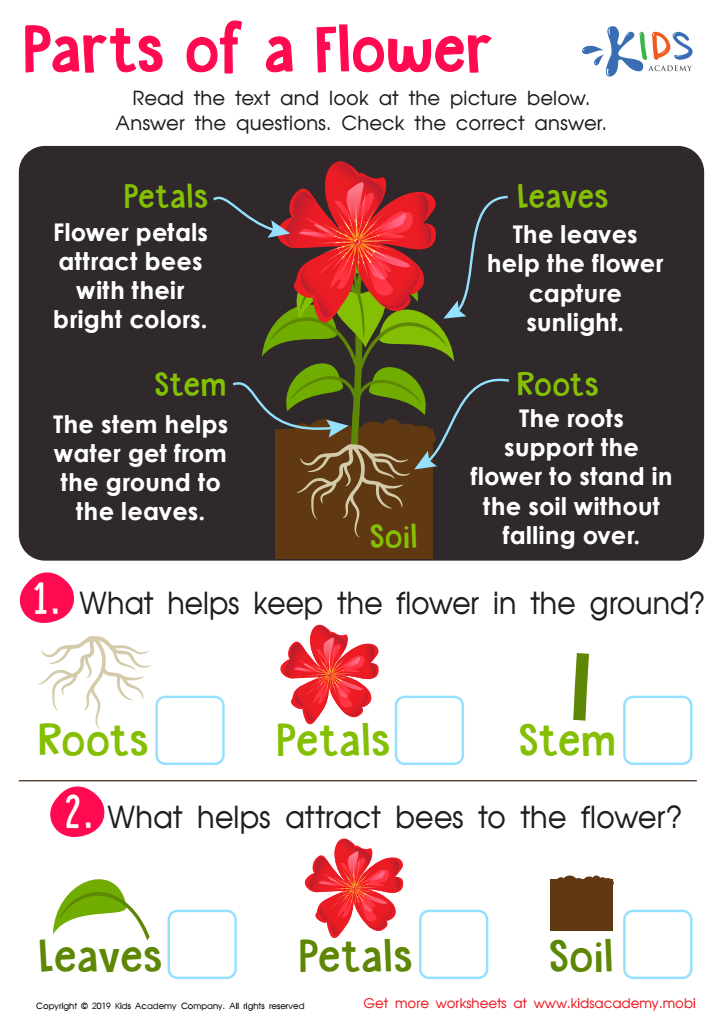
Parts of Flower Worksheet
Learning how to dissect info from graphics is essential. This free worksheet on the parts of a flower is a great learning tool for kids. It offers info, picture clues and comprehension questions. Plus, it gives them a visual reference for building on their knowledge of plants.
Parts of Flower Worksheet
Worksheet
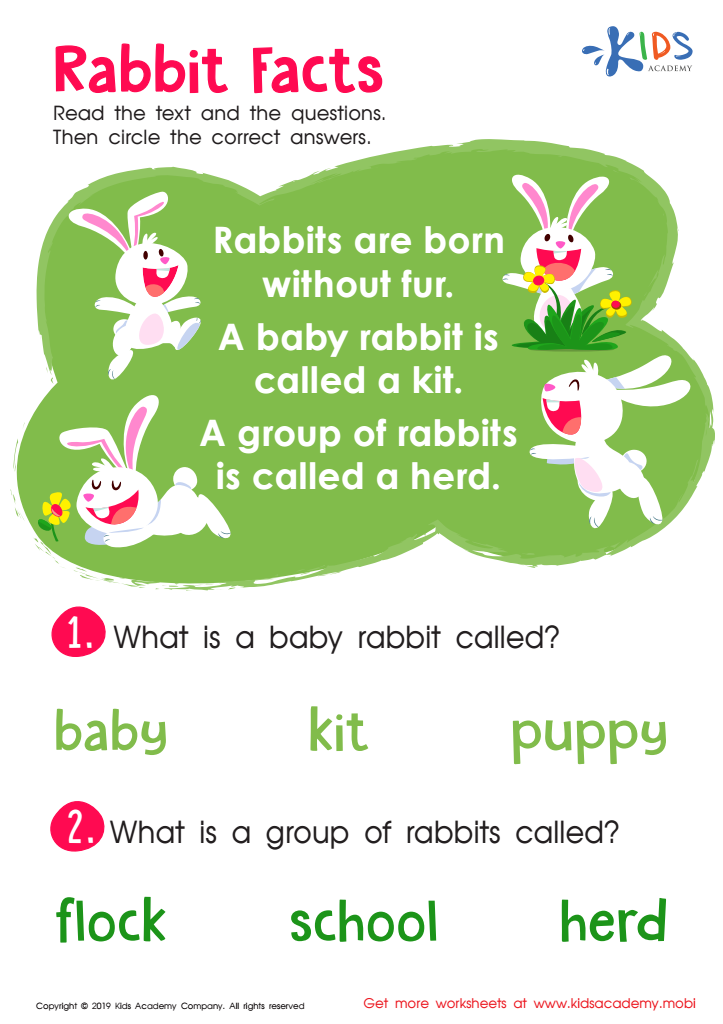
Rabbit Facts Worksheet
Reading comprehension skills can be strengthened with this fun PDF about fluffy rabbits. It helps kids recall and retell details from the text while engaging them in the topic. This encourages success in reading comprehension.
Rabbit Facts Worksheet
Worksheet
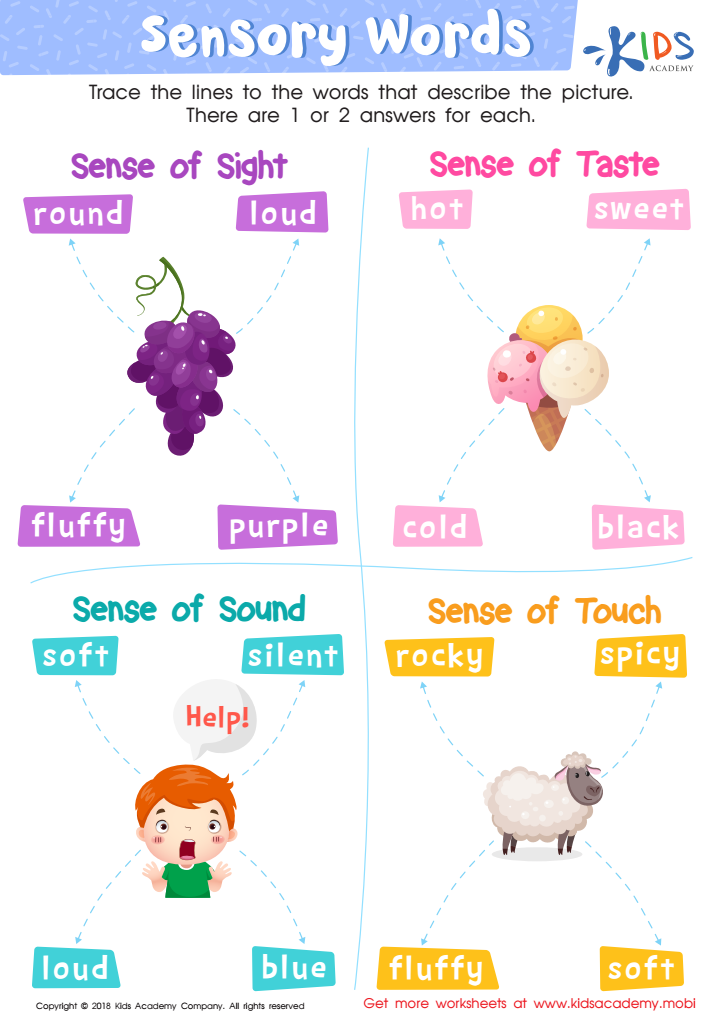
Sensory Words Worksheet
This worksheet helps students explore sensory words by looking at pictures and selecting one or two words to describe how it looks, feels, tastes, smells or sounds. Adding sensory words to texts makes them more interesting and helps students comprehend stories and articles better.
Sensory Words Worksheet
Worksheet
Join Kids Academy for Free
Who is primarily going to use this learning content?








Enhancing vocabulary for children ages 3-6 is extremely important for several significant reasons. At this early stage of development, children's brains are highly receptive to new information, and their language skills are rapidly expanding. Early vocabulary acquisition lays the groundwork for effective communication skills. It allows children to name and describe their experiences, express their thoughts and emotions, and begin to understand complex social interactions.
A broad vocabulary is also crucial for later reading and academic success. Studies have consistently shown that children with a rich vocabulary enter school better prepared, with stronger reading comprehension skills. This early advantage translates to better academic performance in the long run. Moreover, a strong vocabulary boosts self-esteem and confidence, enabling children to engage more fully in conversations and social interactions.
Parents and teachers play a pivotal role in vocabulary development. By reading to children, engaging in conversations, and introducing new words in diverse contexts, they create an enriching linguistic environment. These interactions not only enhance vocabulary but also strengthen the parent-child or teacher-child bond, contributing positively to the child's emotional and social development. Therefore, focusing on building a robust vocabulary during this formative period is critical for both cognitive and emotional growth.








