
Phonics practice Building Vocabulary Worksheets for Ages 3-6
3 filtered results
Difficulty Level
Grade
Age
-
From - To
Subject
Activity
Standards
Enhance your child's vocabulary with our engaging Phonics Practice Building Vocabulary Worksheets designed for ages 3-6. Our expertly crafted worksheets equip young learners with essential phonetic skills, promoting confident reading and language development. Through fun activities and colorful illustrations, children will master letter sounds, word recognition, and pronunciation while building a strong vocabulary foundation. Perfect for preschoolers and kindergarteners, these worksheets offer an enjoyable approach to early literacy, reinforcing skills in a playful and educational way. Visit Kids Academy now to access these valuable resources and set your child on the path to reading success.
Favorites
With answer key
Interactive
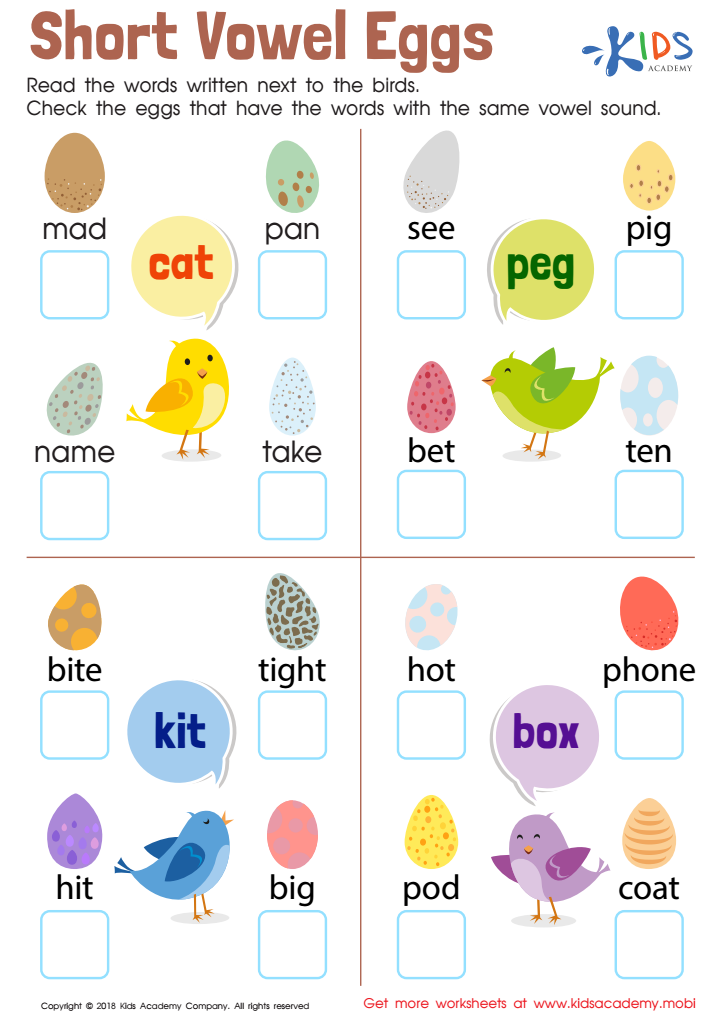
Short Vowel Eggs Worksheet
Your students will love helping these birdies pick the short vowel eggs! Have them read the words in the thought bubbles, then check off the boxes with the same short vowel sounds. The bright colors of this free Worksheet will draw them in and get them practicing their vowels!
 Assign to My Students
Short Vowel Eggs Worksheet
Worksheet











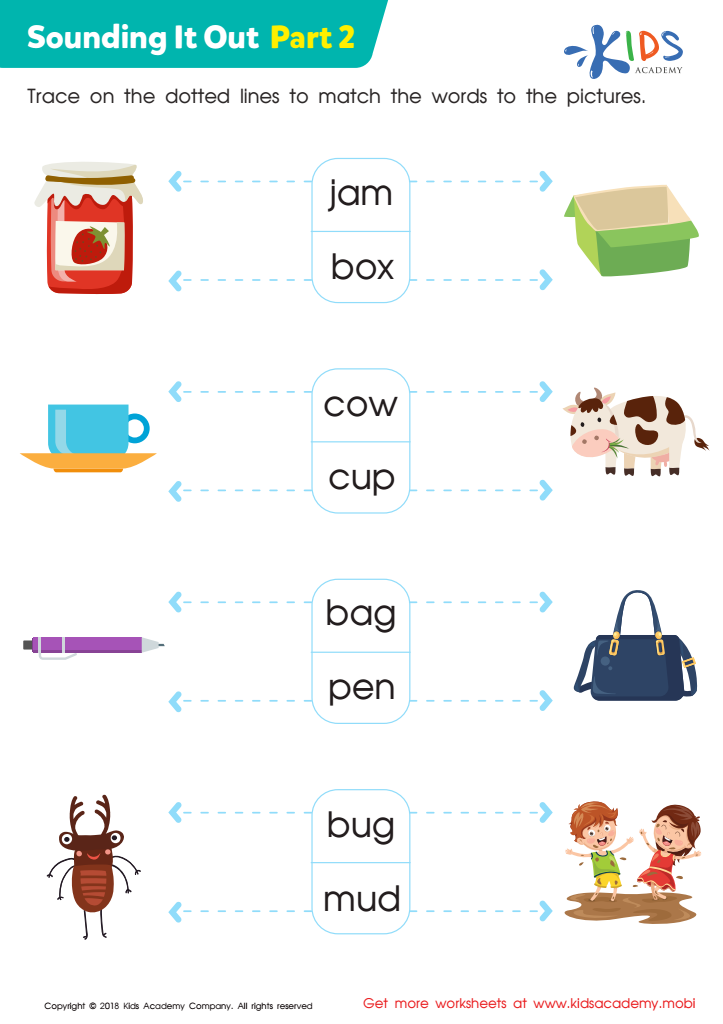
Sounding it Out: Part 2 Worksheet
Mastering phonics is key for kids to learn to read! This free worksheet uses fun pictures to help them sound out words. Ask them to name the images, then use the hints to say each word. Kids will become accomplished readers in no time!
Sounding it Out: Part 2 Worksheet
Worksheet
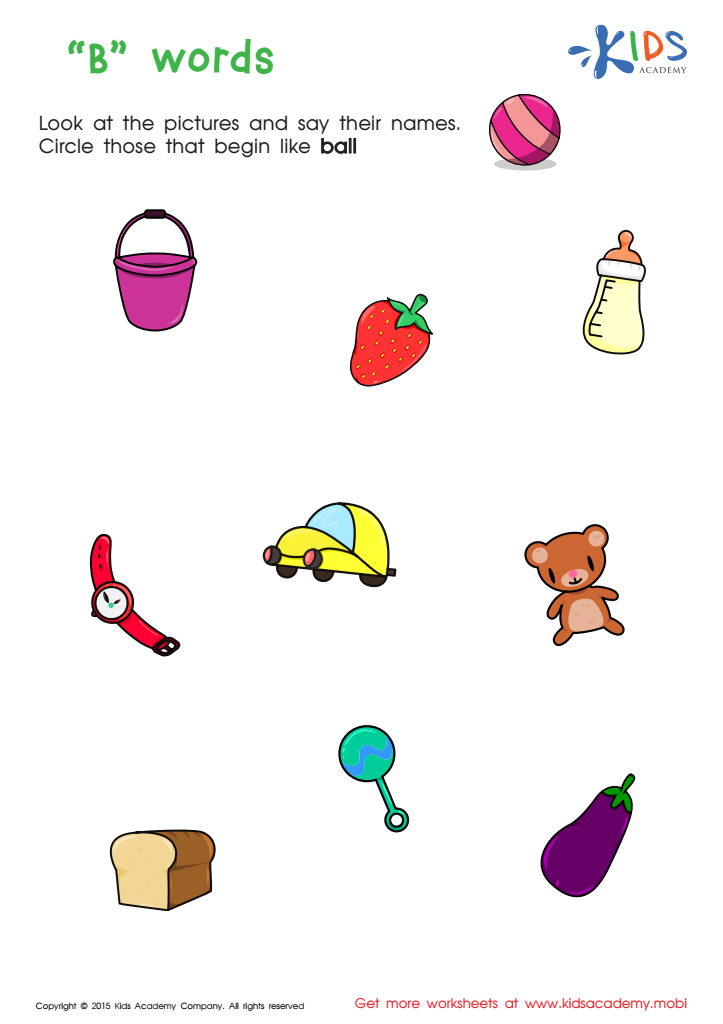
First Words Worksheet
Want to help your preschooler learn to read and write? Start with this 'B' words printable worksheet. It will help your child match pictures to the letters they know, sound out words, and build literacy. Once they understand the concept, they can start sounding out words and building reading skills.
First Words Worksheet
Worksheet
Join Kids Academy for Free
Who is primarily going to use this learning content?







Phonics practice and vocabulary building are critical for young children's development, especially between the ages of 3-6. During these formative years, children are like sponges, absorbing information rapidly. Phonics, the relationship between sounds and their corresponding letters, is essential for reading proficiency. As children learn to decode words, they become more confident readers, which sets the foundation for future academic success.
Building vocabulary at an early age expands a child's ability to express themselves, understand instructions, and comprehend stories. A robust vocabulary is directly linked to better reading comprehension; children with a rich word bank can make sense of texts more easily and engage in more complex conversations.
For parents and teachers, incorporating phonics practice and vocabulary enrichment into daily routines can be quite simple yet profoundly impactful. Reading aloud, singing songs, playing word games, and talking with children about various subjects can stimulate their interest in language.
Additionally, early phonics instruction and vocabulary building foster a love for reading and learning, making educational experiences more enjoyable. These practices also provide children with essential tools and strategies to tackle academic challenges in later years, ultimately aiding in their overall intellectual and emotional development. Thus, caring about phonics and vocabulary at this age is an investment in a child's educational future.








