Filters

7 filtered results

Clear all filters
Favorites
With answer key
Interactive

7 filtered results

Difficulty Level

Grade


Unlock the world of words with our Vocabulary Building Worksheets designed specifically for ages 3-6. These engaging, easy-to-use printables are crafted to enhance young learners' language skills while keeping learning fun. Featuring a variety of exercises, from matching words to pictures to filling in missing words and tracing letters, they promote critical thinking, reading comprehension, and fine motor skills. Ideal for early learners, our worksheets cater to various learning styles, ensuring every child can enjoy the joy of discovery and progress at their own pace. Start your child's vocabulary journey today with our expertly designed resources!

Check out this FREE Trial Lesson on Building Vocabulary for age 3-6!

Answer Questions About Unknown Words in a Story

Favorites
With answer key
Interactive
  • 3-6
  • Vocabulary Building
  • Building Vocabulary
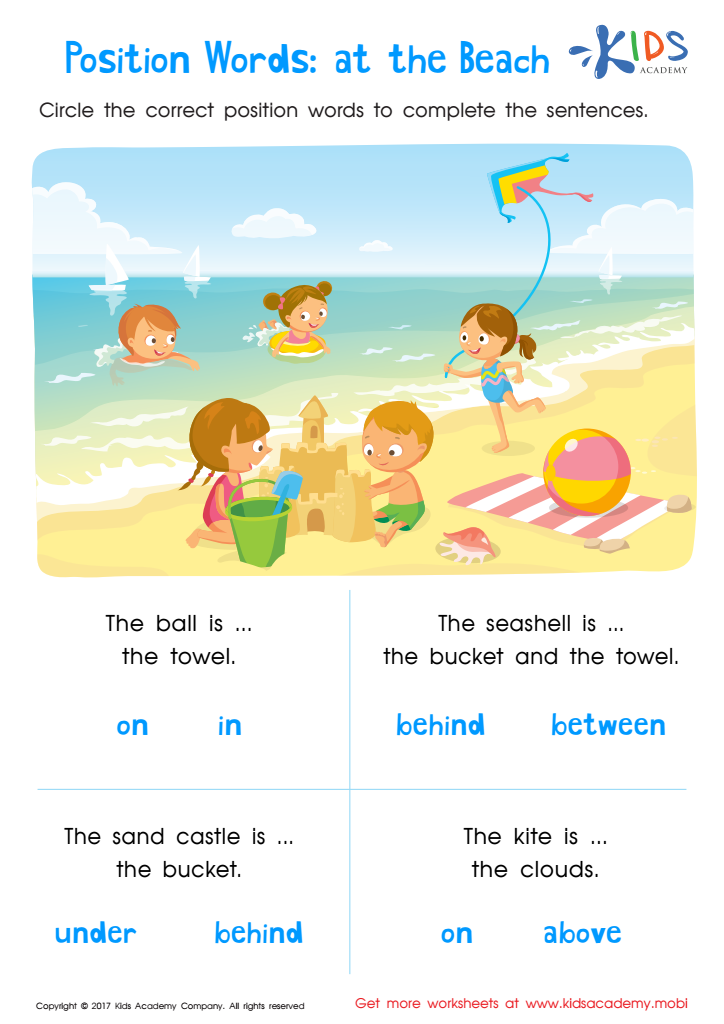
Positional Words Worksheet

At the Beach Printable Sight Words Worksheet

At the Beach Printable Sight Words Worksheet
Worksheet
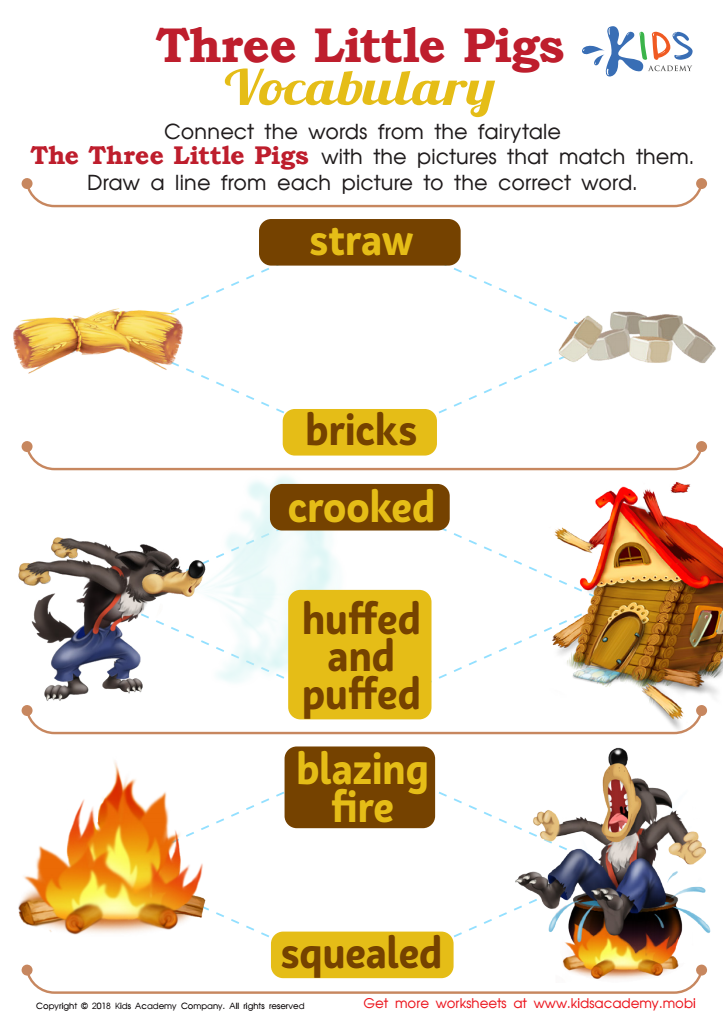
Three Little Pigs Vocabulary Worksheet

Three Little Pigs Vocabulary Worksheet

Read the Three Little Pigs to your children. Have them use the tracing sheet to connect the story words with the pictures. This is a fun and educational way to help them build their vocabulary.
Three Little Pigs Vocabulary Worksheet
Worksheet
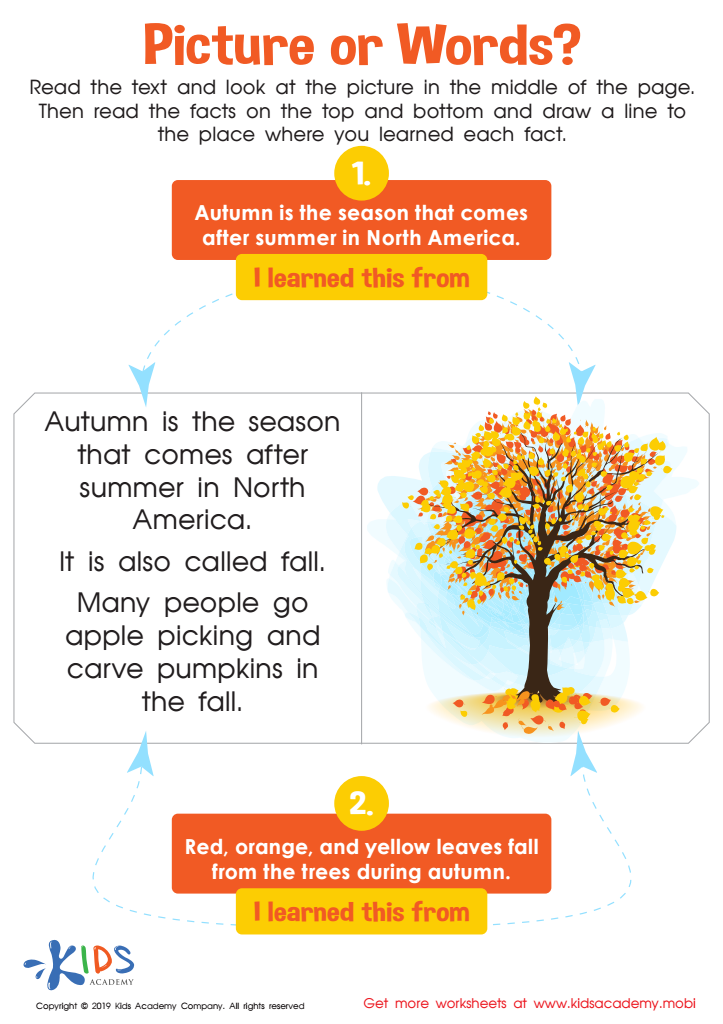
Picture Words Worksheet

Picture Words Worksheet

Pictures are key for early reading skills. Remind children to use all resources when reading passages to understand meaning. With the free PDF, kids can learn through pictures & words, then answer questions based on what they learned. This hits home that all info in text is valuable, pics included!
Picture Words Worksheet
Worksheet
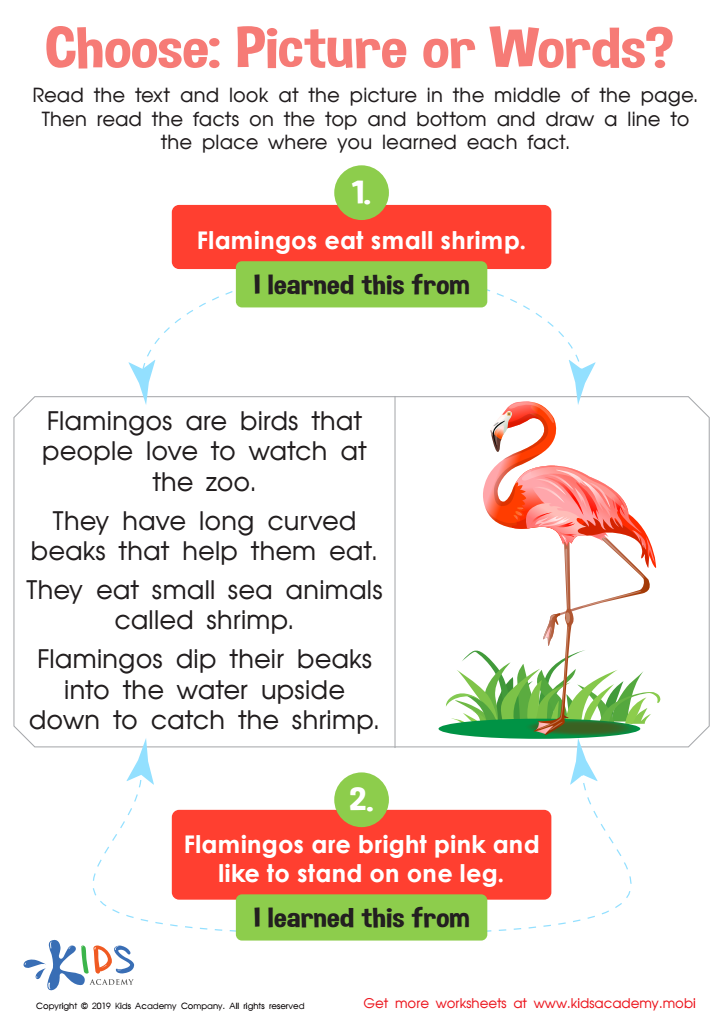
Choose Picture Words Worksheet

Choose Picture Words Worksheet

Pictures are powerful tools for children learning to read. Early readers apply their prior knowledge and pictures to create understanding. This PDF worksheet lets them understand the combined power of pictures and words, by having them choose one to answer how they learned the facts about flamingoes.
Choose Picture Words Worksheet
Worksheet
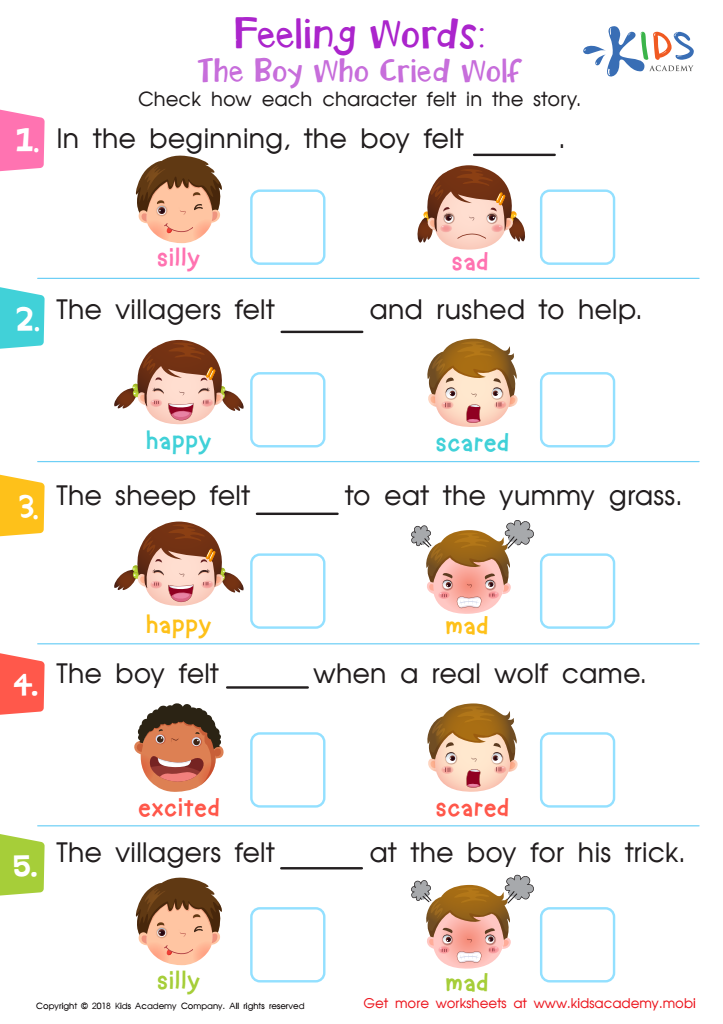
Feeling Words: The Boy Who Cried Wolf Worksheet

Feeling Words: The Boy Who Cried Wolf Worksheet

This worksheet helps students infer characters' traits and feelings by reading The Boy Who Cried Wolf. They choose the correct emotion for each character to improve their story comprehension. A great resource for the reading classroom, it teaches an essential comprehension skill.
Feeling Words: The Boy Who Cried Wolf Worksheet
Worksheet
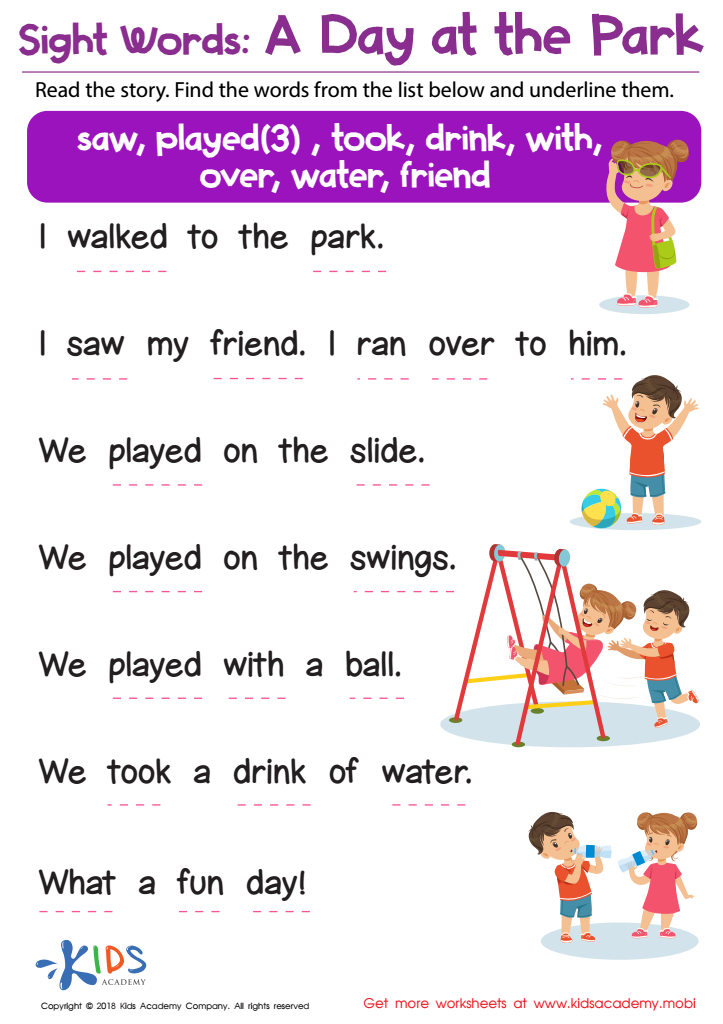
Sight Words: A Day at the Park Worksheet

Sight Words: A Day at the Park Worksheet

This worksheet offers kids practice reading sight words in a story. With picture clues and repetitive wording, they'll work with words that can't be sounded out to reinforce their learning. This is an important step in the reading process that helps kids become more confident readers.
Sight Words: A Day at the Park Worksheet
Worksheet
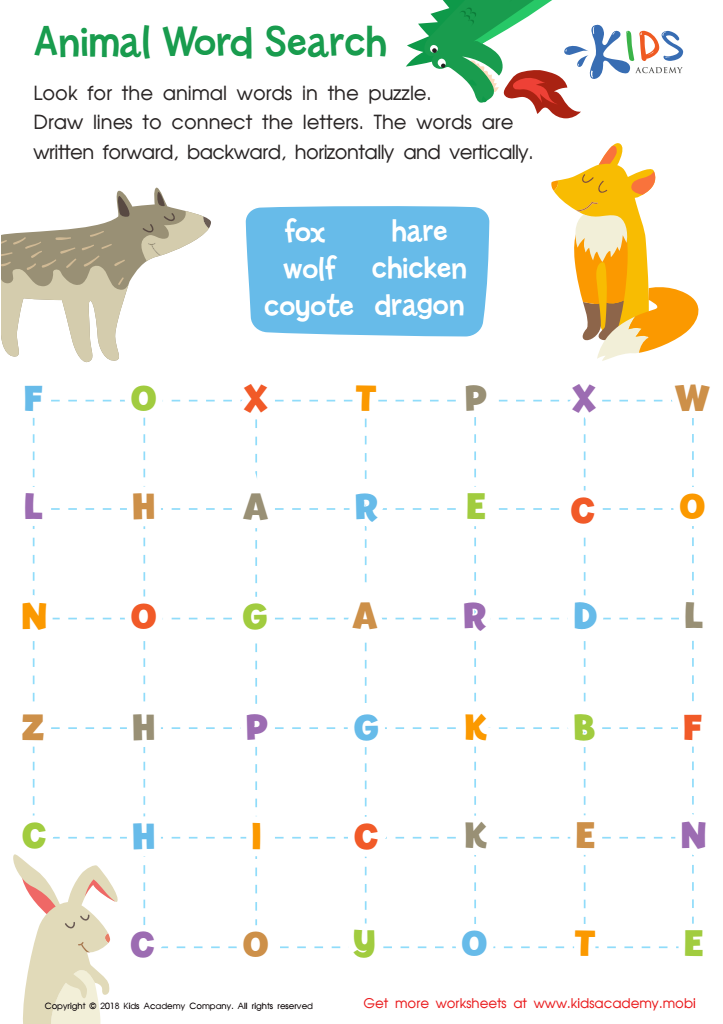
Animal Word Search Worksheet


Animal Word Search Worksheet

Students can have fun and strengthen spelling and vocabulary skills with this word search worksheet. Search for animal words and circle the letters in the puzzle. Words can be found forwards, backwards, horizontally or vertically, providing a great challenge to foster critical thinking skills. An enriching activity for all ages!
Animal Word Search Worksheet
Worksheet


Vocabulary building is crucial for children aged 3-6 because this is a period of rapid cognitive and linguistic development. During these formative years, a child's brain is like a sponge, making it an optimal time to introduce new words and concepts. Parents and teachers play a pivotal role in expanding a child's vocabulary by creating a rich language environment through reading, conversation, and playful interaction.

A strong vocabulary lays the foundation for literacy and academic success. Children who have a more extensive vocabulary tend to perform better in reading and writing tasks as they progress through school. This is because understanding more words improves comprehension and the ability to communicate ideas clearly. Moreover, a broad vocabulary also enhances critical thinking and problem-solving skills by equipping children with the necessary language to describe and analyze their world.

Socially, having a well-developed vocabulary enables children to express their feelings, needs, and thoughts more effectively, fostering better relationships and reducing frustration that can arise from misunderstandings. It also enhances their ability to follow directions, participate in conversations, and absorb new information.

In summary, prioritizing vocabulary building in early childhood helps pave the way for a child's long-term academic, social, and emotional development, which is why parents and teachers should actively support and engage in activities that promote language growth.