Color recognition Reading Worksheets for Ages 3-6 - Page 2
28 filtered results
-
From - To
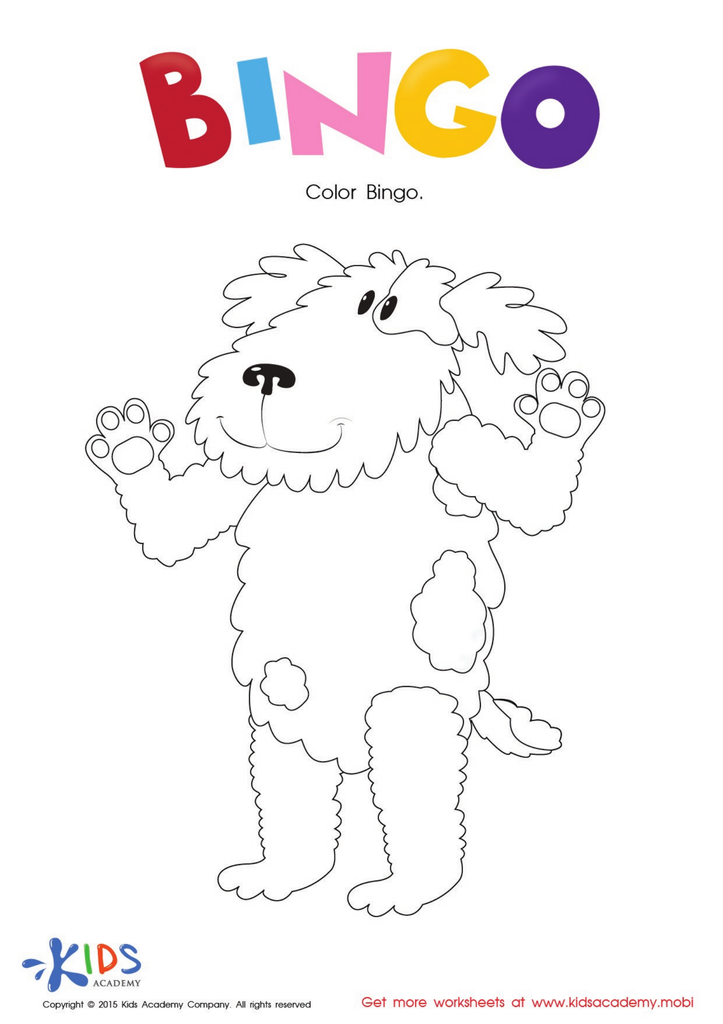
The Bingo Song: Coloring The Dog Worksheet
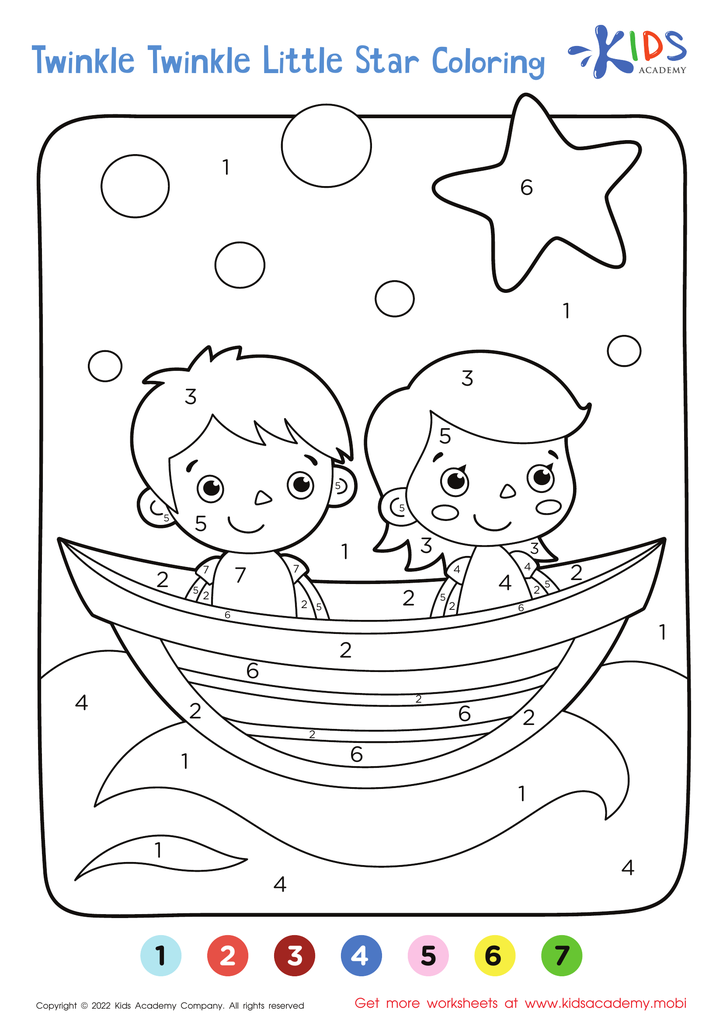
Twinkle, Twinkle, Little Star – Coloring by Numbers








Color recognition reading is a foundational skill with a significant impact on a child's overall cognitive development during the ages of 3-6. This age band is critical as children are highly receptive and their brains are rapidly developing. Incorporating activities that focus on color recognition helps build essential neural pathways, facilitating other learning processes.
Understanding and distinguishing between colors fosters improved memory and observation skills, enhancing a child’s ability to categorize and organize their environment. Furthermore, it aids in developing their vocabulary by associating words with visual stimuli, thereby improving language and communication skills. As children recognize and name colors, they also strengthen their descriptive abilities, leading to more nuanced and expressive communication.
Cognitively, color recognition is directly linked to sorting and patterning activities which are foundational for later mathematical and logical reasoning. Socially and emotionally, as children interact with colorful objects and associate colors with feelings or events, it enables them to better express themselves and understand others’ emotions.
In essence, caring about color recognition reading supports a holistic development approach, blending cognitive, language, social, and emotional growth, paving the way for a smoother and more successful educational journey in later years. Therefore, it is crucial for teachers and parents to incorporate and emphasize color recognition in early childhood education.








