Understanding suffixes Reading Worksheets for Ages 3-6
3 filtered results
-
From - To
Boost your child's reading skills with our "Understanding Suffixes" worksheets designed for ages 3-6! These engaging resources help young learners grasp the concept of suffixes by introducing fun activities and colorful visuals. Each worksheet encourages language development through exciting games that enhance vocabulary and comprehension. Designed to align with early learning standards, our materials cater to various learning styles, ensuring that every child can thrive. Whether at home or in the classroom, these worksheets provide an effective and enjoyable way to make learning about suffixes an exciting adventure. Watch your little ones build confidence as they discover the magic of words!
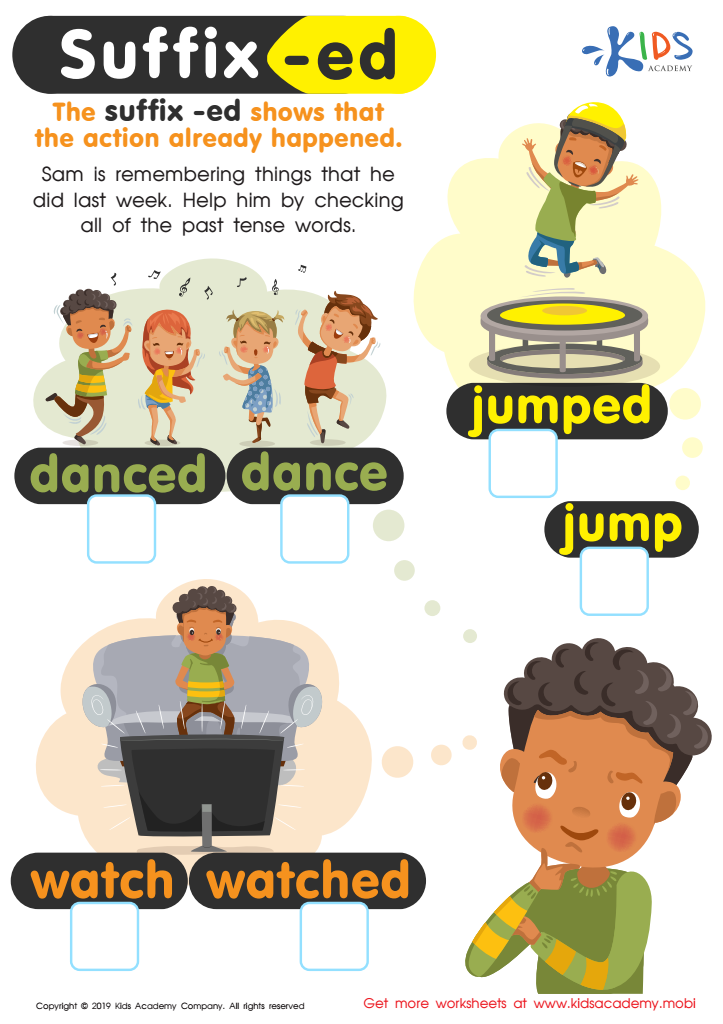
Suffix-ed Worksheet
 Assign to My Students
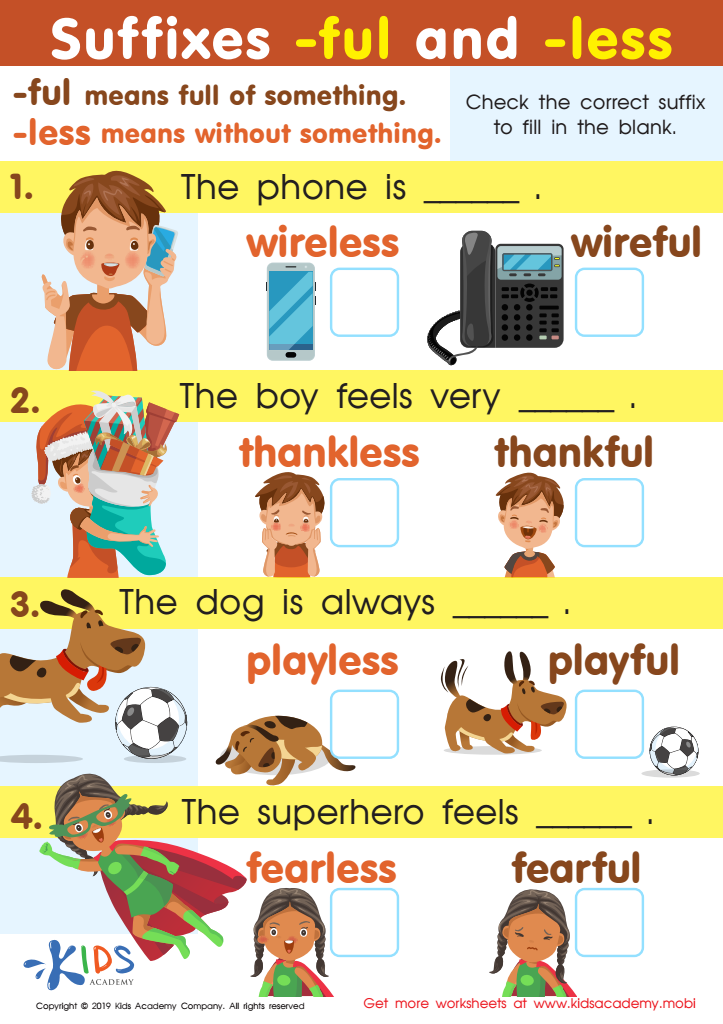
Suffixes –ful and –less Worksheet
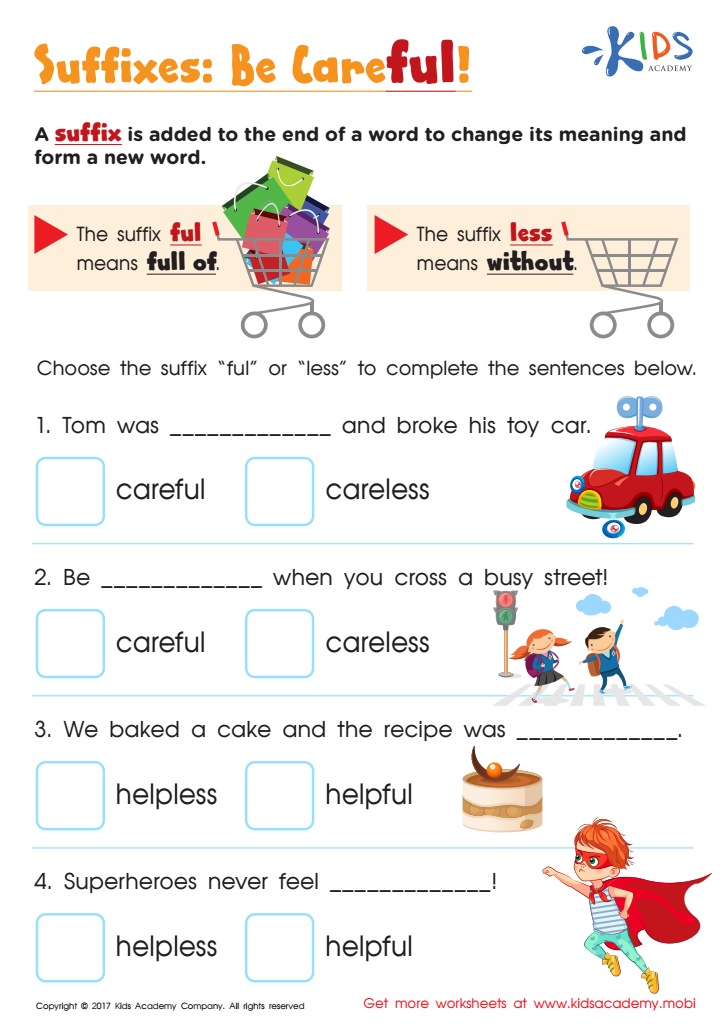
Suffixes Ful and Less Worksheet








Understanding suffixes is crucial for young readers aged 3-6 as it lays the foundation for advanced literacy. Suffixes are word endings that modify meanings or indicate grammatical function, playing a significant role in vocabulary expansion. When teachers and parents emphasize suffix recognition, they help children decode new words more easily and understand their meanings.
This understanding boosts reading comprehension, empowering children to engage with more complex texts as they progress. Recognizing suffixes also enhances spelling skills, enabling children to form new words and improve their overall writing abilities. The knowledge gained during these formative years contributes to self-confidence, as children feel more equipped to tackle challenging language.
Moreover, engaging with suffixes encourages curiosity about language, fostering a love for reading and learning. It can spark discussions around word formation and meanings, making learning fun and interactive. Lastly, investing time in understanding suffixes can open doors for better communication skills in the long run, an essential aspect of both social interaction and academic success. In summary, focusing on suffix understanding in early childhood is an effective strategy to nurture lifelong learners and confident communicators.








