Critical thinking development Reading Fiction Worksheets for Ages 3-6
3 filtered results
-
From - To
Discover our engaging "Critical Thinking Development Reading Fiction Worksheets" tailored for children aged 3-6. These thoughtfully designed resources enhance young learners' comprehension skills while encouraging analytical thinking. Through interactive stories and imaginative characters, kids will explore connections, draw conclusions, and make predictions, fostering a deeper understanding of narratives. The worksheets promote creativity and decision-making, laying a strong foundation for lifelong learning. Ideal for both classroom and home settings, these activities encourage discussion and collaborative learning, making critical thinking fun and accessible. Help your child unlock their potential with our captivating reading fiction worksheets that spark curiosity and imaginative exploration!
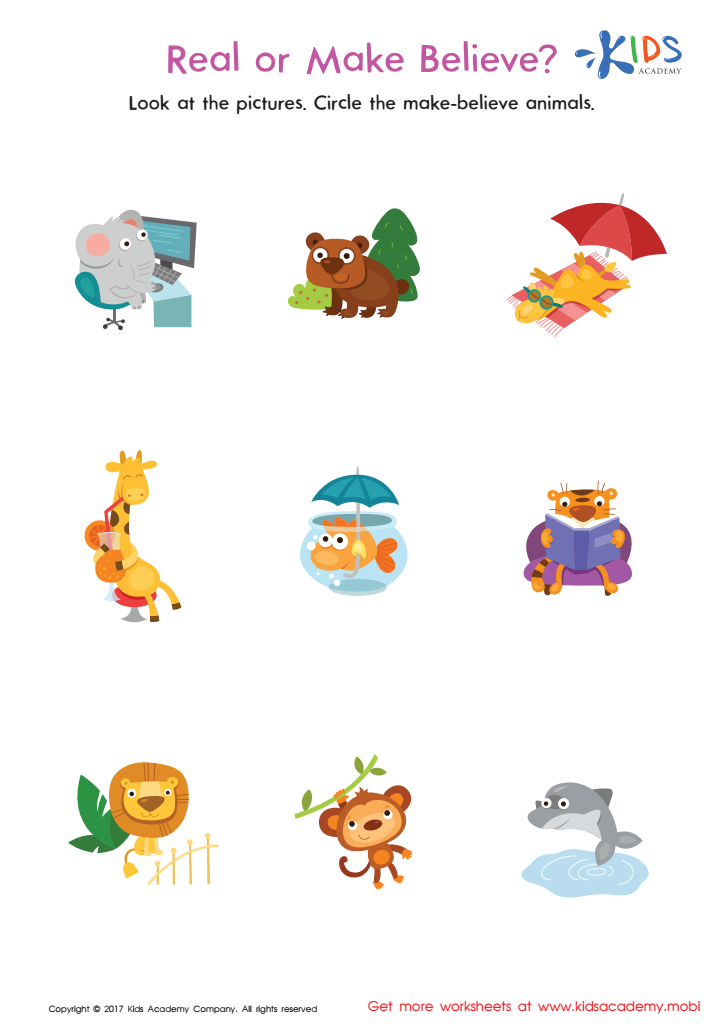
Fact or Make Believe Worksheet
 Assign to My Students
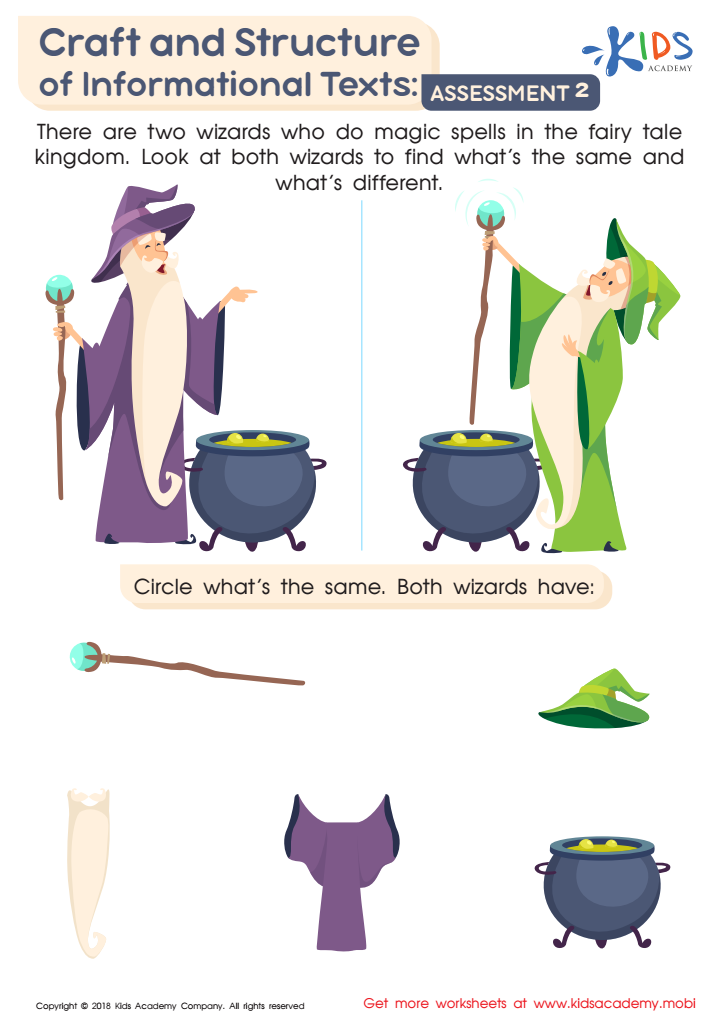
Craft and Structure of Informational Texts: Assessment 2 Worksheet
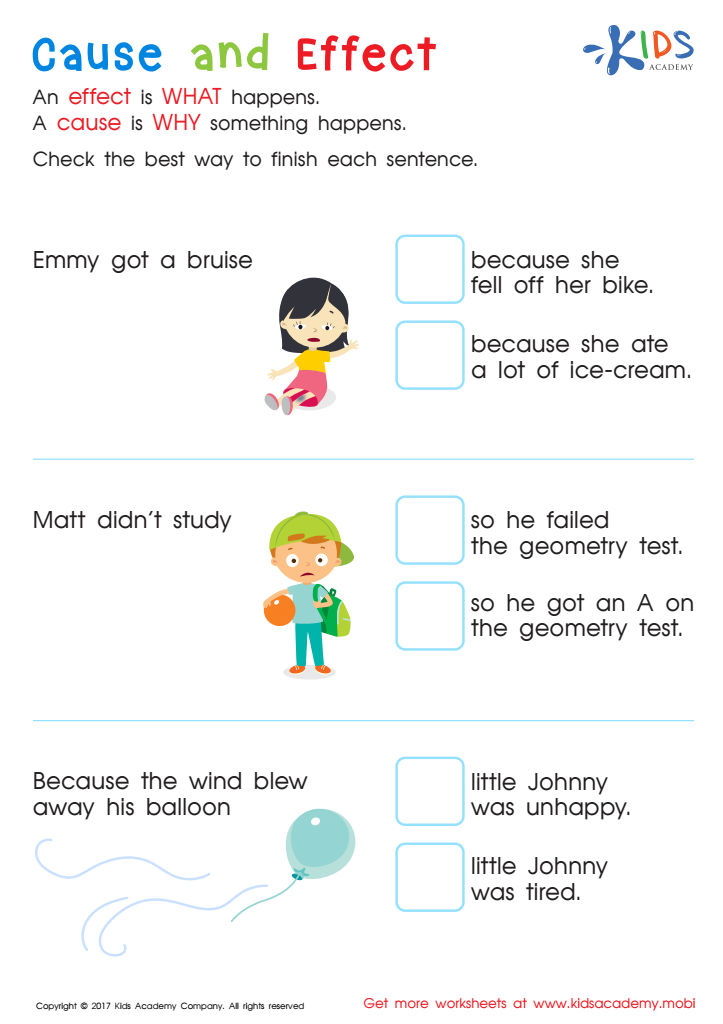
Cause and Effect Worksheet






.jpg)

Critical thinking development through reading fiction is essential for children aged 3-6 as it lays the groundwork for problem-solving, creativity, and empathy. During these formative years, young children actively develop their cognitive skills, and exposure to fiction plays a pivotal role in this process. Stories often present characters facing challenges, encouraging children to analyze situations, make predictions, and explore various outcomes. By engaging with fictional narratives, children learn to think critically about different perspectives and possible resolutions.
Moreover, reading fiction promotes imagination and curiosity, vital components of creative thinking. When children immerse themselves in imaginary worlds, they enhance their ability to invent and innovate, critical attributes for future learning. Fictional stories also touch on complex emotions and social situations, aiding the development of empathy; children learn to understand and relate to feelings that differ from their own.
For parents and teachers, nurturing critical thinking through fiction fosters a love for reading and learning, equipping children with skills they'll rely on throughout their lives. This crucial foundation not only impacts academic achievement but also prepares children to navigate the complexities of interpersonal relationships and societal expectations in a thoughtful, informed manner.








