
Logical Reasoning Reading Fiction Worksheets for Ages 3-6
5 filtered results
Difficulty Level
Grade
Age
-
From - To
Subject
Activity
Standards
Discover the power of logical reasoning with our engaging Reading Fiction Worksheets for ages 3-6! Designed to stimulate young minds, these worksheets enhance critical thinking skills through enjoyable stories and relatable characters. Children will explore story elements, make predictions, and solve problems, all while building comprehension and reasoning abilities. With a variety of fun activities and age-appropriate challenges, kids will strengthen their understanding of fiction in a delightful way. Perfect for home or classroom use, these worksheets promote early literacy and inspire a love for reading. Encourage your child's growth in logic and imagination with our carefully crafted resources!
Favorites
With answer key
Interactive
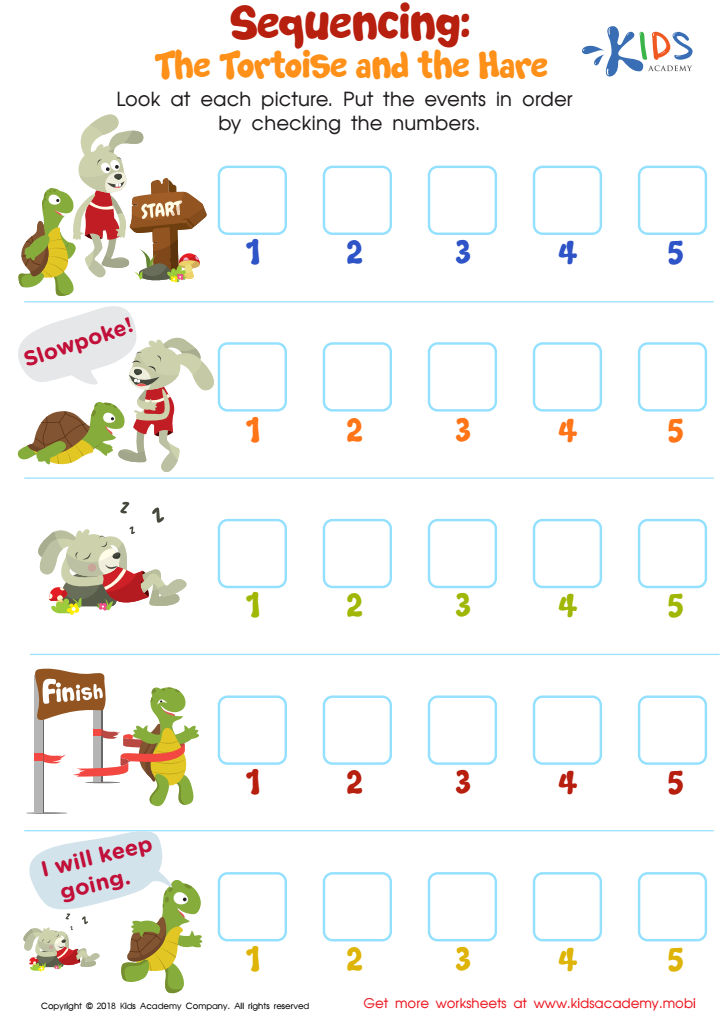
Sequencing: The Tortoise and the Hare Worksheet
Help your child become an independent reader and critical thinker with a sequencing worksheet from Kids Academy! Have them read the classic tale of the tortoise and the hare and use the accompanying worksheet to check their understanding of the story's sequence of events. Have kids identify the correct order of events by selecting the box next to the correct number for each image!
 Assign to My Students
Sequencing: The Tortoise and the Hare Worksheet
Worksheet
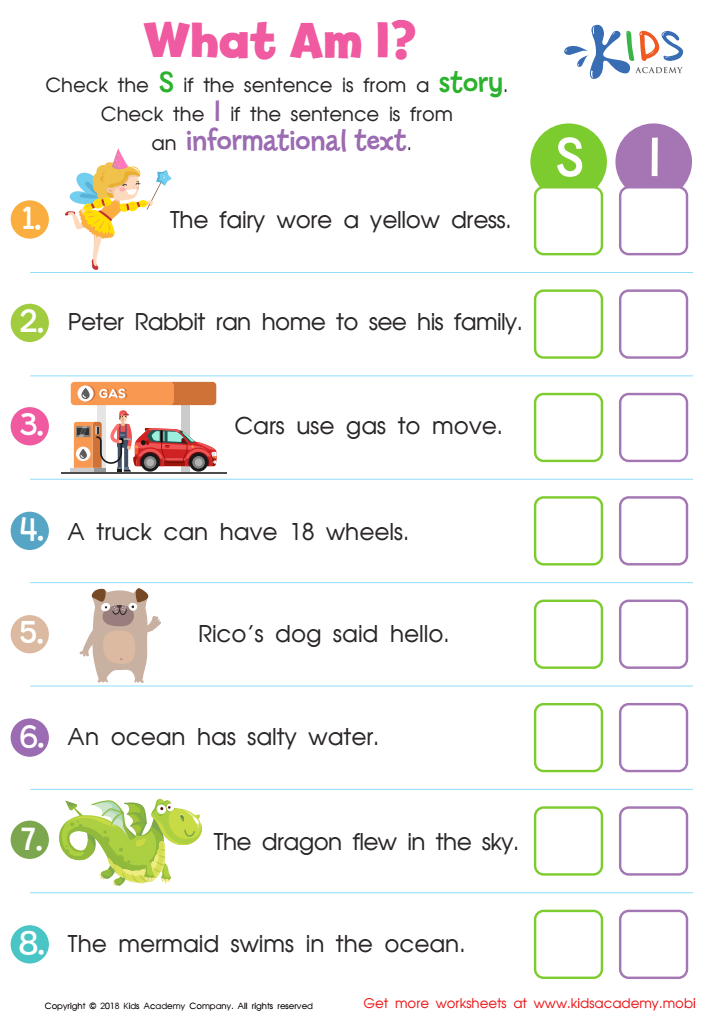
What Am I? Worksheet
This worksheet assesses students' ability to differentiate between stories and texts they read for facts. Students learn to distinguish between reading for pleasure and reading for information. It includes statements from both a story and an informational text, and students must decide what type of text it is.
What Am I? Worksheet
Worksheet
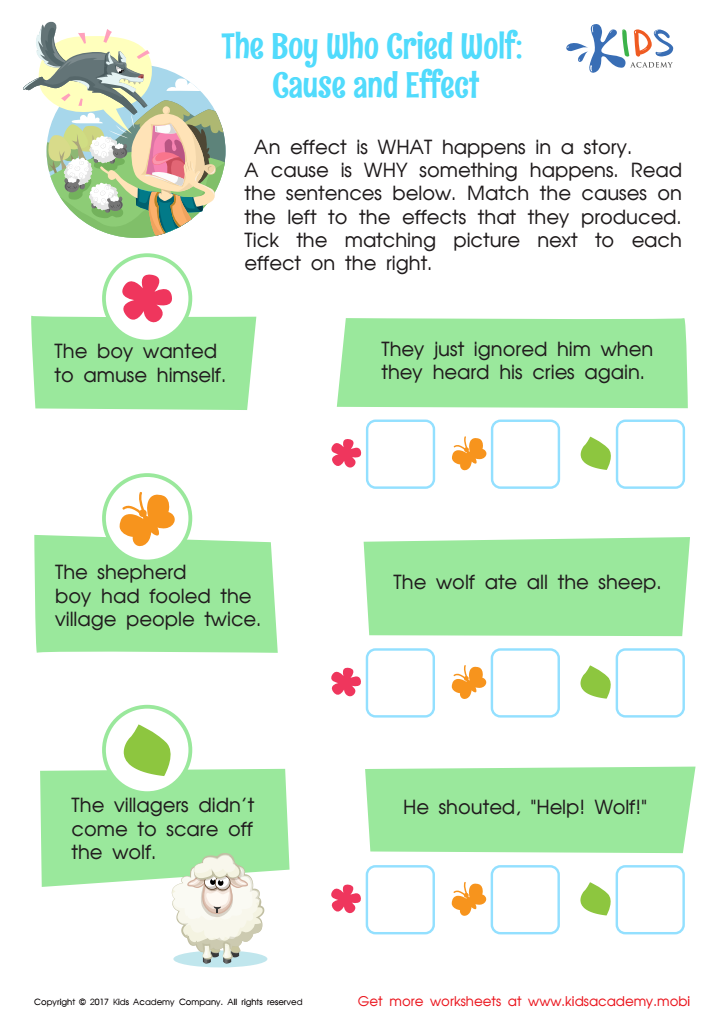
The Boy Who Cried Wolf: Cause and Effect Worksheet
With classic stories and fables, learning reading comprehension is easy - and fun!
The Boy Who Cried Wolf: Cause and Effect Worksheet
Worksheet
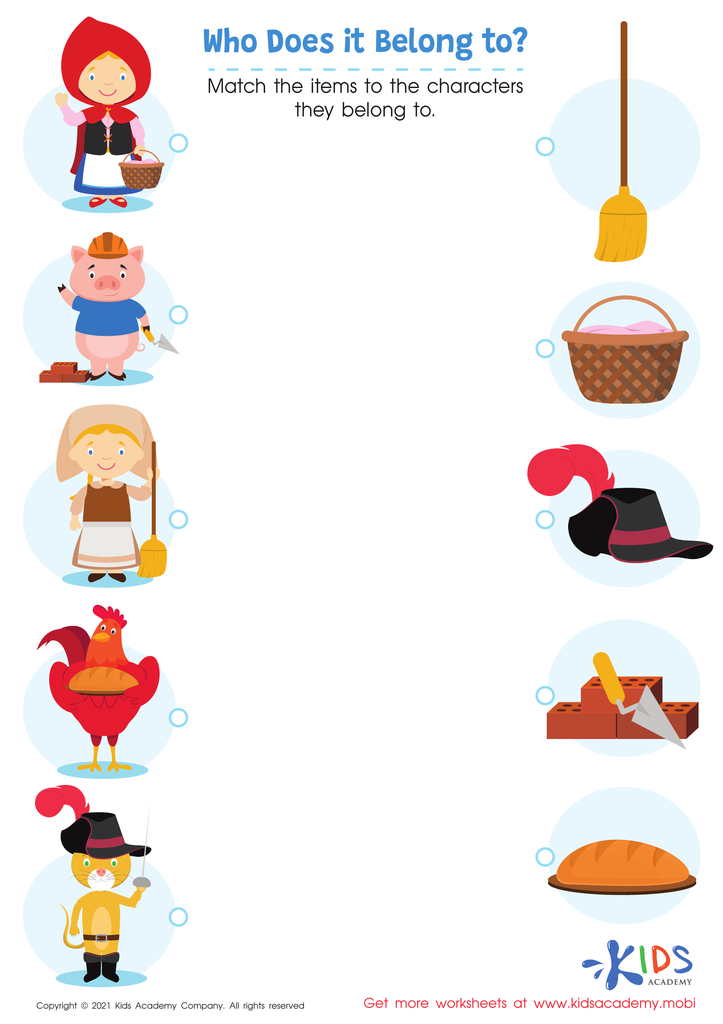
Who Does It Belong To? Worksheet
The summer season is here, and with it comes a variety of activities that can help you beat the heat. Going to the beach, taking a dip in the pool, and having a picnic in the park are some popular choices.
Summer is here! Beat the heat with activities like going to the beach, swimming, and picnicking in the park. Enjoy!
Who Does It Belong To? Worksheet
Worksheet
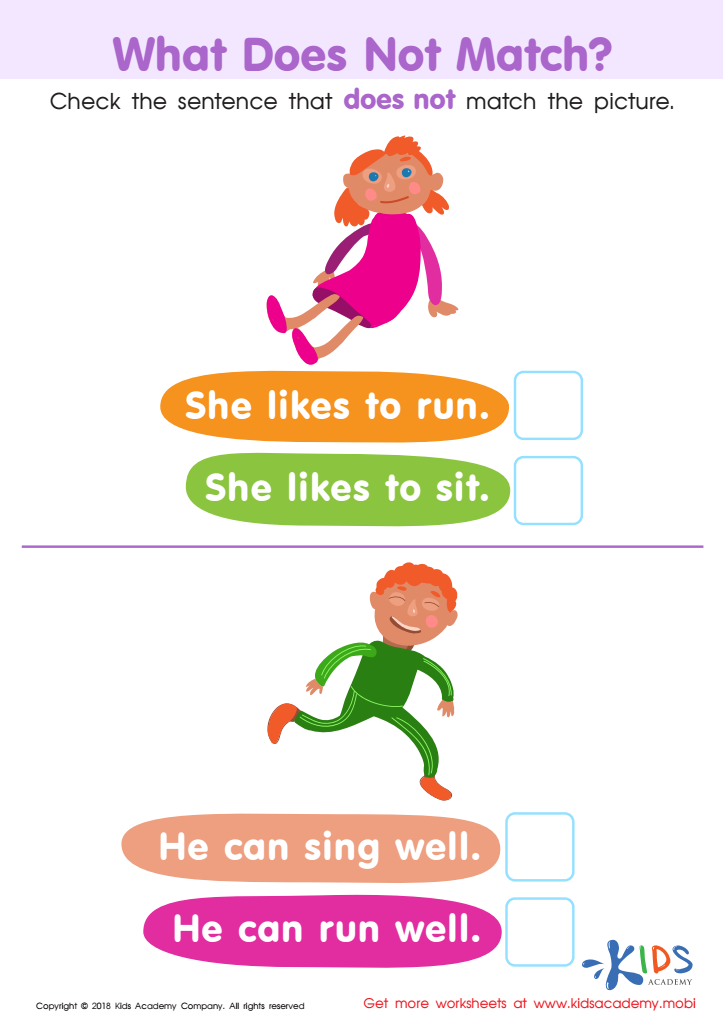
What Does Not Match? Worksheet
Emerging readers need to practice using visual cues and repetitive text. This colorful PDF provides them with an opportunity to look at pictures, use discrimination and discern which phrase does not match. It also enables them to gain familiarity with high-frequency words to aid decoding longer sentences.
What Does Not Match? Worksheet
Worksheet
Join Kids Academy for Free
Who is primarily going to use this learning content?


.jpg)





Logical reasoning through reading fiction for ages 3-6 is crucial for a child's cognitive development. At this formative age, children begin to explore concepts of cause and effect, prediction, and problem-solving—all essential components of logical reasoning. Engaging with stories allows children to follow narratives, make connections between events, and anticipate outcomes, sharpening their analytical skills.
Moreover, reading fiction encourages imagination and creativity, which are key aspects of logical thinking. When children immerse themselves in fictional worlds, they learn to consider multiple perspectives and scenarios, building their ability to reason through different situations. This imaginative engagement promotes not only linguistic skills but also social-emotional understanding as they empathize with characters' experiences.
Additionally, stories often present challenges and conflicts, providing young readers opportunities to discuss potential solutions and moral dilemmas with parents or teachers. This dialogue fosters critical thinking, encouraging children to articulate their thought processes and reasoning.
By prioritizing logical reasoning in fiction, parents and teachers help establish a solid foundation for lifelong learning, enabling children to navigate not just stories but the complexities of real-life situations with confidence and understanding. Investing time in these developmental activities reaps long-term benefits for literacy and overall cognitive growth.








