
Story analysis Reading Fiction Worksheets for Ages 3-6
5 filtered results
Difficulty Level
Grade
Age
-
From - To
Subject
Activity
Standards
Enhance your child's reading comprehension with our "Story Analysis Reading Fiction Worksheets for Ages 3-6." These engaging and educational worksheets are designed to help young learners delve into their favorite stories. Through interactive activities, children will explore story elements like characters, settings, and plot. Each worksheet includes vibrant illustrations and simple, easy-to-follow questions that promote critical thinking and comprehension skills. Perfect for both classroom and home use, our worksheets are a fun way to foster early literacy and a love for reading. Give your child the tools they need to become confident and insightful readers.
Favorites
With answer key
Interactive
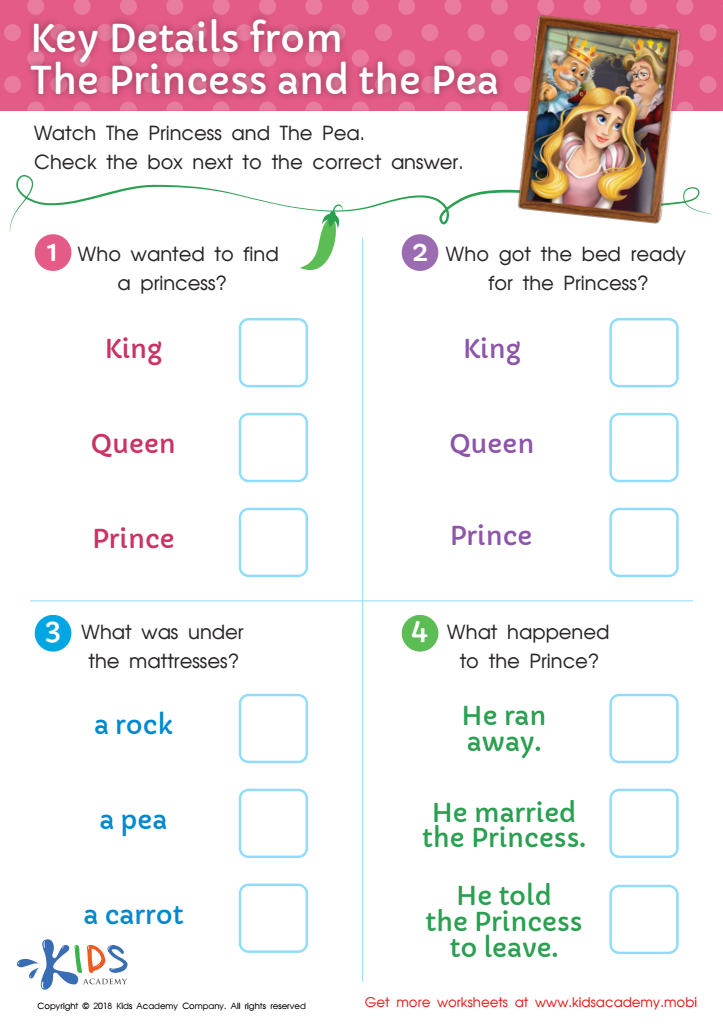
Key Details from the Princess and the Pea Worksheet
After reading The Princess and the Pea, ask your students questions to assess their comprehension of the story. Check their knowledge of key details. This printable can be used to help evaluate their understanding. Encouraging the recall of story events helps build important reading skills.
 Assign to My Students
Key Details from the Princess and the Pea Worksheet
Worksheet
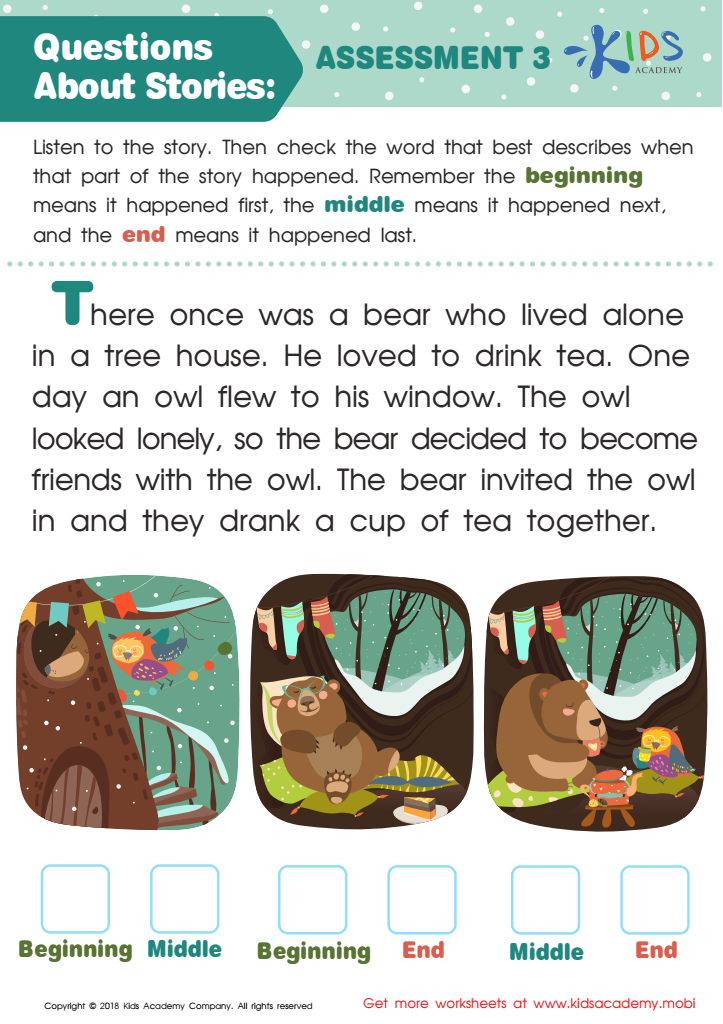
Questions About Stories: Assessment 3 Worksheet
Help kids understand stories by having them listen to a story and check boxes for the beginning, middle, and end. This worksheet makes it fun for even the youngest learners to recall story elements and sequence of events. Let them listen to the story from start to finish, then look at the pictures to check which part of the story they depict.
Questions About Stories: Assessment 3 Worksheet
Worksheet
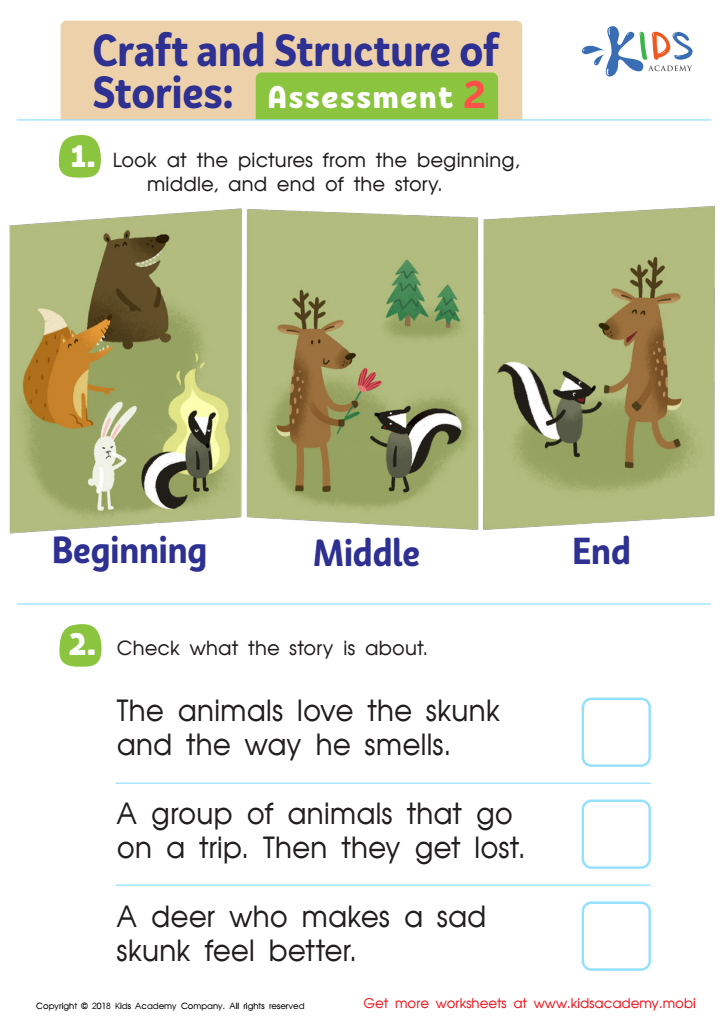
Craft and Structure of Stories: Assessment 2 Worksheet
Help your child assess their story sequencing and reading comprehension skills using this cute worksheet! It encourages them to look at the three pictures on the page, each representing a scene from the beginning, middle and end. Ask them what the story is about, then let them check the box next to the correct answer. This is a great way to ensure they understand the main events of a story.
Craft and Structure of Stories: Assessment 2 Worksheet
Worksheet
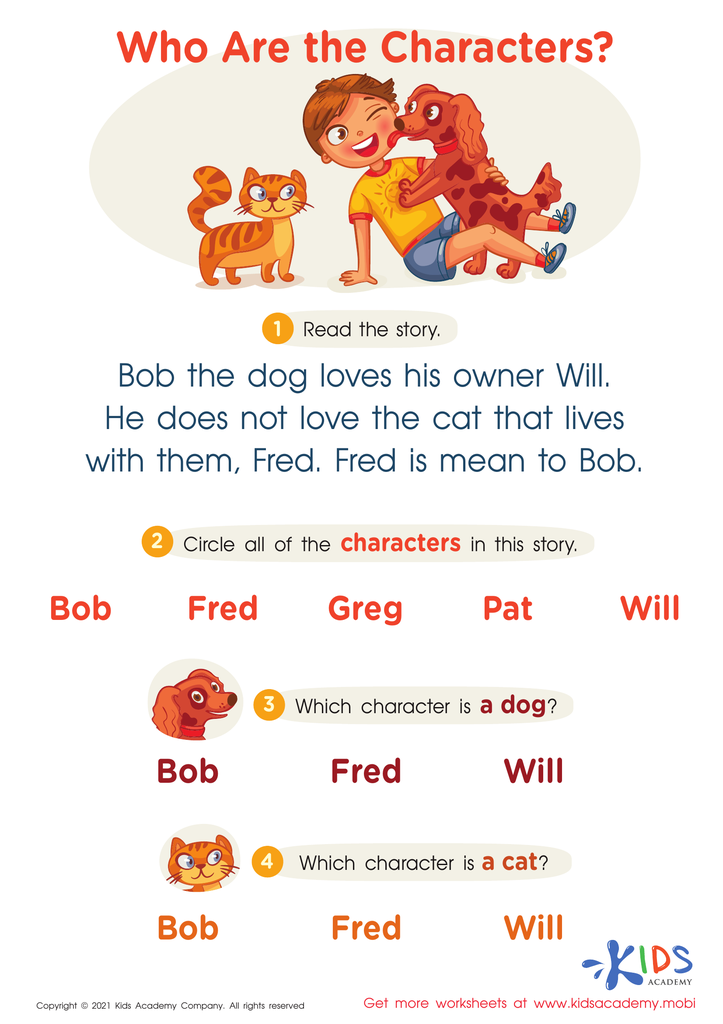
Who Are the Characters? Worksheet
Original:
The annual summer festival takes place on the last day of June and is celebrated with a parade and a carnival that features rides, games, and yummy food.
Rewrite:
Every June end marks the annual summer festival with a parade and carnival. Enjoy rides, games, and delicious food!
Who Are the Characters? Worksheet
Worksheet
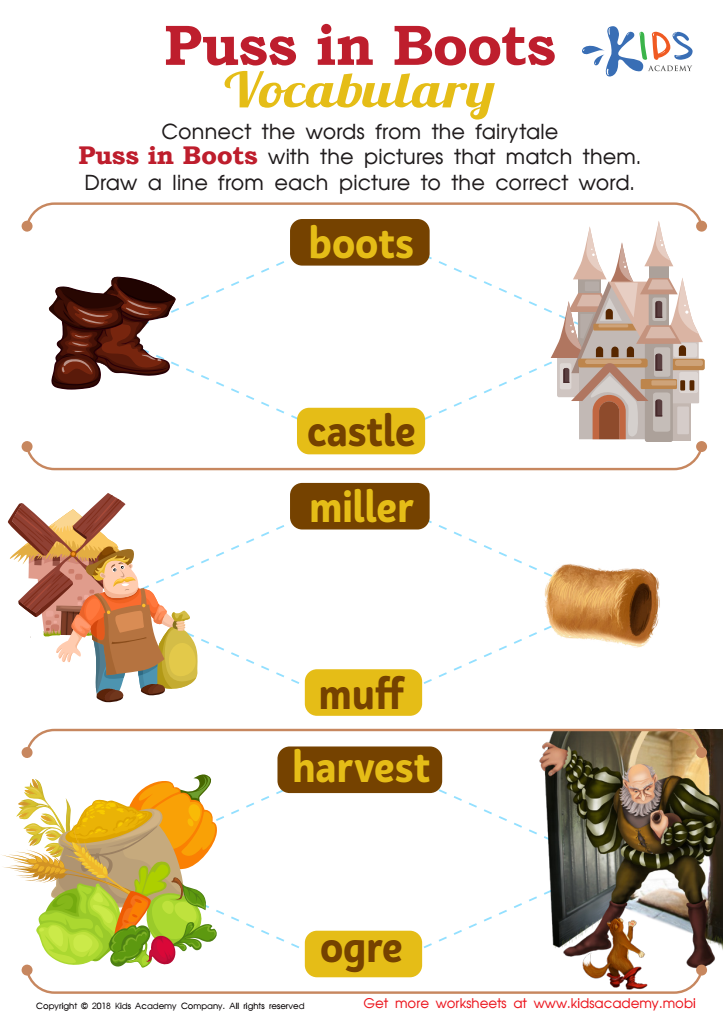
Puss in Boots Vocabulary Worksheet
Let your kids enjoy story-telling while learning at the same time. Help them learn from the fairytale, Puss in Boots, by connecting words from the worksheet with the matching pictures. Ask them to draw a line between each picture and corresponding word to build their vocabulary.
Puss in Boots Vocabulary Worksheet
Worksheet
Join Kids Academy for Free
Who is primarily going to use this learning content?








Reading fiction and conducting story analysis for children aged 3-6 is vital for multiple reasons. Firstly, it stimulates their imagination and creativity. Kids imagine vibrant characters and scenarios, and this sparks their creative thinking. Secondly, analyzing stories enhances comprehension skills. As children explore plot structure, characters, and settings, they learn to understand narratives more deeply.
Thirdly, story analysis support the development of critical thinking. By discussing why a character behaved in a certain way or predicting what might happen next, children begin to interpret and evaluate information. This analysis encourages curiosity and questioning, foundational skills for lifelong learning.
Moreover, fiction introduces children to diverse experiences and emotions. Stories often address a wide array of emotions and social situations. Discussing these elements helps children articulate their own feelings and builds empathy, helping them understand perspectives different from their own.
Lastly, engaging with stories enriches language acquisition and vocabulary. Exposure to varied sentence structures and new words in context enhances language development and prepares children for later academic success.
In essence, story analysis nurtures intellectual, emotional, and social growth, providing a comprehensive foundation that benefits early childhood development. Parents and teachers, thus, play a pivotal role in enriching young minds through the effective use of fiction.








