Addition Practice Sight Words Worksheets for Ages 3-6
5 filtered results
Difficulty Level
Grade
Age
-
From - To
Subject
Activity
Standards
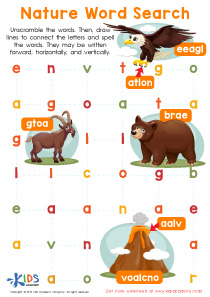
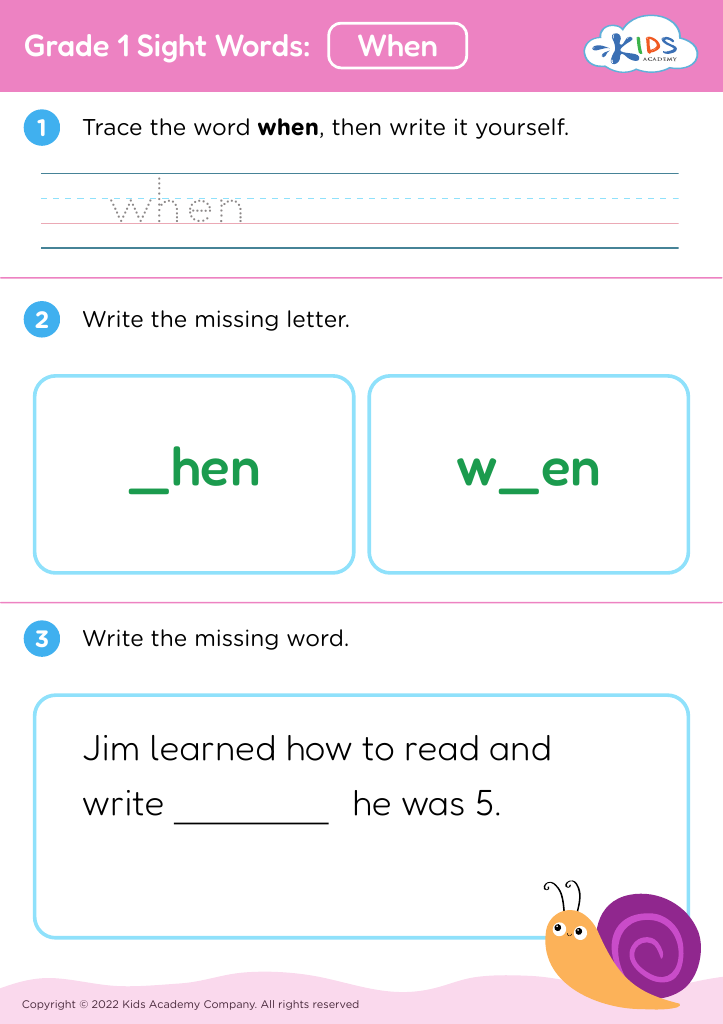
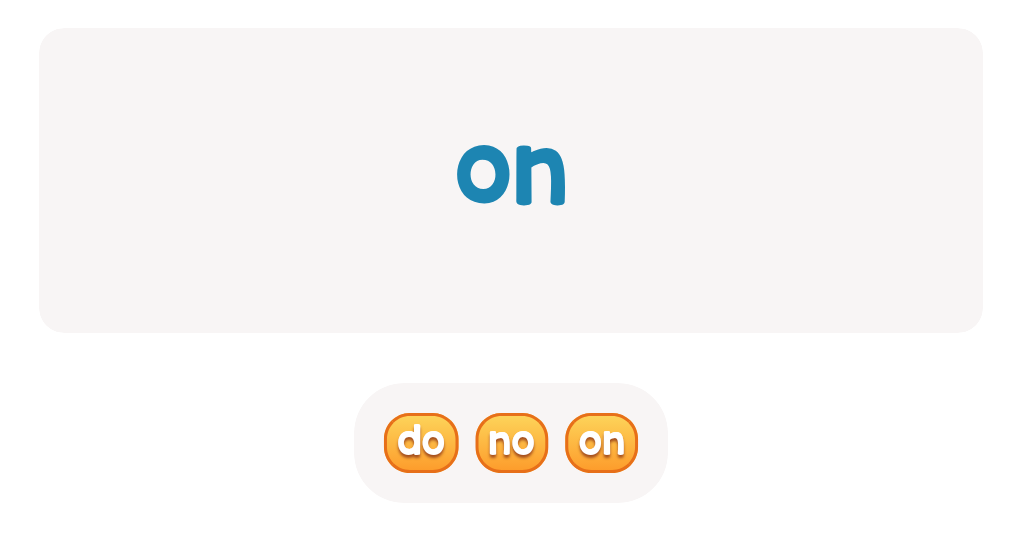
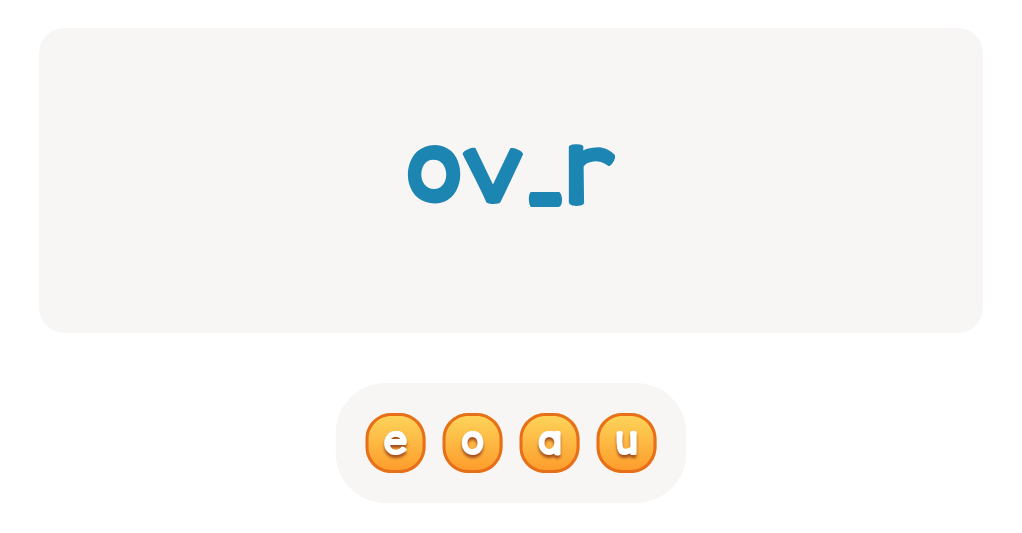
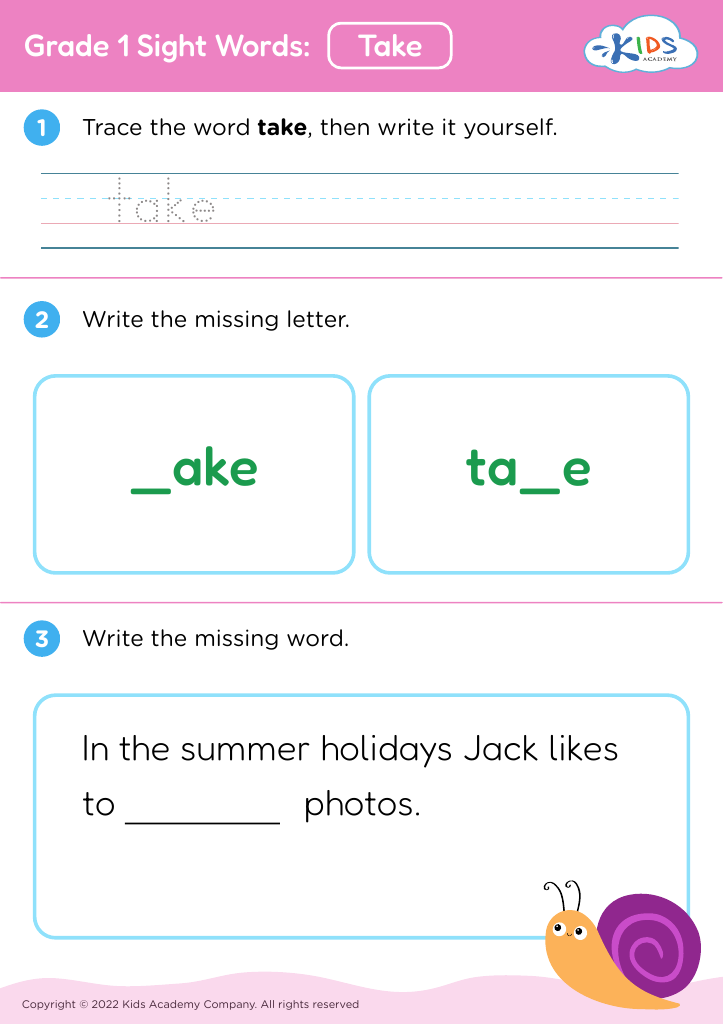
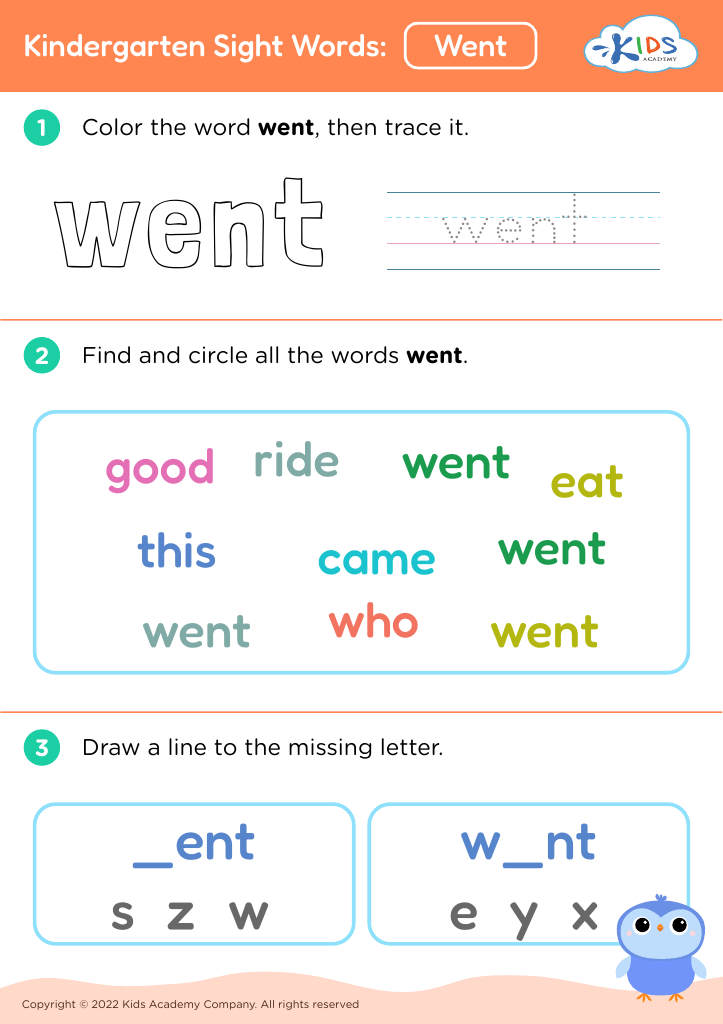
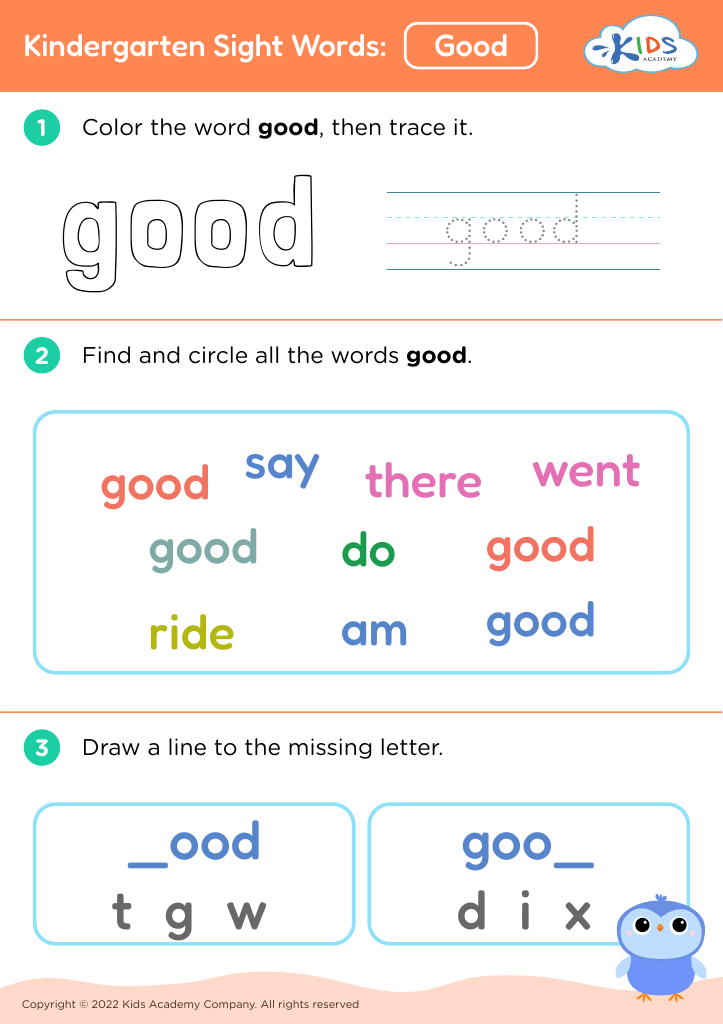
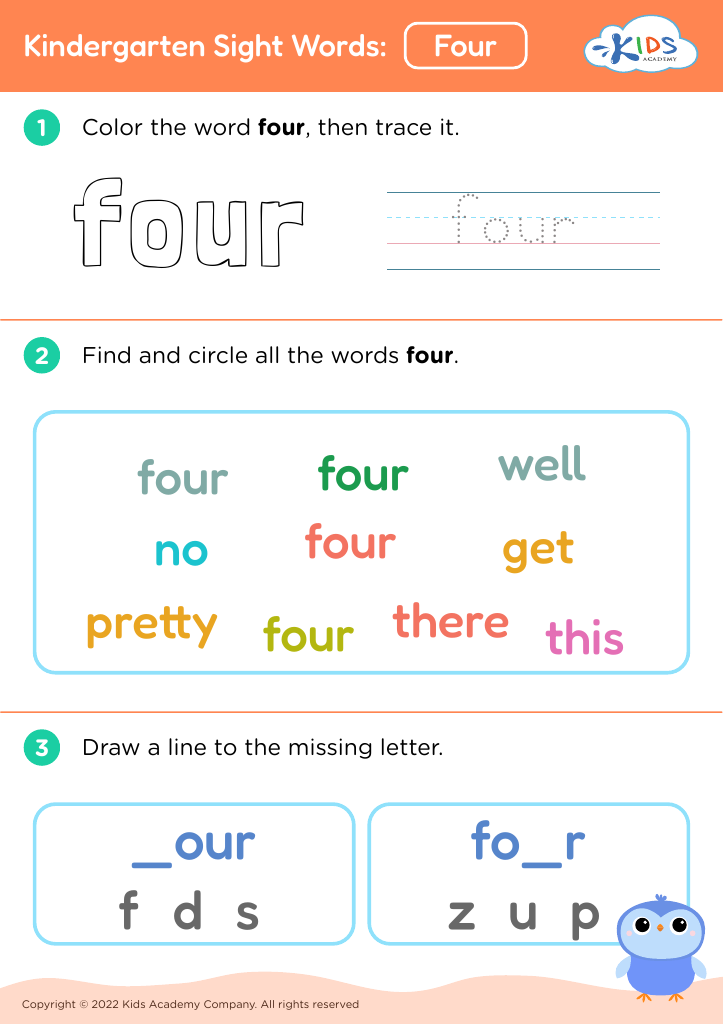
Boost your child's early math and reading skills with our Addition Practice Sight Words Worksheets, designed for ages 3-6. These engaging worksheets combine fundamental arithmetic with essential sight word learning, offering a well-rounded educational experience. Perfect for budding scholars, our printable resources feature fun, interactive activities that make learning enjoyable and effective. By integrating basic addition problems with common sight words, children build a solid foundation in both numeracy and literacy. Ideal for use at home or in the classroom, our worksheets provide a playful pathway to knowledge, encouraging young learners to develop crucial skills with confidence.
Favorites
With answer key
Interactive





Join Kids Academy for Free
Who is primarily going to use this learning content?






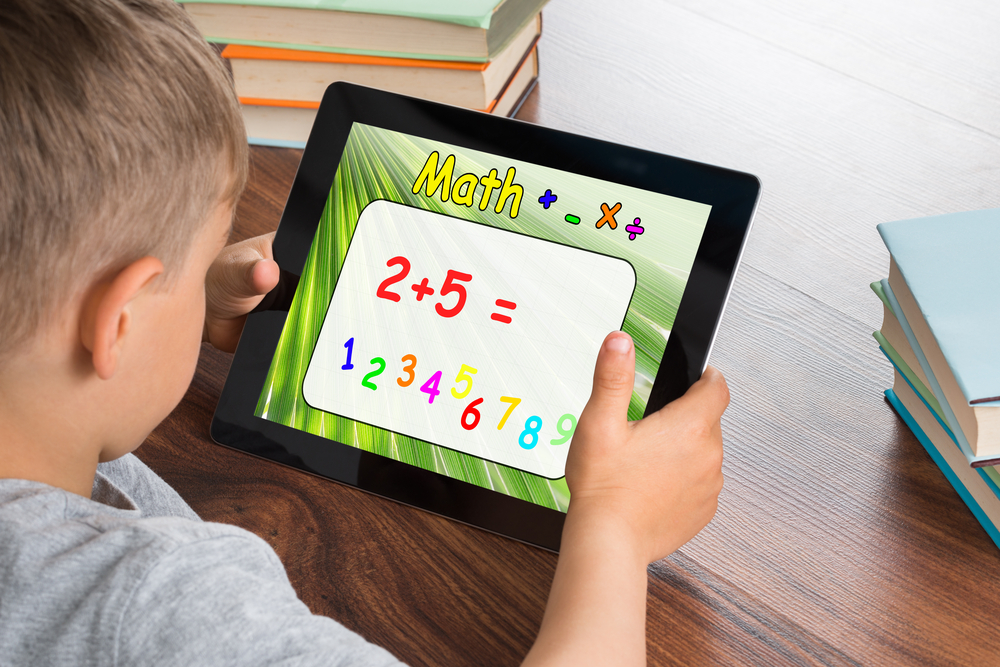

Parents and teachers should care about addition practice and sight words for children aged 3-6 because these foundational skills are crucial for their early cognitive development and academic success.
Addition practice helps children develop essential math skills, such as understanding number concepts, recognizing patterns, and building problem-solving abilities. By engaging in addition exercises, young learners build the confidence necessary to tackle more complex mathematical concepts in the future. Moreover, early math practice promotes logical thinking and enhances a child's ability to handle everyday tasks that require numerical understanding, such as counting and measuring.
Similarly, practicing sight words—common words like "the," "and," "can," and "see" that children recognize immediately without having to sound them out—is fundamental for reading fluency. Proficiency in sight words allows children to read more smoothly and with greater comprehension, laying a strong foundation for literacy. As reading is a significant part of most learning experiences, early mastery of sight words makes future learning in all subjects more accessible and enjoyable.
Together, addition practice and sight word recognition equip children with critical skills, foster a love of learning, and prepare them for the academic challenges ahead. Building these foundations at a young age sets the stage for lifelong educational success and intellectual curiosity.