Categorization skills Animals Worksheets for Ages 3-6
4 filtered results
-
From - To
Our “Categorization Skills Animals Worksheets for Ages 3-6” are designed to foster critical thinking and foundational science knowledge in young children. Through engaging activities, kids will learn to sort and categorize various animals based on their characteristics. The worksheets feature fun illustrations and interactive tasks that enhance observation and cognitive skills. Perfect for early learners, these printable resources help children make connections, develop vocabulary, and build a solid understanding of the animal kingdom. Ideal for classroom use or homeschooling, our worksheets offer an enjoyable and educational experience tailored to nurture young minds. Discover the joy of learning with our expertly crafted animal categorization worksheets!
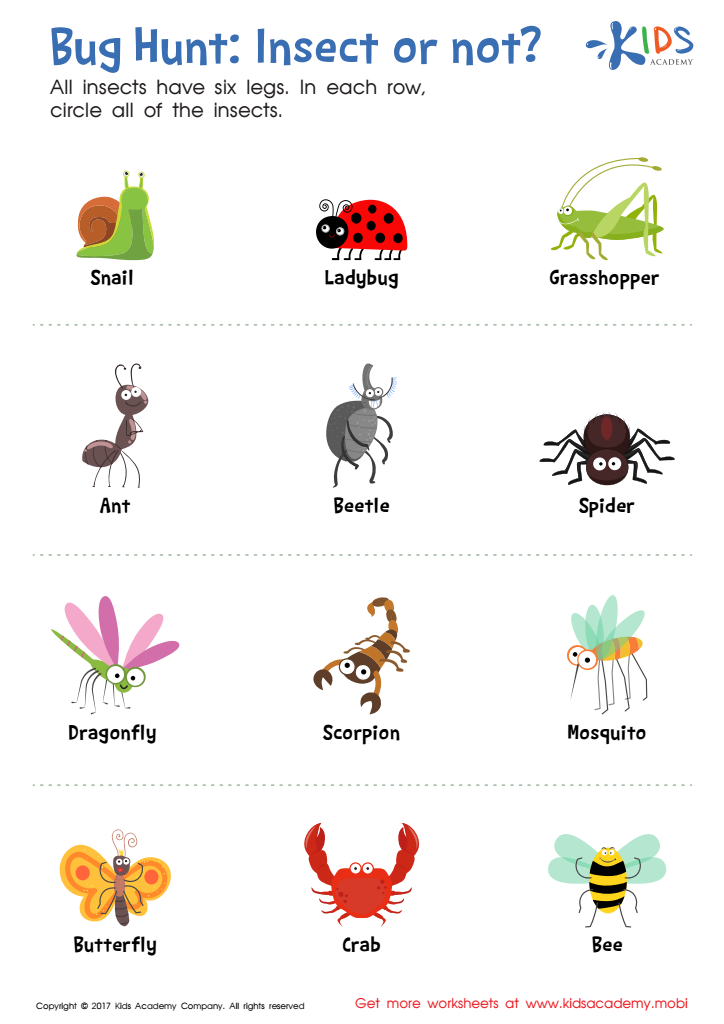
 Assign to My Students
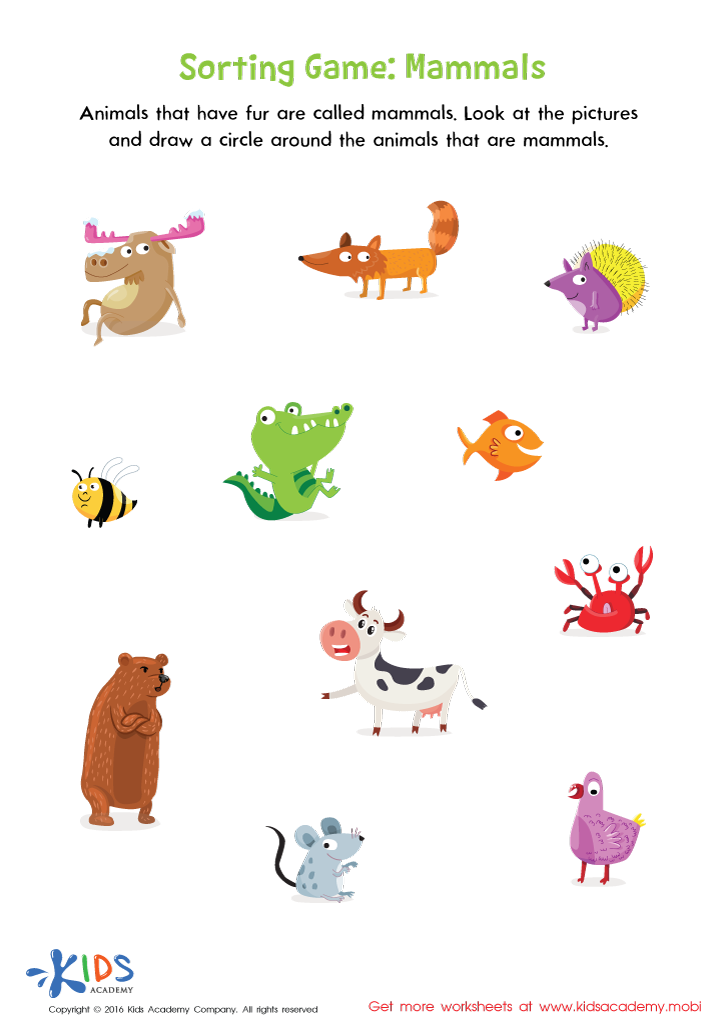
Mammals Sorting Worksheet
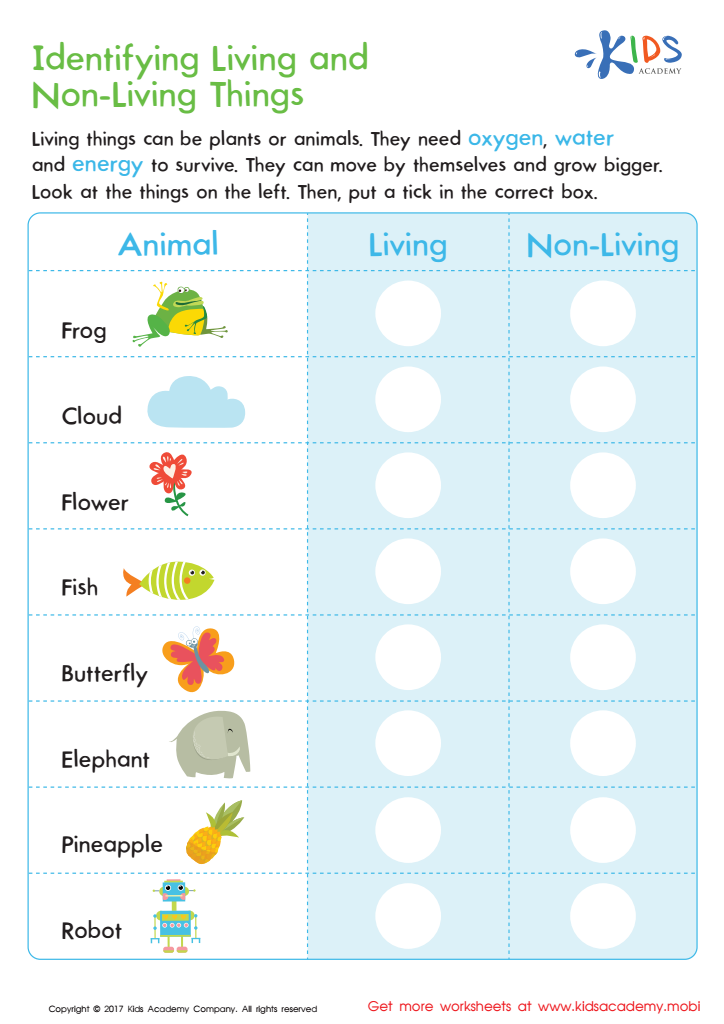
Identifying Living or Non–living Worksheet
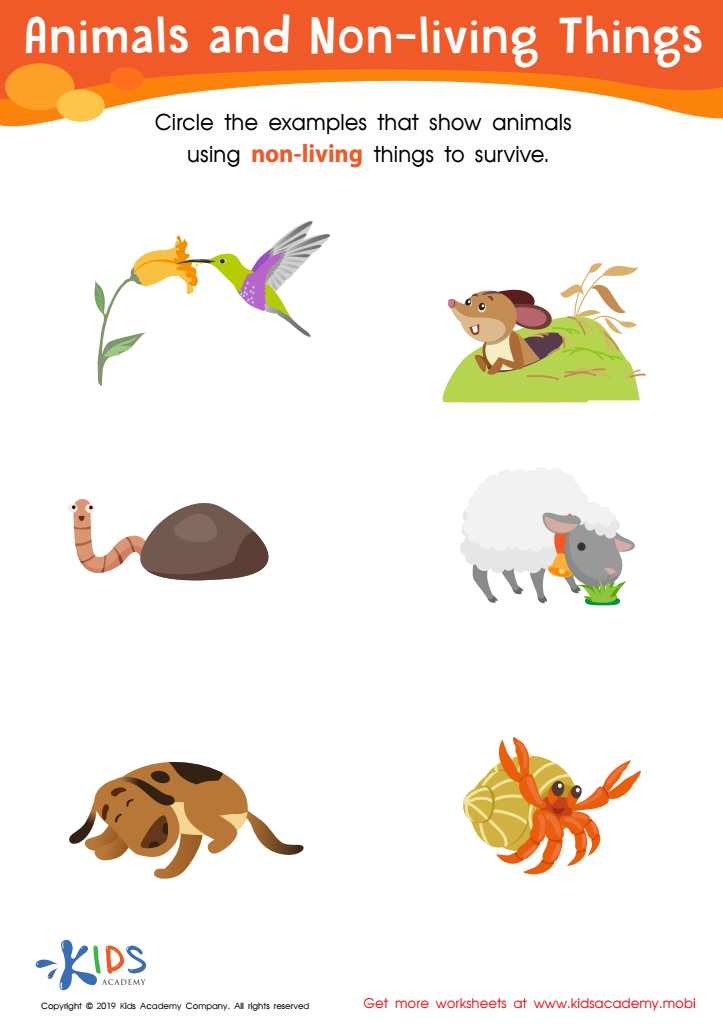
Animals and Non-Living Things Worksheet







Parents and teachers should care about fostering categorization skills in young children, particularly with age-appropriate themes like animals, because these skills are foundational to cognitive development. For children aged 3-6, categorizing animals involves recognizing similarities and differences among various species, which strengthens their ability to observe, analyze, and differentiate.
Firstly, categorization enhances memory. By grouping animals based on characteristics like habitat, diet, or size, children develop mental frameworks that make recalling information easier. Secondly, engaging in categorization activities enriches vocabulary. Describing why a lion and a tiger are similar but different from a dolphin introduces new words and concepts, enriching linguistic skills.
Moreover, categorization exercises aid in mathematical thinking. Sorting animals by type, size, or other criteria introduces fundamental concepts of comparison, pattern recognition, and organization, all of which are crucial for early math skills. Socially, discussing categories with peers or adults encourages communication and collaborative learning.
Importantly, categorizing animals also sparks curiosity about the natural world. This curiosity lays a foundation for science education by helping children develop inquiry skills and an appreciation for biodiversity. Thus, emphasizing categorization skills at this age nurtures a well-rounded developmental profile, preparing children for future academic and life challenges.