Enhancing observation skills Community Worksheets for Ages 3-6
3 filtered results
-
From - To
Enhancing observation skills is crucial for young learners, and our comprehensive community worksheets are designed specifically for children ages 3-6. These engaging activities help develop keen observational abilities, promoting awareness and curiosity about the world around them. Through fun and interactive exercises, kids learn to notice details, patterns, and differences in their environment, laying a strong foundation for critical thinking and problem-solving. Perfect for preschool and kindergarten students, our worksheets align with early childhood education standards, making learning enjoyable and effective. Ignite your child's observational skills and nurture their love for discovery with these expertly crafted resources.
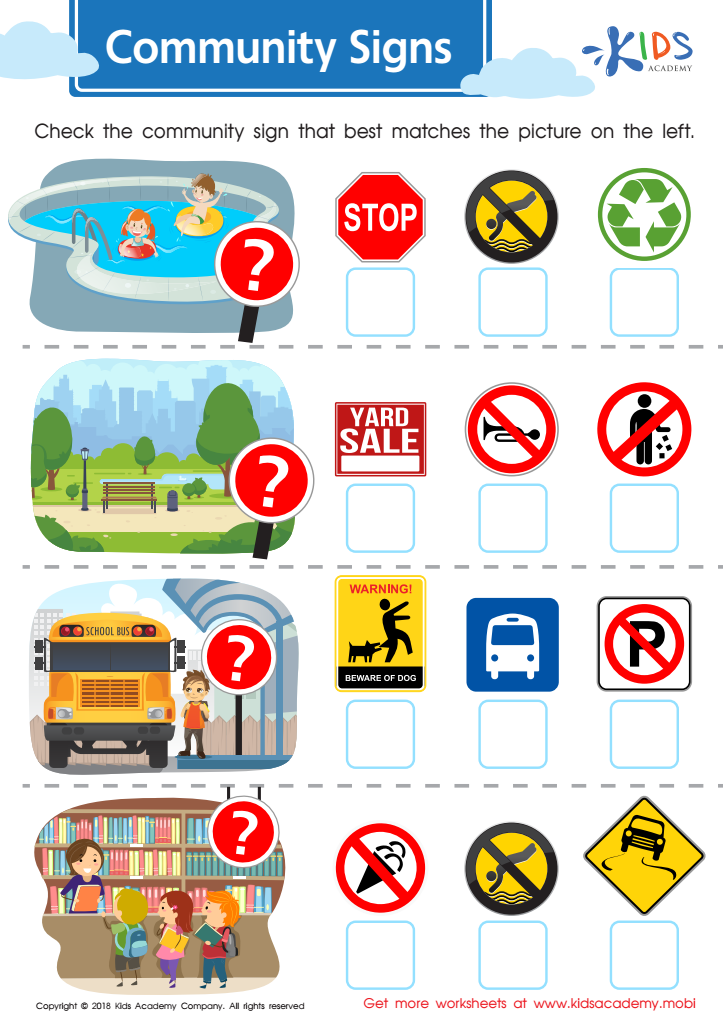
Community Signs Worksheet
 Assign to My Students
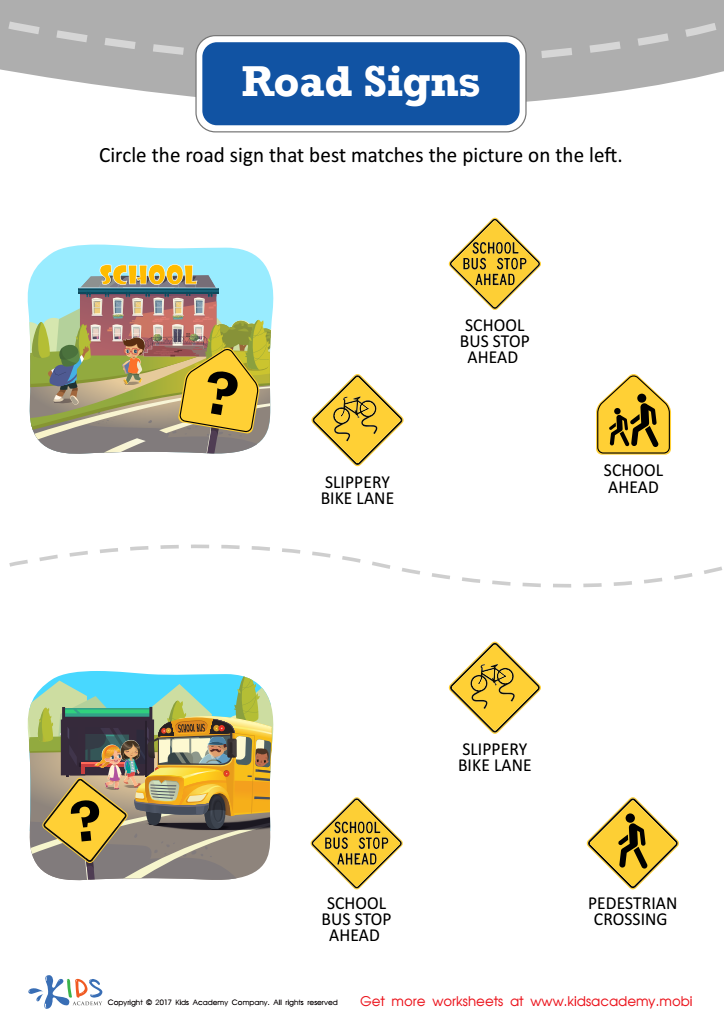
Road Signs (Part 1) Worksheet
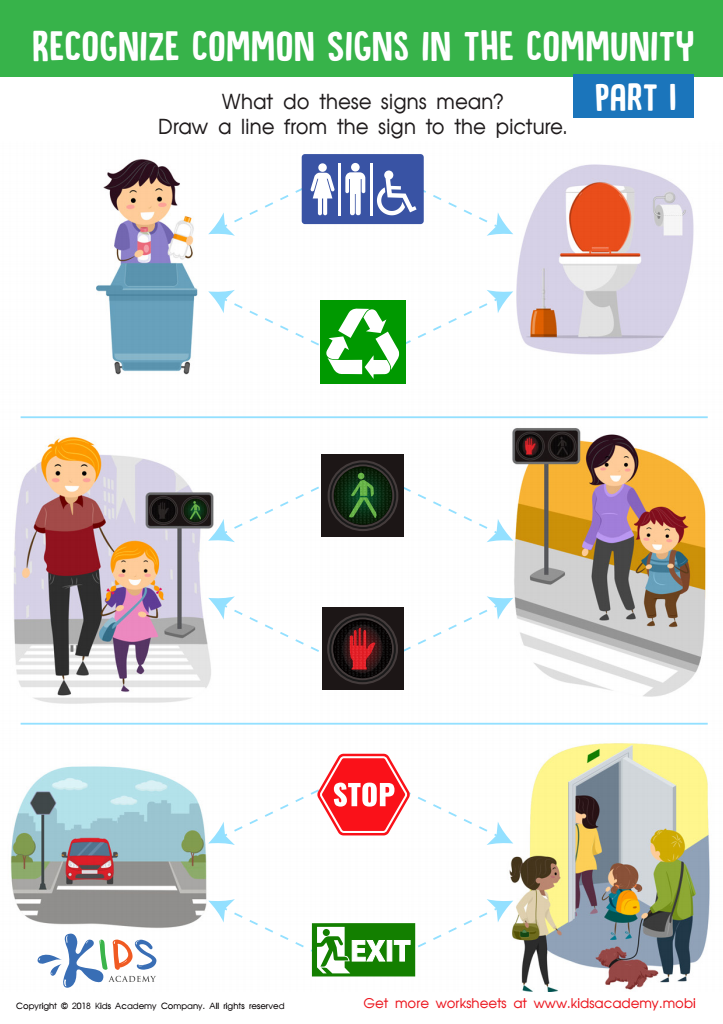
Recognize Common Signs: Part 1 Worksheet








Parents and teachers should prioritize enhancing observation skills in children aged 3-6 because it's fundamental for their overall cognitive development. At this stage, children are naturally curious; their brains are rapidly developing and absorbing information like sponges. By fostering keen observation skills, we leverage this critical window to cultivate critical thinking, attention to detail, and comprehension abilities.
Empowering children with strong observation skills also aids in improving their language development. For instance, they learn to associate words with objects, actions, and emotions by observing their surroundings. Additionally, these skills can strengthen memory and recall, as young children learn to pay attention to and remember the intricate details of their experiences.
Socially, enhanced observation skills enable children to better understand and interpret social cues, thereby facilitating smoother interactions with peers and adults. This can lead to improved empathy and communication skills, which are essential for building healthy relationships.
In an educational setting, observation skills are crucial for laying the foundation for scientific thinking. Observing patterns, differences, and the cause-and-effect relationships foster a child's ability to inquire, experiment, and deduce conclusions.
Therefore, creating a community focused on enhancing observation skills can provide a robust framework for fostering cognitive, language, social, and emotional development in children during these formative years. This solid foundation can significantly impact their lifelong learning trajectory.








