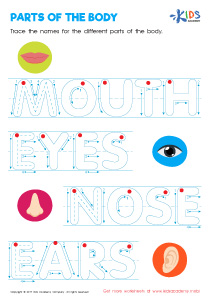
Counting skills World Around Us Worksheets for Ages 3-6
5 filtered results
-
From - To
Discover our "Counting Skills World Around Us Worksheets" designed for children aged 3-6! These engaging and educational resources help young learners develop essential counting skills through fun activities related to their everyday surroundings. Each worksheet features colorful illustrations and interactive exercises that encourage exploration and understanding of numbers. From counting objects in nature to identifying quantities in familiar environments, these worksheets make learning enjoyable. Foster your child's mathematical foundations while they explore and connect with the world around them. Perfect for home or classroom use, these worksheets are an excellent tool for sparking a love of learning in early childhood education!
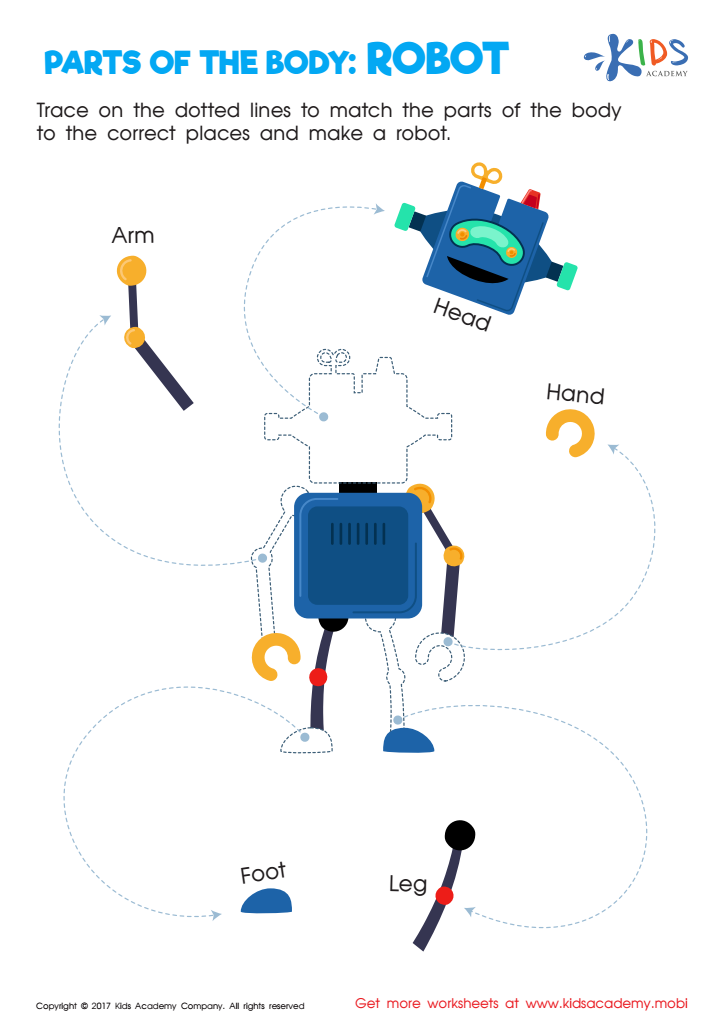
Robot Printable
 Assign to My Students
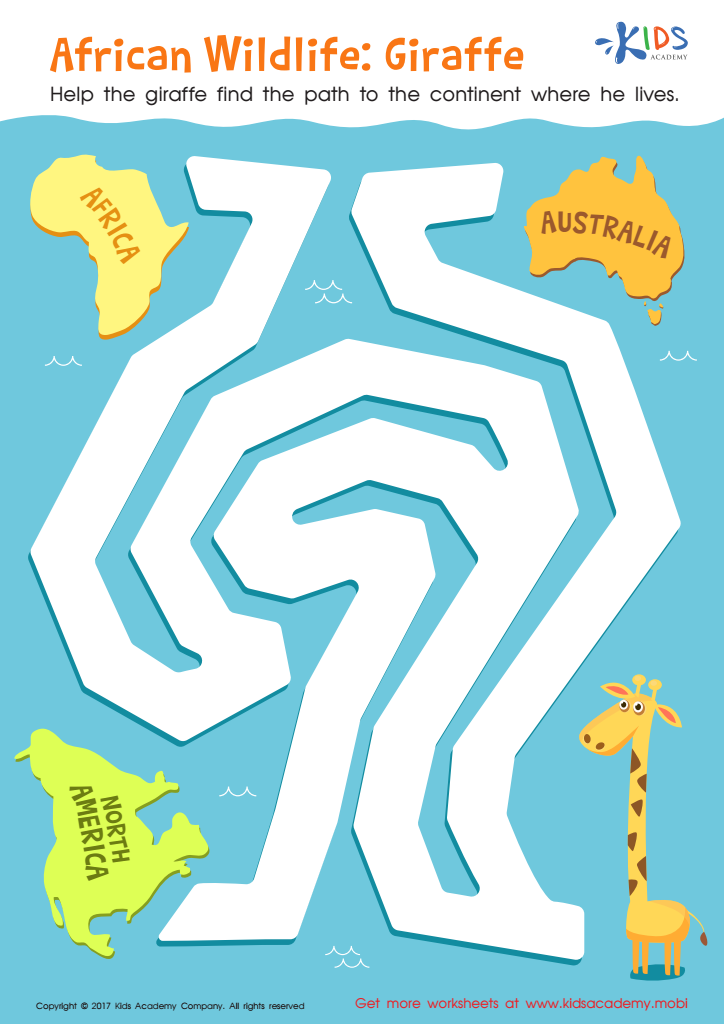
African Wildlife: Giraffe Worksheet
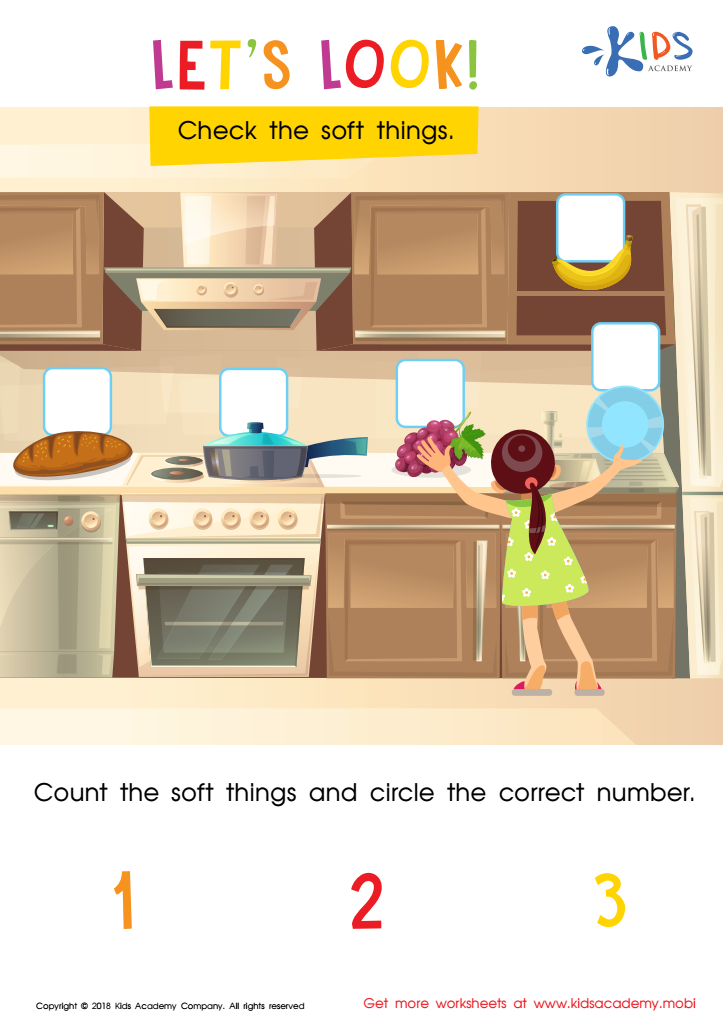
Let's Look! Assessment Worksheet
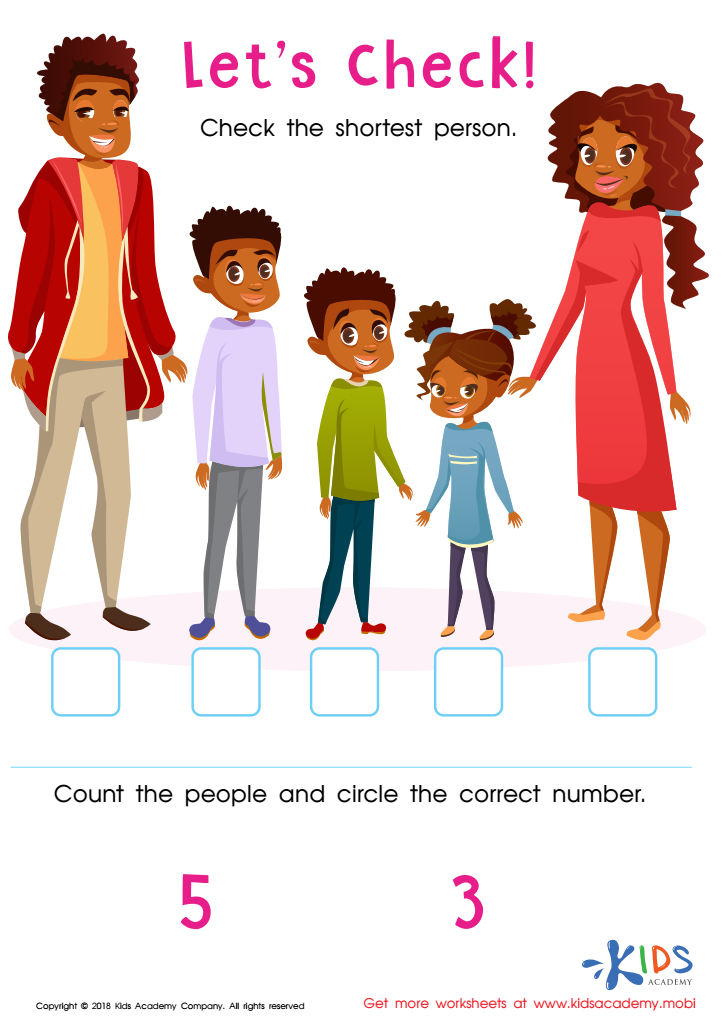
Let's Check! Assessment Worksheet
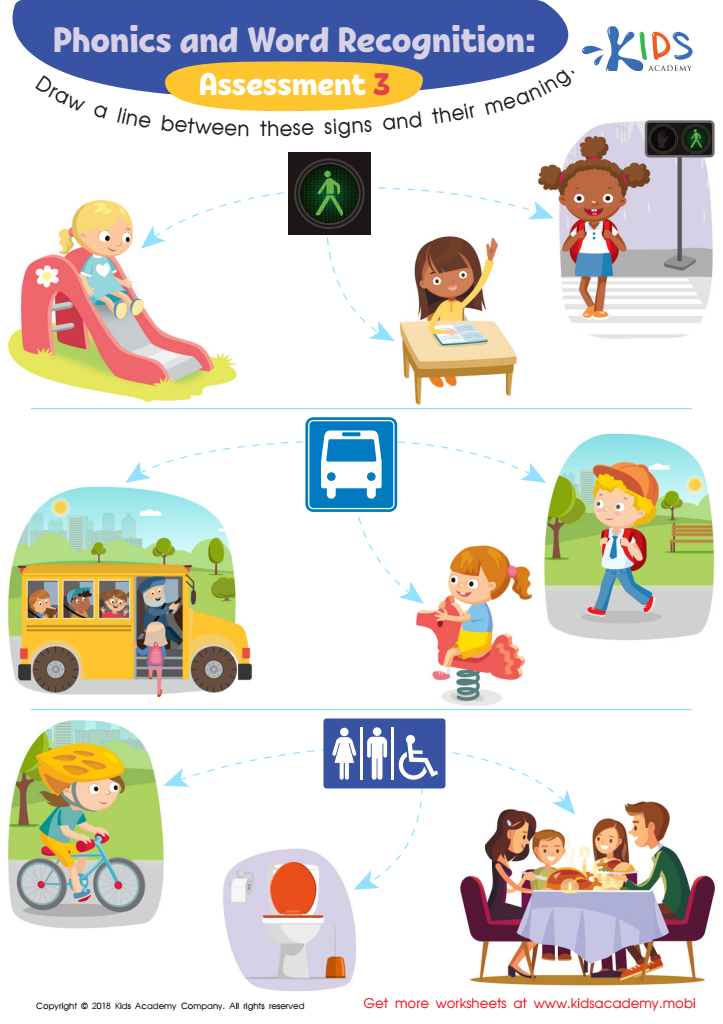
Phonological Awareness: Assessment 3 ELA Worksheet




.jpg)


Counting skills are foundational for young children, particularly in the ages of 3-6, as they serve as the building blocks for future mathematical understanding and cognitive development. Parents and teachers should care about these skills because counting supports not only number recognition but also the ability to quantify, compare, and organize information.
Counting helps children develop critical thinking skills, as they learn to solve simple problems and make sense of their environment. It encourages early numeracy through play, song, and hands-on activities, making learning enjoyable and engaging. When children count objects in their surroundings—such as toys, trees, or steps—they connect abstract numbers to tangible reality, which enhances their comprehension of math concepts.
Additionally, counting skills are linked to essential life skills like budgeting, time management, and spatial awareness. By fostering these skills early on, parents and teachers help children build confidence, resilience, and persistence in problem-solving. Furthermore, strong counting abilities can enhance children's overall academic performance as they progress in their education. Encouraging counting through playful and interactive experiences can create a solid foundation for lifelong learning and a love of mathematics.