Vocabulary expansion Grammar Worksheets for Ages 3-6 - Page 2
27 filtered results
-
From - To
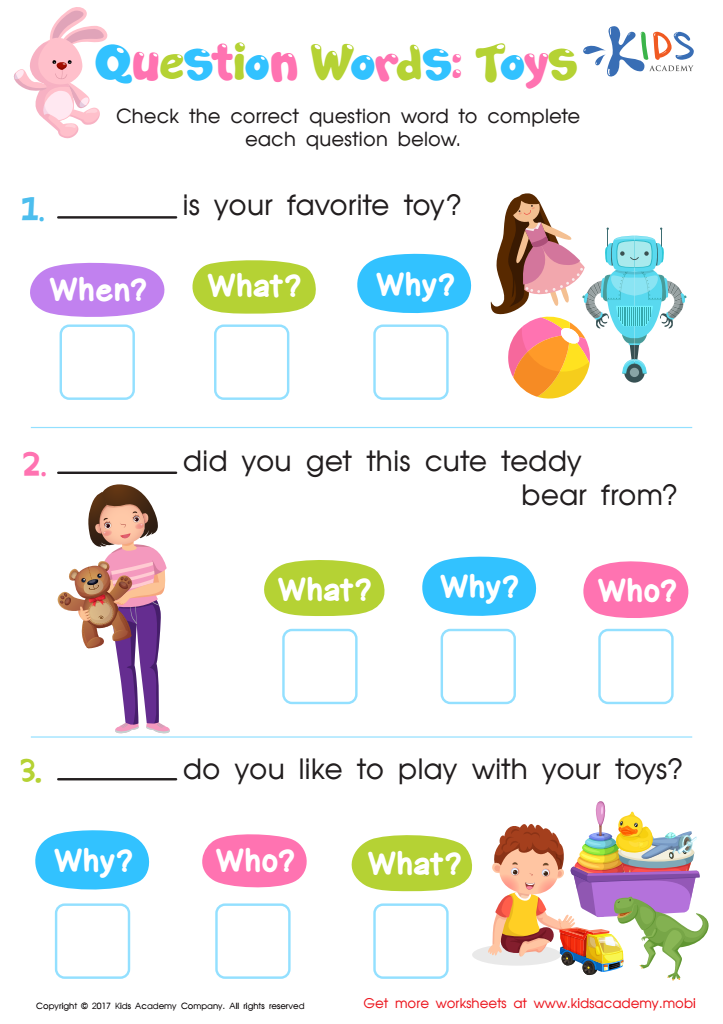
Question Words: Toys Worksheet
 Assign to My Students
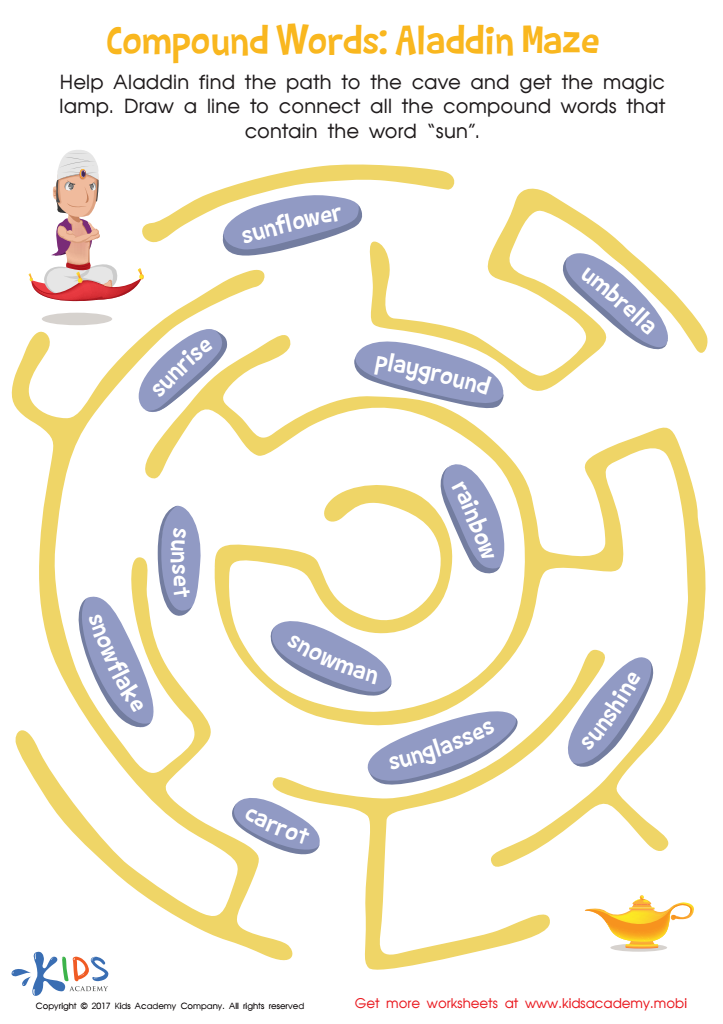
Compound Aladdin Maze Word Structure Worksheet
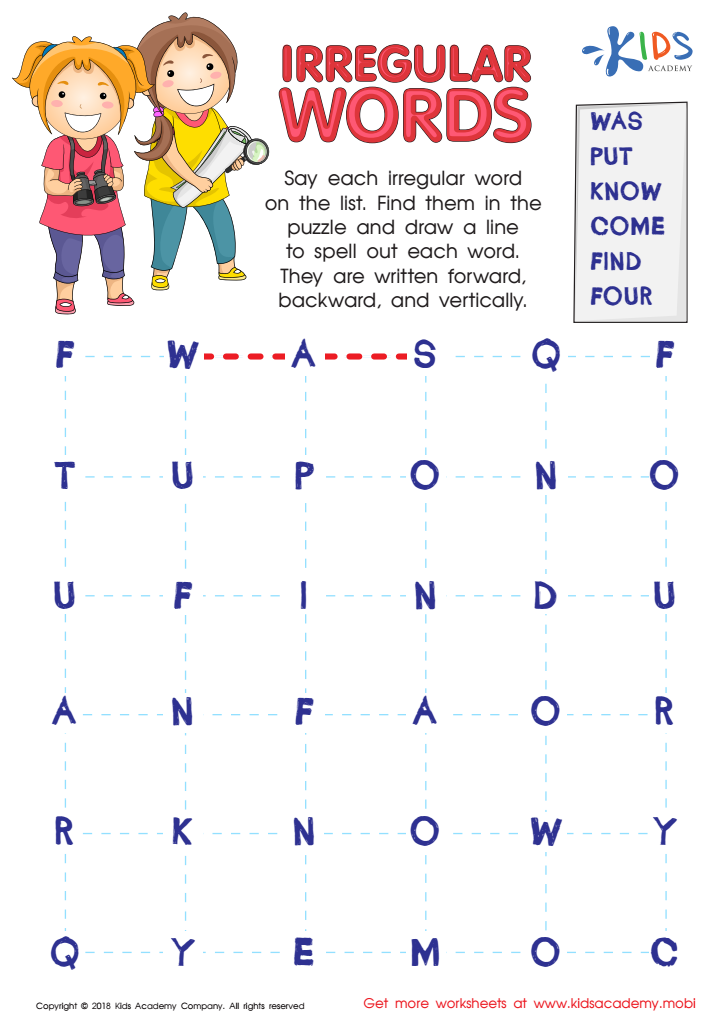
Irregular Words Worksheet







Vocabulary expansion and grammar development are crucial during the ages of 3-6, a period that significantly influences a child's communication skills and overall literacy. Early exposure to a rich vocabulary enhances a child's ability to express thoughts, feelings, and ideas, which is essential for social interaction and academic success. At this developmental stage, children's brains are primed for language acquisition, making the incorporation of varied vocabulary and simple grammar structures essential for cognitive growth.
When parents and teachers prioritize vocabulary and grammar, they empower children to become effective communicators. This not only aids their verbal skills but also fosters comprehension, which is critical for later learning in subjects such as reading, writing, and even mathematics. Moreover, understanding the basics of grammar lays the groundwork for more complex language use as they grow.
Additionally, a robust vocabulary contributes to self-esteem and confidence in communication, encouraging children to engage more in conversations and express themselves freely. By investing time and effort in promoting vocabulary and grammar at this early age, both parents and educators help cultivate a love for language and literacy, setting children on a path to become successful learners and communicators throughout their lives.








