Comprehension skills Writing Worksheets for Ages 3-6
3 filtered results
-
From - To
Enhance your child's literacy journey with our Comprehension Skills Writing Worksheets designed specifically for ages 3-6. These engaging worksheets help young learners improve their understanding of stories through fun activities that promote critical thinking and creativity. By incorporating pictures, short texts, and interactive questions, our resources make comprehensive learning enjoyable and effective. Ideal for both home and classroom settings, these worksheets encourage children to express their understanding and articulate their ideas clearly. Foster a love for reading and writing in your little ones as they explore the wonders of comprehension with our thoughtfully crafted materials!
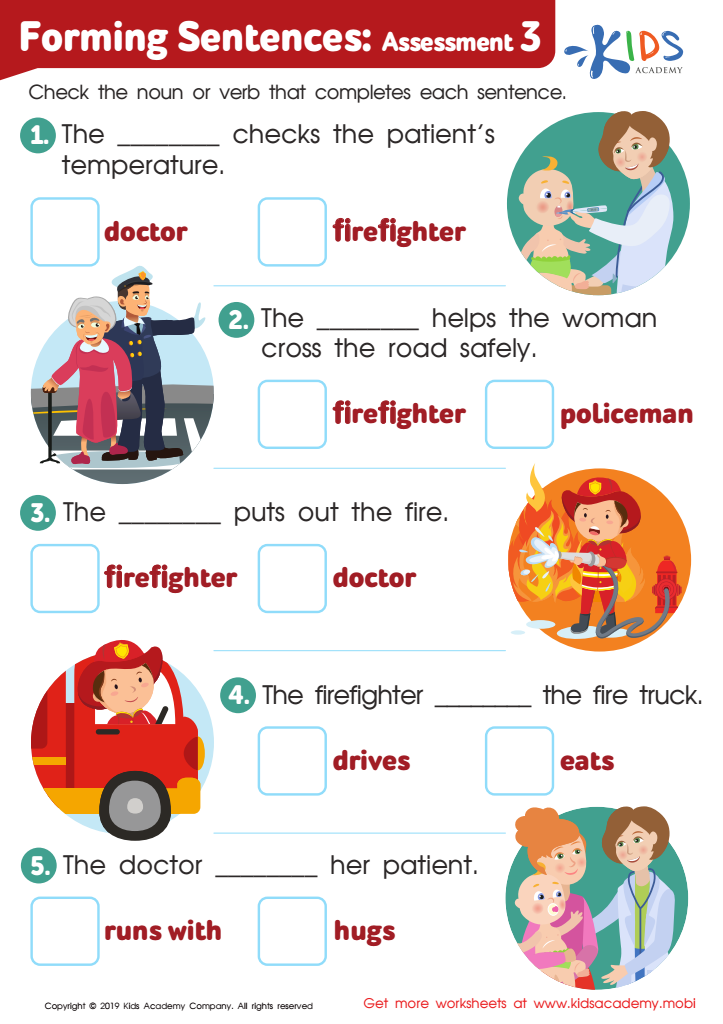
Forming Sentences: Assessment 3 Worksheet
 Assign to My Students
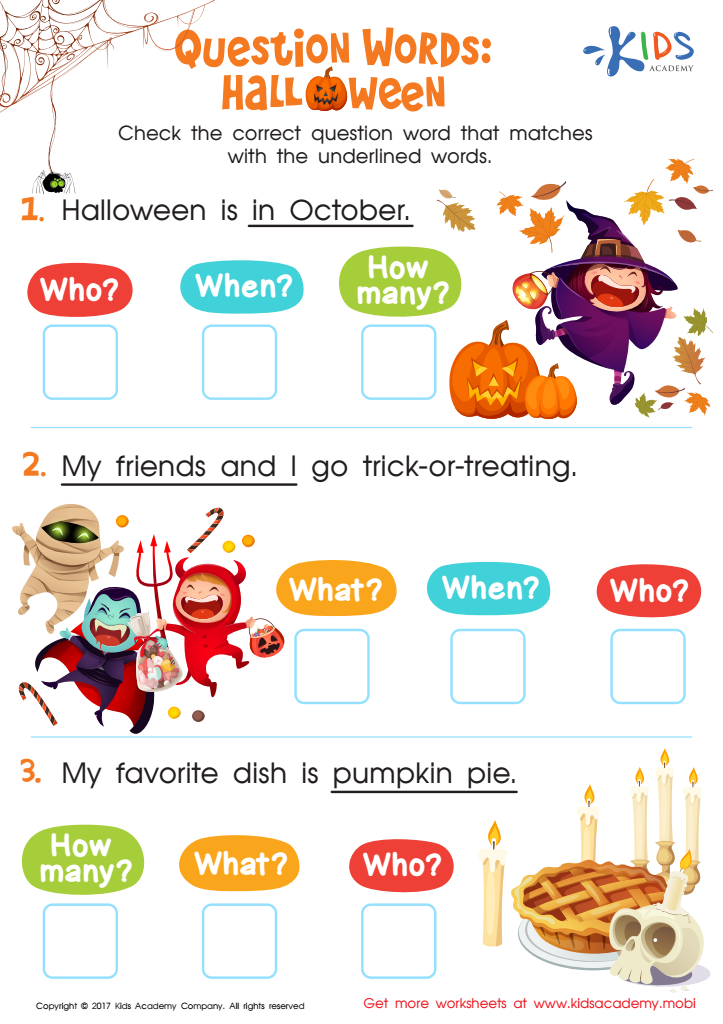
Question Words: Halloween Worksheet
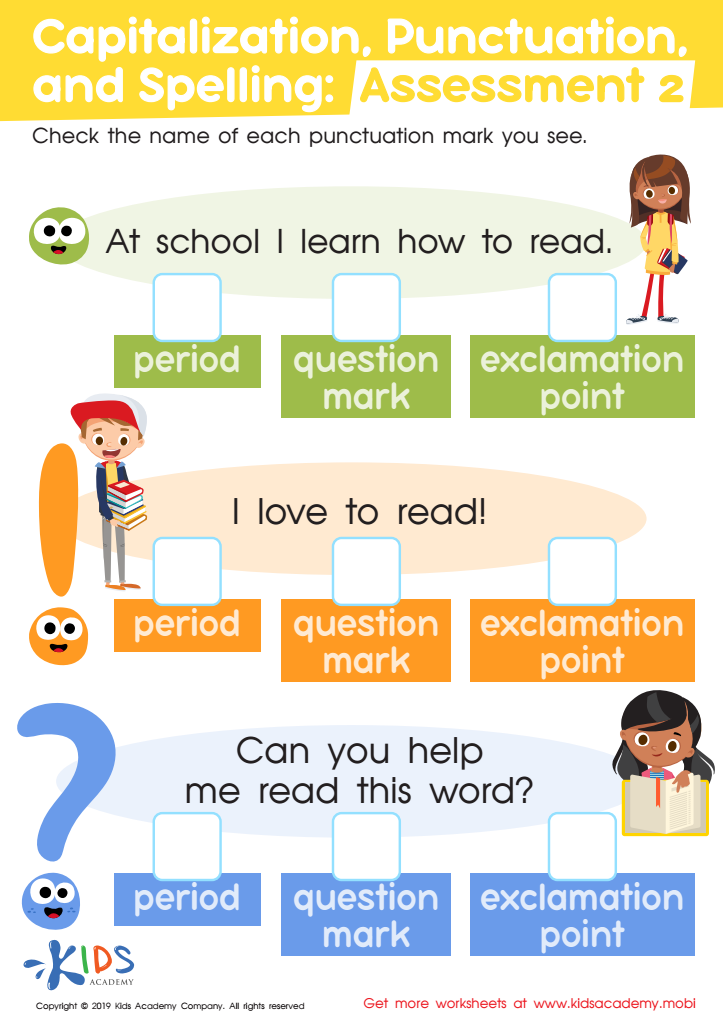
Capitalization. Punctuation. Spelling: Assessment 2 Worksheet


.jpg)



Parents and teachers should prioritize comprehension skills in writing for children aged 3-6 because these foundational skills are essential for lifelong learning. At this early developmental stage, children are beginning to understand and process language, which sets the groundwork for effective communication and critical thinking. Strong comprehension skills enhance a child’s ability to make sense of written texts, later aiding in their understanding of academic materials.
Fostering comprehension in writing also promotes a love for reading, as children who can grasp the meaning in stories are more likely to engage with books. This engagement is crucial, as frequent reading expands vocabulary, enhances grammar, and improves overall literacy skills. Additionally, being able to comprehend and articulate thoughts effectively boosts a child’s confidence in social settings and classrooms.
Moreover, early introduction to comprehension skills aligns with early childhood education goals, supporting literacy development and academic success. Parents can encourage this at home by sharing stories and asking open-ended questions, while teachers can specifically incorporate activities that enhance these skills during lessons. By valuing comprehension skills in writing, we equip young learners with the tools necessary to navigate their world, express themselves clearly, and build a strong trajectory for future academic achievement.








