Filters

7 filtered results

Clear all filters
Favorites
With answer key
Interactive

7 filtered results

Difficulty Level

Grade


Unlock the world of reading with our engaging Phonics Recognition Letter Sounds Worksheets for ages 3-7. Designed to make learning fun and effective, these worksheets help young learners master the sounds of each letter through interactive activities and colorful illustrations. Perfect for early readers, our resources build a strong phonics foundation, enhancing both confidence and academic performance. Ideal for both classroom use and homeschooling, our worksheets cater to every child's unique learning pace, making phonics an exciting adventure. Join us at Kids Academy today and give your child the best start in their literacy journey!

Check out this FREE Trial Lesson on Letter Sounds for age 3-7!

One-to-one Letter-sound Correspondence

Favorites
With answer key
Interactive
  • 3-7
  • Phonics recognition
  • Letter Sounds
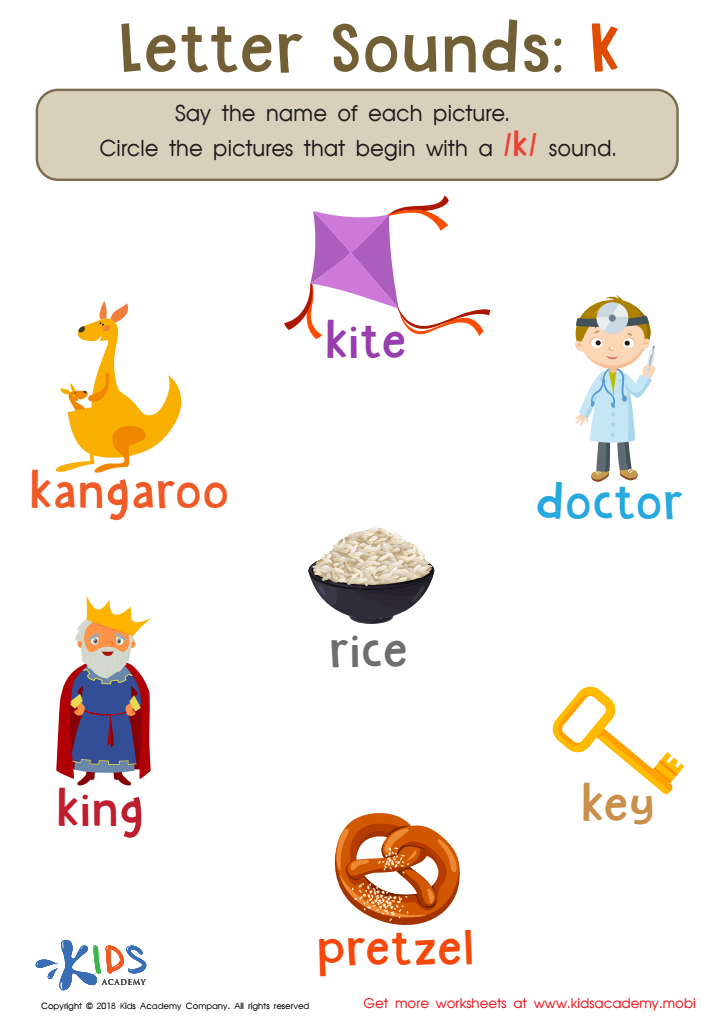
Letter K Sounds Worksheet

Letter K Sounds Worksheet

Help your child practice phonics with Kids Academy's illustrated worksheet! Have them look at the pictures, read the words and say them aloud. Only circle those that start with a hard 'K' sound. Perfect for preschoolers and kindergarteners! Plus, they'll learn the silent K used in a few words.
Letter K Sounds Worksheet
Worksheet
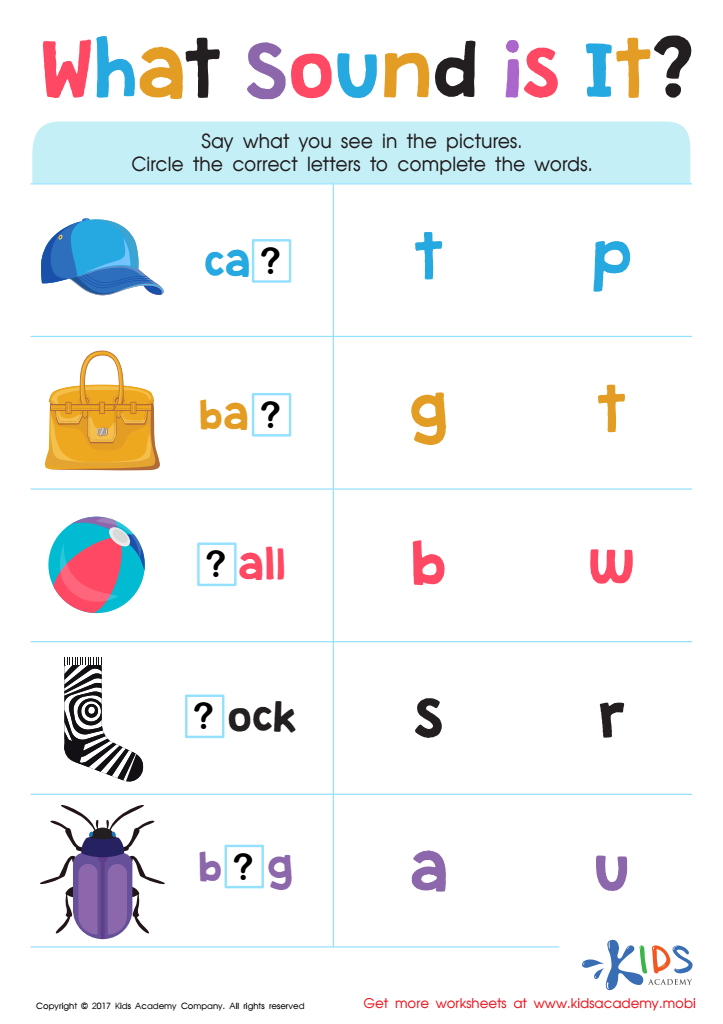
What Sound Is it? Worksheet

What Sound Is it? Worksheet

Have your child say the words for the pictures on this fun worksheet. As he or she sounds out the word, your child will use the provided letter choices to complete it, building reading and phonics skills. Visual cues make it easier to identify the correct beginning, middle, or end sound.
What Sound Is it? Worksheet
Worksheet
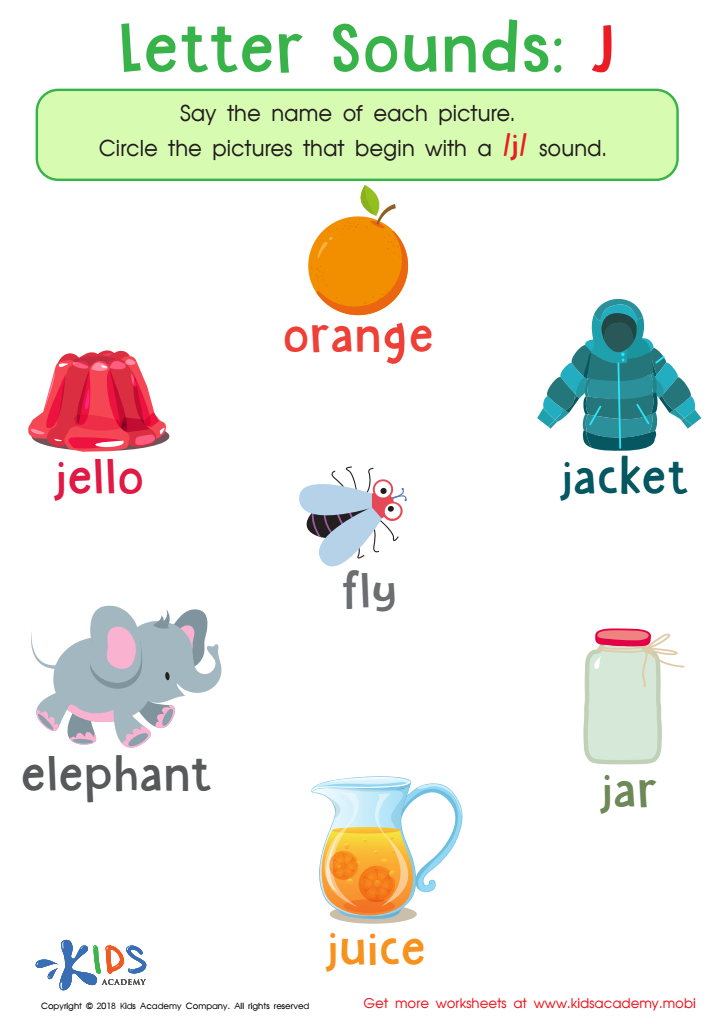
Letter Sounds: J Printable Worksheet

Letter Sounds: J Printable Worksheet

Preschoolers can learn to identify letter sounds by focusing on beginning sounds. This cute and colorful worksheet reviews the hard “j” sound. Kids can point it out by naming the words and circling only those starting with the “j” sound. Read the text out loud and listen closely!
Letter Sounds: J Printable Worksheet
Worksheet
Choose a Sound Worksheet

Choose a Sound Worksheet

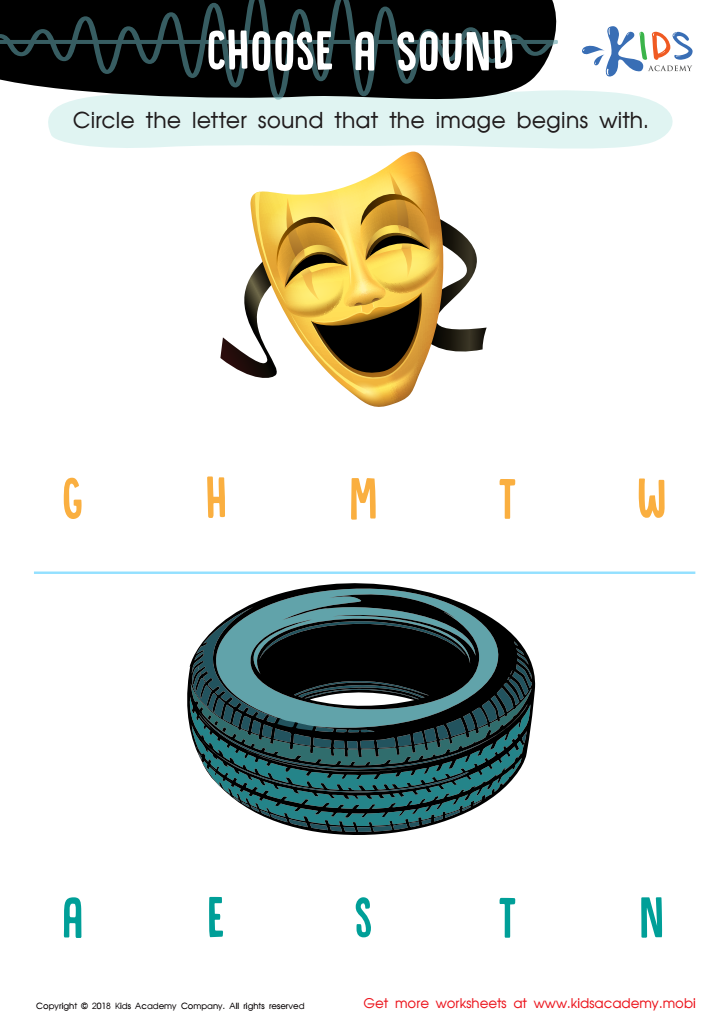
Help your child hone pre-reading skills with this colorful worksheet! They'll practice tracing letter sounds, develop phoneme awareness, and gain confidence. Plus, it's a fun way to work on their fine motor skills.
Choose a Sound Worksheet
Worksheet
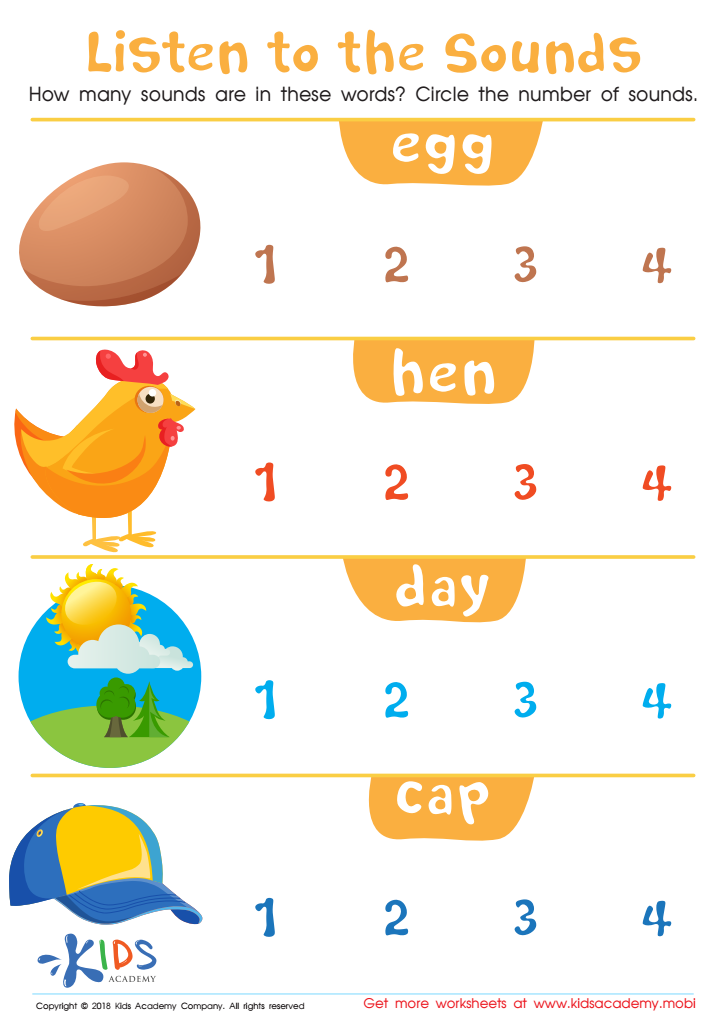
Listen to the Sounds Worksheet

Listen to the Sounds Worksheet

This worksheet builds emerging readers' skills in using sounds for reading and spelling. It helps strengthen auditory processing by having them count the sounds in each word, then trace the corresponding number. Fun and cheerful!
Listen to the Sounds Worksheet
Worksheet
Let's Count the Sounds Worksheet

Let's Count the Sounds Worksheet

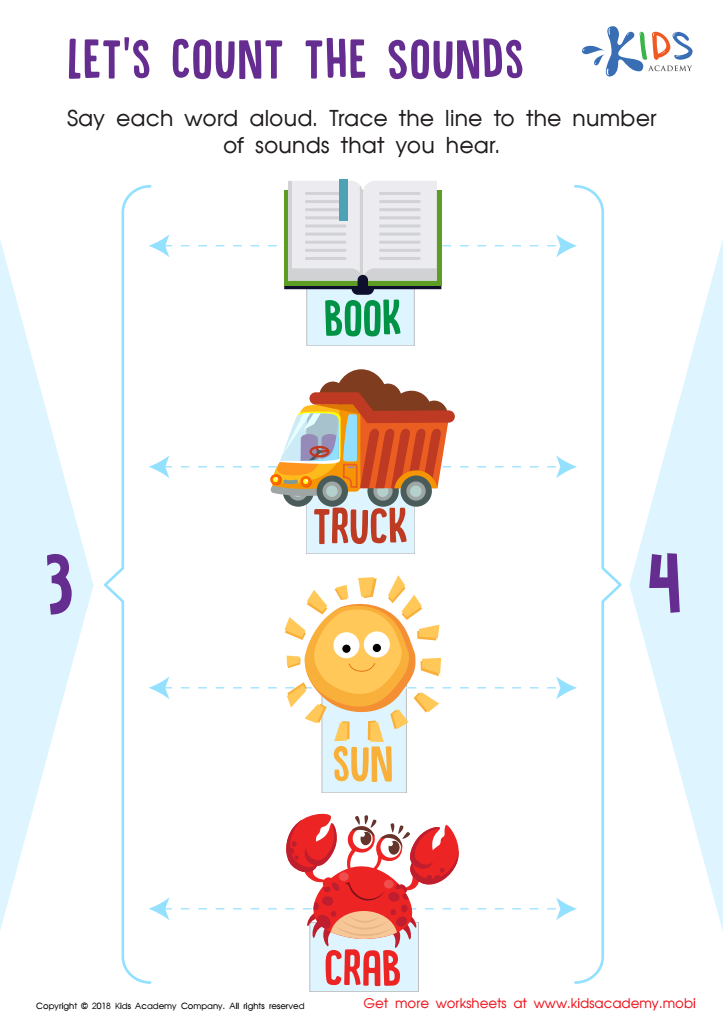
This bright and cheery traceable worksheet encourages children to practice auditory discrimination and phonological awareness. Using picture clues, they read each word and trace the line that represents the number of sounds heard. This builds decoding skills and helps them become successful readers.
Let's Count the Sounds Worksheet
Worksheet
Let's Check for «i» Sounds Worksheet


Let's Check for «i» Sounds Worksheet

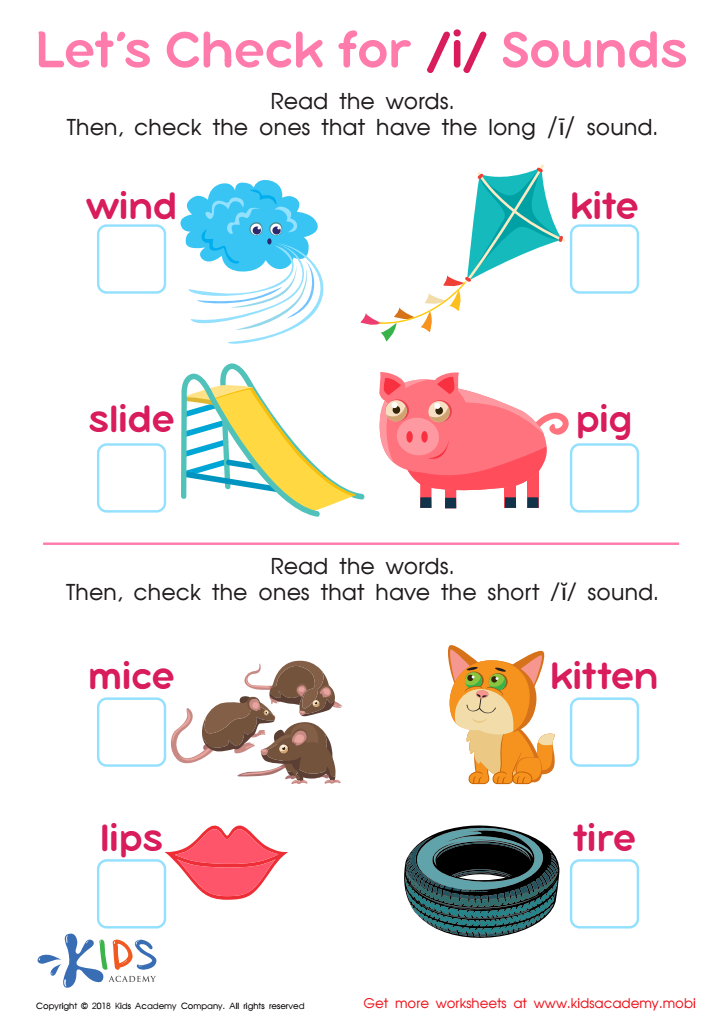
This fun worksheet with pictures boosts phonics skills - differentiating between long «ī» and short «i» sounds in 1- and 2-syllable words. Kids use picture clues to read words, then check off the correct ones. It's a great way for new readers to practice early reading skills and find success on their own.
Let's Check for «i» Sounds Worksheet

Worksheet


Phonics recognition and understanding of letter sounds are crucial for children aged 3-7. This period is a critical stage in early childhood development where foundational literacy skills are formed. Phonics teaches children the relationships between letters and sounds, enabling them to decode words when reading.

For young learners, this skill is crucial as it lays the groundwork for fluency and comprehension. By recognizing letter sounds, children can improve their ability to spell, enhance their vocabulary, and develop a love for reading. Phonics instruction supports memory and cognitive skills by encouraging pattern recognition, aiding in overall academic success.

Moreover, early proficiency in phonics boosts children’s confidence and helps prevent future reading struggles, which are often linked to academic challenges in other subjects. Giving children the tools to read and write effectively at a young age sets a positive trajectory for lifelong learning. Parents and teachers, as primary influencers in a child's early education, play an essential role in facilitating this learning. Engaging activities that incorporate phonics can make the learning process enjoyable and effective. Prioritizing phonics recognition empowers children to become independent, successful readers, fostering a solid educational foundation and instilling a sense of achievement and joy in learning.