Rhyming skills Rhyming Worksheets for Ages 3-7
3 filtered results
-
From - To
Explore our engaging rhyming worksheets specifically designed for children ages 3-7 at Kids Academy! These interactive resources foster essential literacy skills by making learning fun and enjoyable. Each worksheet encourages children to recognize rhyming patterns, match similar sounds, and enhance their vocabulary, all while developing critical thinking skills. With colorful illustrations and age-appropriate activities, our worksheets keep young learners motivated and excited about language. Perfect for both at-home learning and classroom activities, our rhyming exercises are a valuable tool for nurturing confidence in reading and language development. Unlock your child’s creativity and language skills with our delightful rhyming worksheets today!
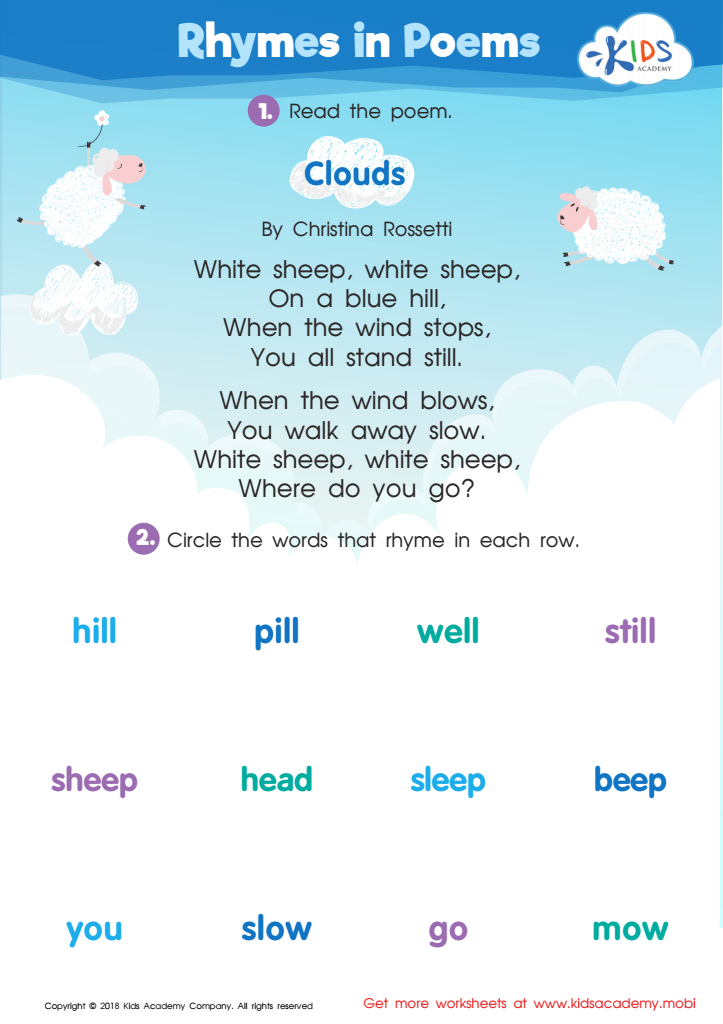
Rhymes in Poems Worksheet
 Assign to My Students
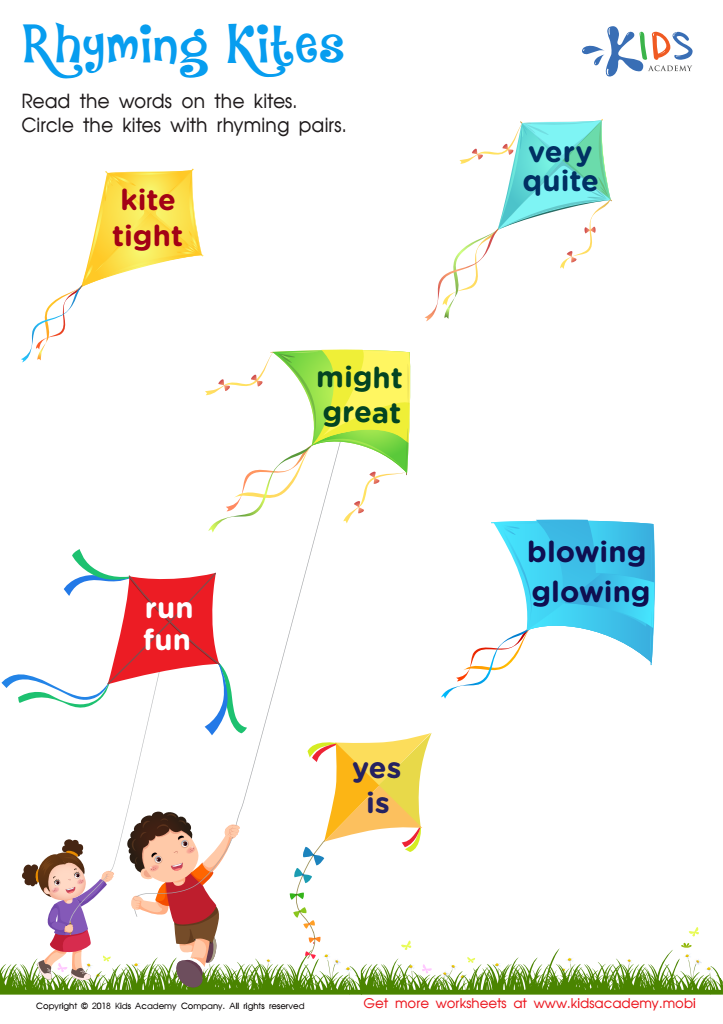
Rhyming Kites Worksheet
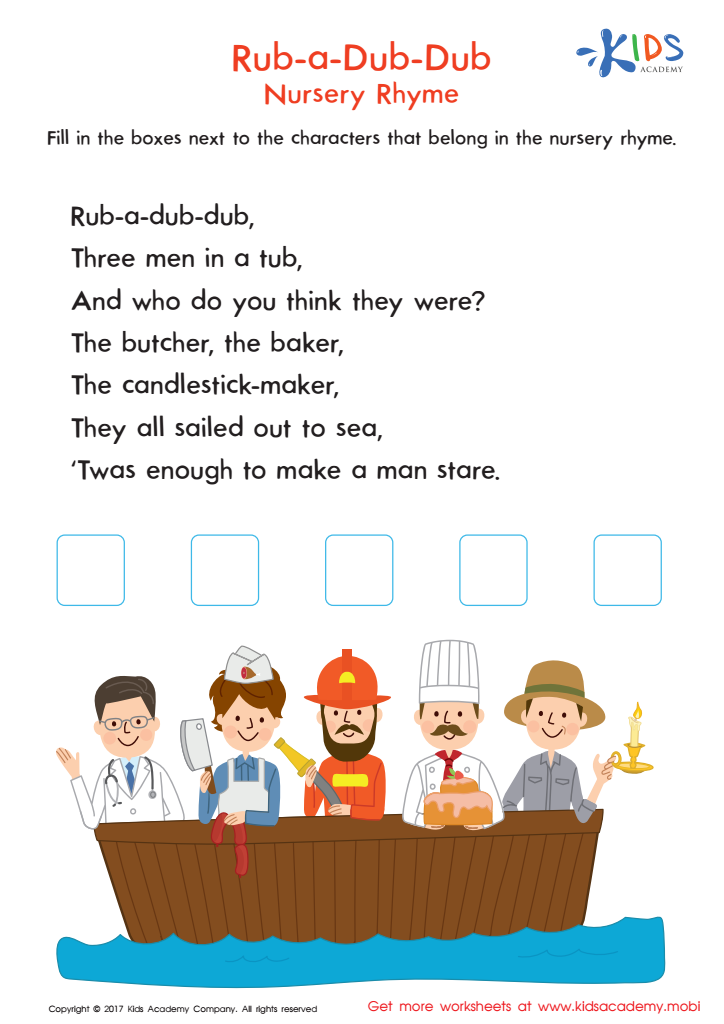
Rub a Dub Dub Printable








Rhyming skills are vital for children aged 3 to 7 as they lay the foundation for early literacy and language development. Understanding rhyme helps children recognize phonemic awareness—the ability to hear, identify, and manipulate sounds in words. This skill is crucial for developing reading abilities, as it enhances their understanding of word formation and spelling patterns.
Additionally, rhyming fosters vocabulary expansion. When children engage with rhyming words through songs, books, and games, they encounter new words and their meanings in a playful context, making it easier to remember and use them in conversation. Furthermore, the rhythmic nature of rhymes captures children's attention and makes learning enjoyable, promoting positive attitudes toward reading and language.
Socially and emotionally, rhyming activities can help develop listening and communication skills. They often involve turn-taking and sharing, which teach collaboration and patience. Finally, rhyming strengthens memory skills; the repetitive nature of rhyme makes it easier for children to recall and recite phrases, enhancing cognitive functions linked to memory retention. Overall, nurturing rhyming skills equips children with essential tools for academic success and lifelong language proficiency, making it a critical area of focus for parents and educators alike.







