Long vowel recognition Vowels and Consonants Worksheets for Ages 3-7
3 filtered results
-
From - To
Enhance your child's reading skills with our engaging Long Vowel Recognition Worksheets, designed specifically for ages 3-7. These vibrant and interactive activities help young learners identify long vowels through fun exercises and captivating themes. By mastering long vowels, children will build a strong foundation for reading fluency and comprehension. Our worksheets feature a variety of engaging formats, including matching, tracing, and fill-in-the-blank challenges, all aimed at making learning enjoyable. Whether in the classroom or at home, these resources are perfect for supporting early literacy development in a playful and effective way. Explore our collection today and help your child discover the joys of reading!
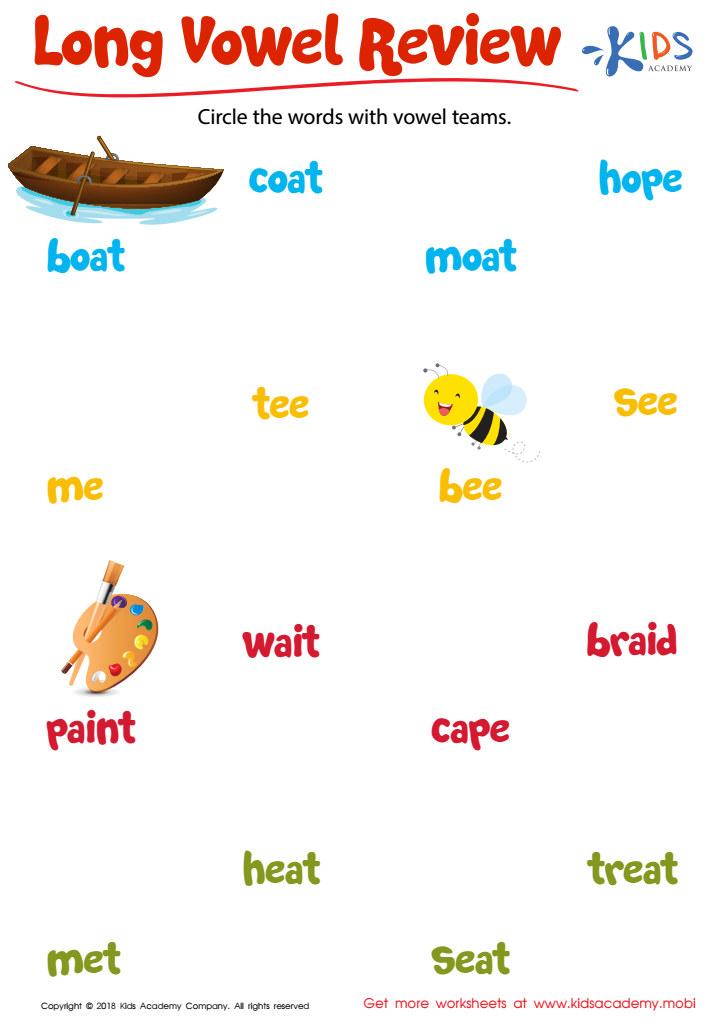
Long Vowel Review Worksheet
 Assign to My Students
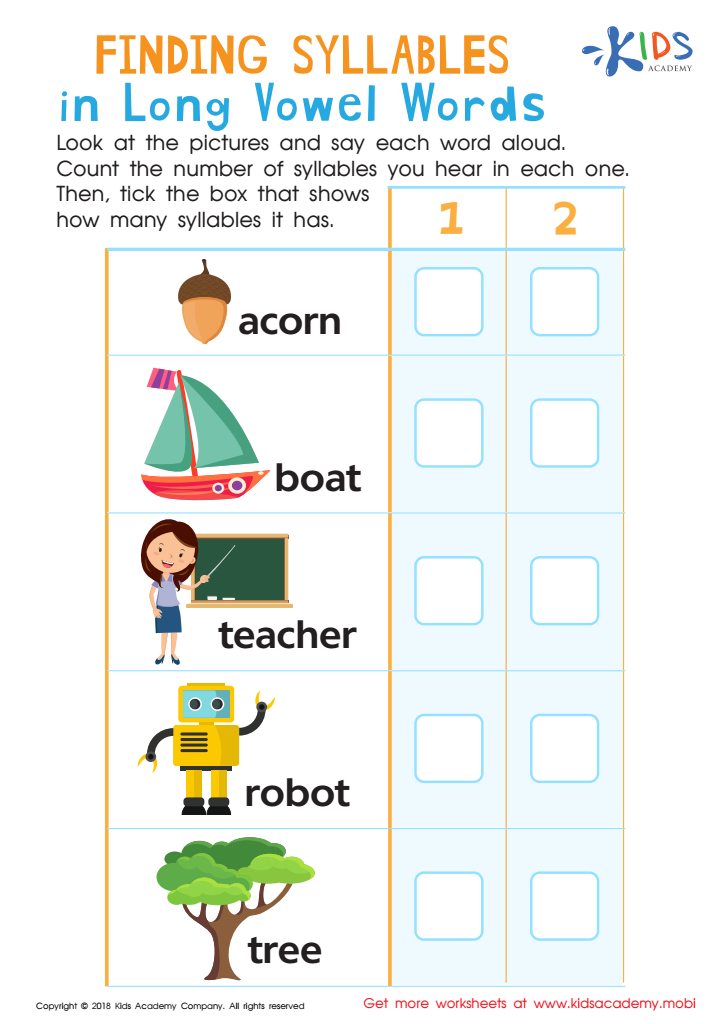
Finding Syllables in Long Vowel Words Worksheet
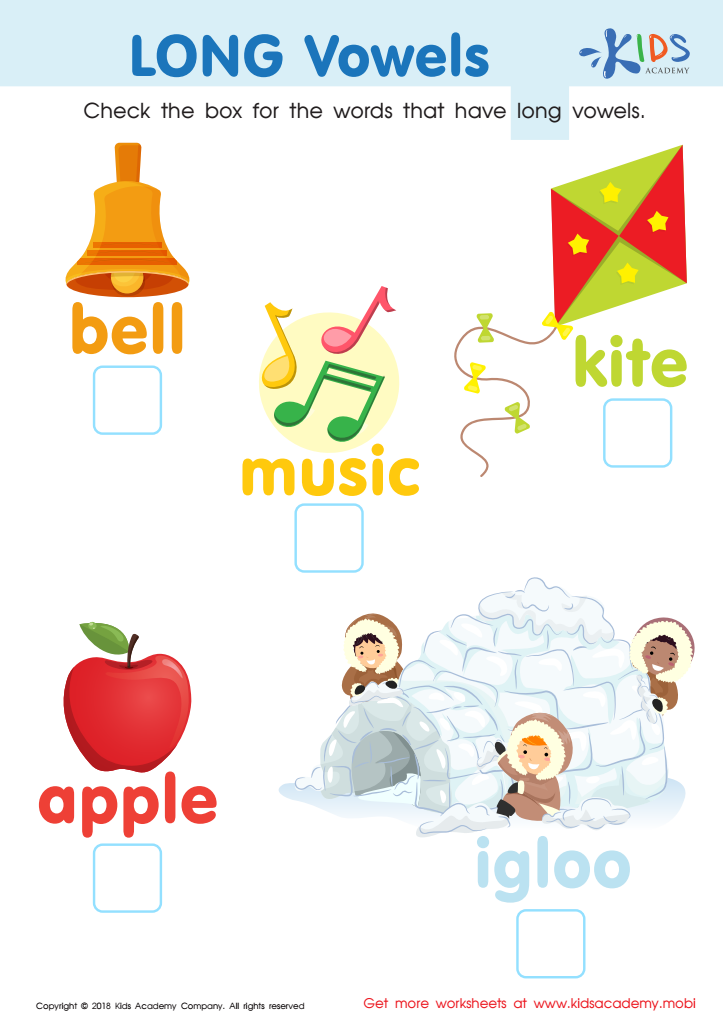
long vowels Worksheet



Understanding long vowel recognition is crucial for children aged 3-7 as it forms a foundational skill for literacy development. Long vowels are key in distinguishing between simple sounds and their meanings, enabling children to pronounce and recognize words accurately. When children can identify long vowels, they boost their reading fluency, comprehension, and spelling abilities, allowing them to progress from simple phonetic awareness to more complex literacy skills.
For parents and teachers, fostering long vowel recognition is essential because it enhances children's confidence in reading. Engaging in activities that highlight long vowels—through songs, rhymes, and games—can make learning enjoyable and can also strengthen the bond between adults and children. As children begin to connect sounds with letters, they develop critical thinking and problem-solving skills as they decode words, which are vital for their academic success.
Moreover, recognizing vowels and consonants helps children understand the structure and rhythm of language, improving their verbal communication. By prioritizing long vowel recognition in early education, adults can set the stage for lifelong literacy and learning, ensuring that children are well-equipped to navigate their educational journeys and beyond. This investment in foundational skills pays off as they progress through their schooling and daily lives.







