
Reading Skills Vowels and Consonants Worksheets for Ages 3-7
3 filtered results
Difficulty Level
Grade
Age
-
From - To
Subject
Activity
Standards
Discover our engaging "Reading Skills: Vowels and Consonants Worksheets" designed specifically for children ages 3-7! These worksheets provide a fun and interactive way for young learners to master the foundation of reading. Through vibrant activities, kids will identify and differentiate between vowels and consonants, enhancing their phonemic awareness. Each worksheet encourages letter recognition, sound association, and word building, making learning enjoyable. Perfect for homeschooling or classroom settings, our resources support early literacy development in a creative, kid-friendly manner. Jumpstart your child's reading journey today with our comprehensive and delightful worksheets tailored to foster a love for reading!
Favorites
With answer key
Interactive
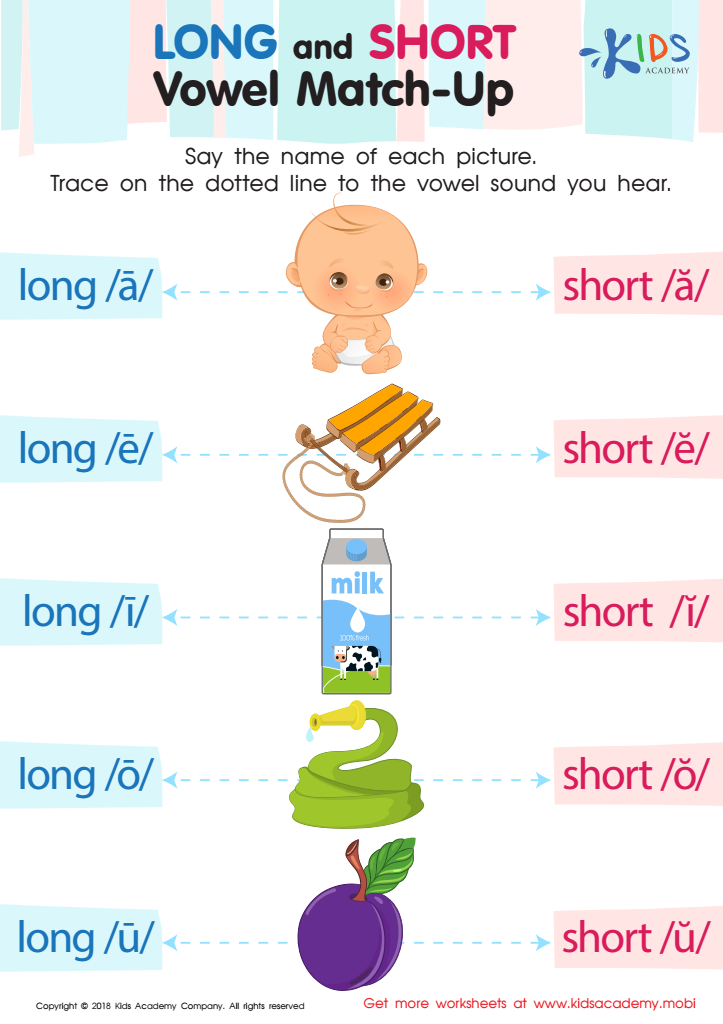
Long and Short Vowel Match up Reading Worksheet
Help your reader build confidence and refine their decoding skills! This worksheet combines long and short vowel recognition with a traceable component to improve fine motor skills. Your learner will name each picture and trace the dotted lines to get to the correct vowel sounds.
 Assign to My Students
Long and Short Vowel Match up Reading Worksheet
Worksheet
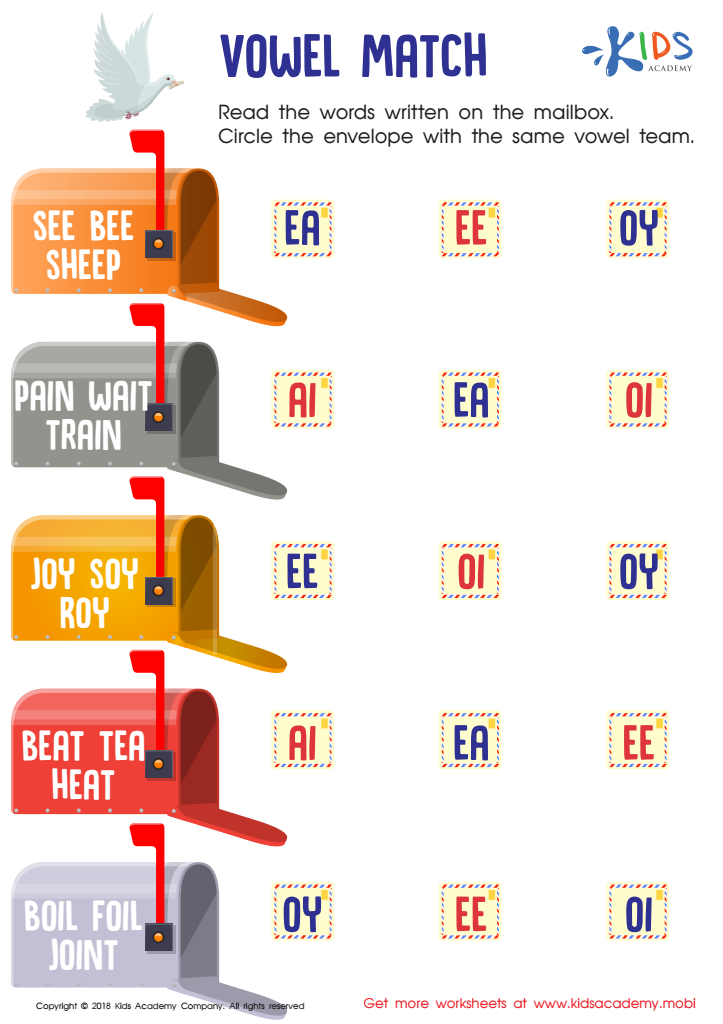
Vowel match Worksheet
Early readers can find vowel teams (digraphs) tricky. This simple worksheet helps kids match words with the right digraphs and learn to read! They'll practice reading words from different families, and linking the letters to their sounds. It's a fun way to get kids sending letters to the right addresses!
Vowel match Worksheet
Worksheet
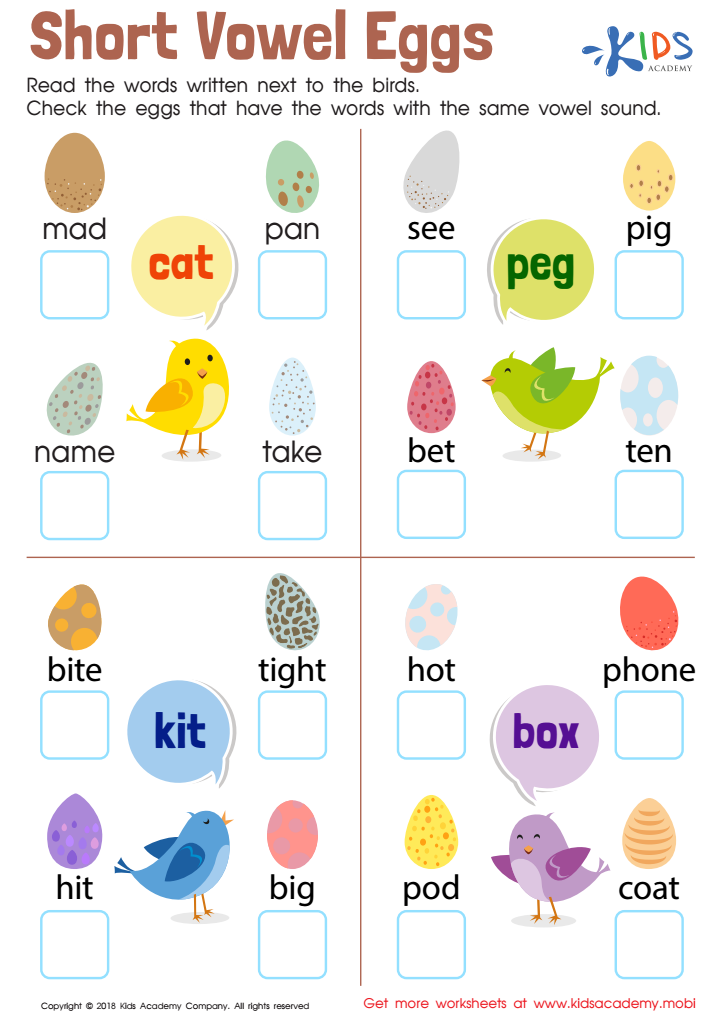
Short Vowel Eggs Worksheet
Your students will love helping these birdies pick the short vowel eggs! Have them read the words in the thought bubbles, then check off the boxes with the same short vowel sounds. The bright colors of this free Worksheet will draw them in and get them practicing their vowels!
Short Vowel Eggs Worksheet
Worksheet
Join Kids Academy for Free
Who is primarily going to use this learning content?



Reading skills, particularly understanding vowels and consonants, are essential for children aged 3 to 7 as they lay the foundation for literacy. At this age, children are naturally curious and eager to learn, making it the ideal time to introduce them to the building blocks of language. Vowels and consonants form the backbone of forming words, and recognizing these letters aids in phonemic awareness, which is crucial for reading success.
Parents and teachers should prioritize teaching these skills because they facilitate early reading, critical thinking, and communication. When children grasp the role of vowels and consonants, they can decode words, thereby gaining confidence in their reading abilities. This confidence translates into a love for reading, which has a long-lasting impact on academic performance.
Furthermore, these skills promote language development and enhance vocabulary acquisition. Engaging children in playful activities that involve vowels and consonants can also strengthen their cognitive functions, such as memory and problem-solving skills. By focusing on reading at this early age, parents and teachers can nurture lifelong learners who value literacy as a key component of personal growth and success in their education journey. Investing early in reading skills helps ensure children are well-prepared for future academic challenges.







