Chess knowledge Chess Worksheets for Ages 3-7
3 filtered results
-
From - To
Introduce your little ones to the exciting world of chess with our engaging Chess Knowledge Worksheets designed for ages 3-7! These playful and educational resources make learning the basics of chess fun and interactive. Each worksheet helps young minds develop critical skills such as problem-solving, strategic thinking, and concentration. With colorful illustrations and age-appropriate activities, children will enjoy exploring chess pieces, understanding their movements, and discovering fundamental game rules. Perfect for parents and educators alike, these worksheets provide a fantastic way to nurture a love for chess and boost cognitive abilities in a creative environment. Start your chess journey today!
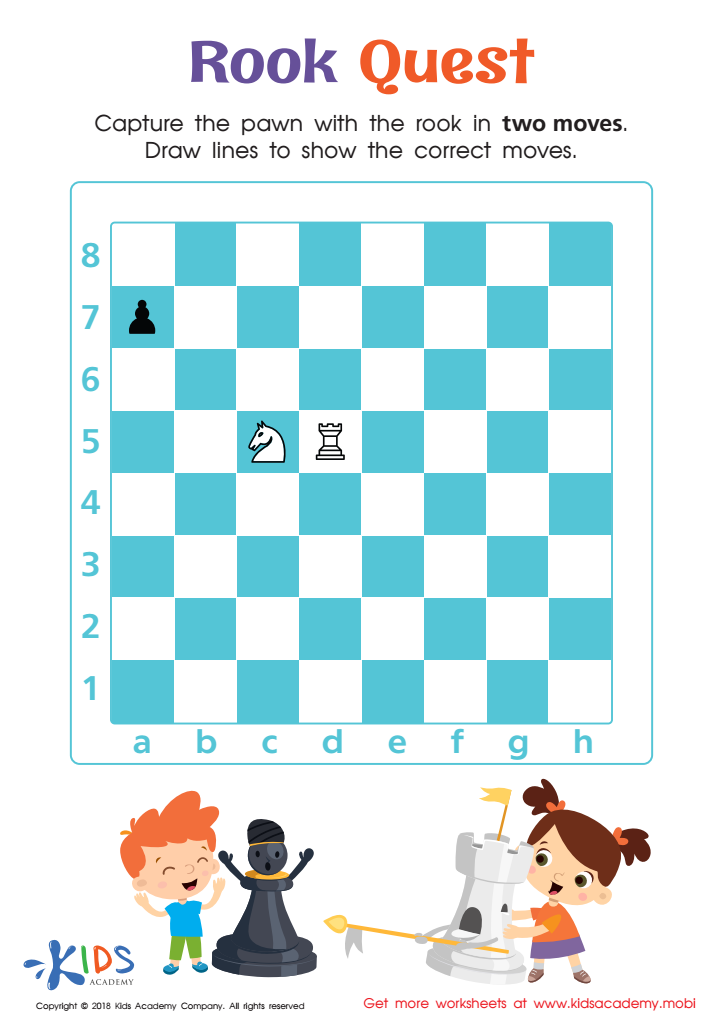
Rook Quest Worksheet
 Assign to My Students
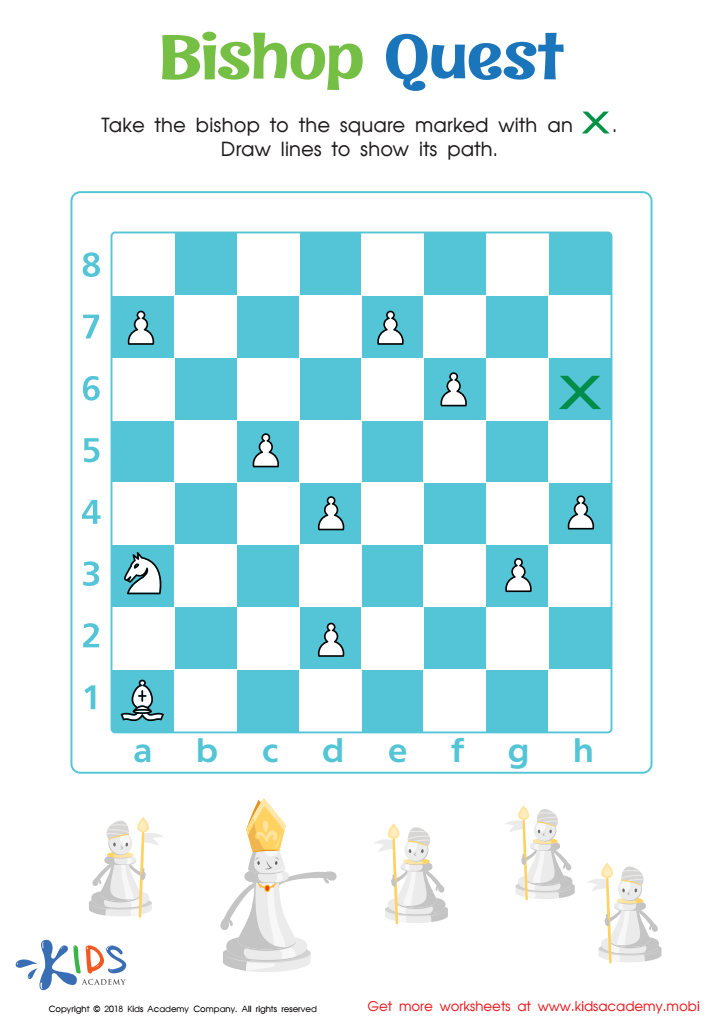
Bishop Quest Worksheet
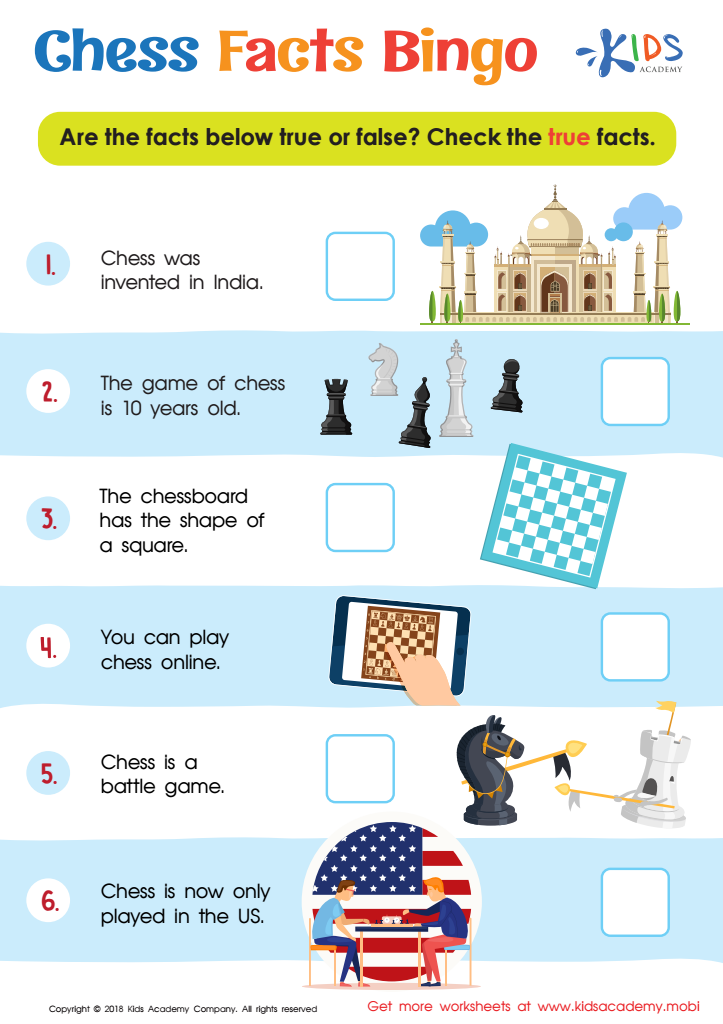
Chess Facts Bingo Worksheet







Teaching chess to children aged 3-7 can significantly benefit their cognitive, social, and emotional development. First, chess enhances critical thinking and problem-solving skills. Young players learn to evaluate positions, anticipate opponents' moves, and strategize their own, fostering a mindset that becomes valuable in academic settings.
Additionally, chess encourages patience and resilience. Children learn that losing is part of the game and develop a healthy attitude towards competition and setbacks. They cultivate perseverance, as they must analyze situations, rethink strategies, and try again, skills that translate to various life challenges.
Furthermore, chess promotes concentration and focus. The game requires sustained attention, helping young learners practice staying engaged and resisting distractions.
Socially, chess teaches children about following rules and respecting opponents, nurturing good sportsmanship and interpersonal skills. It also provides a platform for interaction and collaboration, whether through organized club play or casual games with peers.
Instilling a love for chess in young children not only enriches their playtime but also prepares them for future academic success and personal growth. For parents and educators, fostering interest in chess is an investment in their children's overall development and lifelong learning skills.