Decision making skills Chess Worksheets for Ages 3-7
3 filtered results
-
From - To
Enhance your child's decision-making skills with our engaging Chess Worksheets designed for ages 3-7! These printable resources introduce young learners to chess concepts while promoting critical thinking and strategic planning. Each worksheet encourages creativity and problem-solving as children navigate fun scenarios and choose their best moves. With colorful illustrations and age-appropriate activities, these worksheets make learning exciting and informative. Perfect for parents and educators, these tools foster cognitive development and help build confidence in decision-making. Introduce your child to the world of chess and watch them grow into skilled thinkers through play! Start their journey towards strategic excellence today!
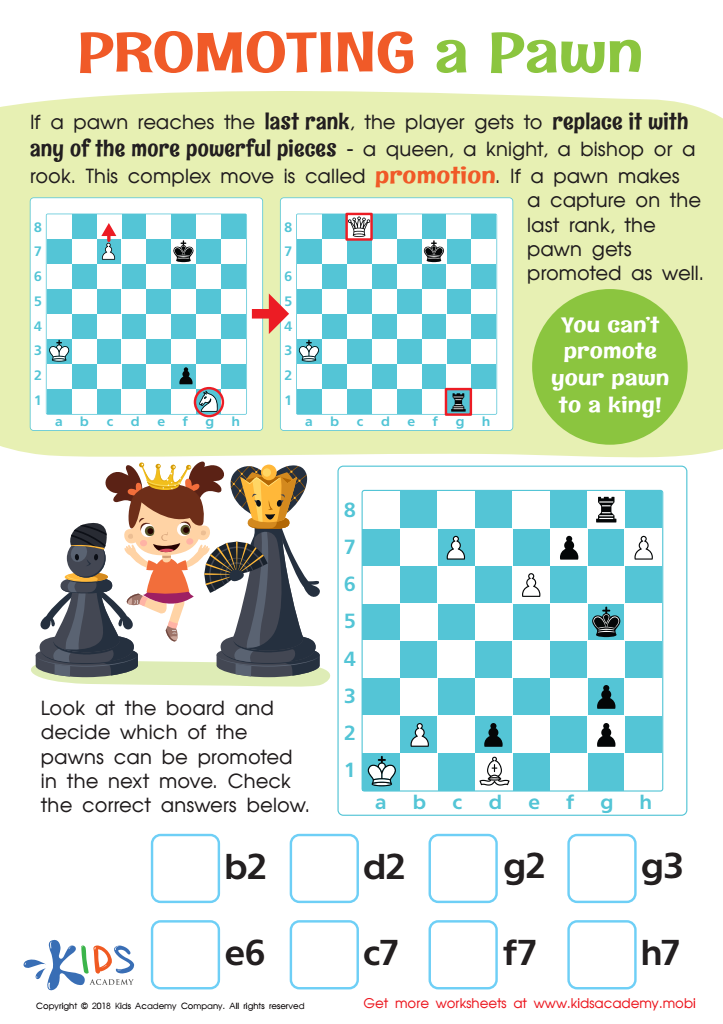
Promoting a Pawn Worksheet
 Assign to My Students
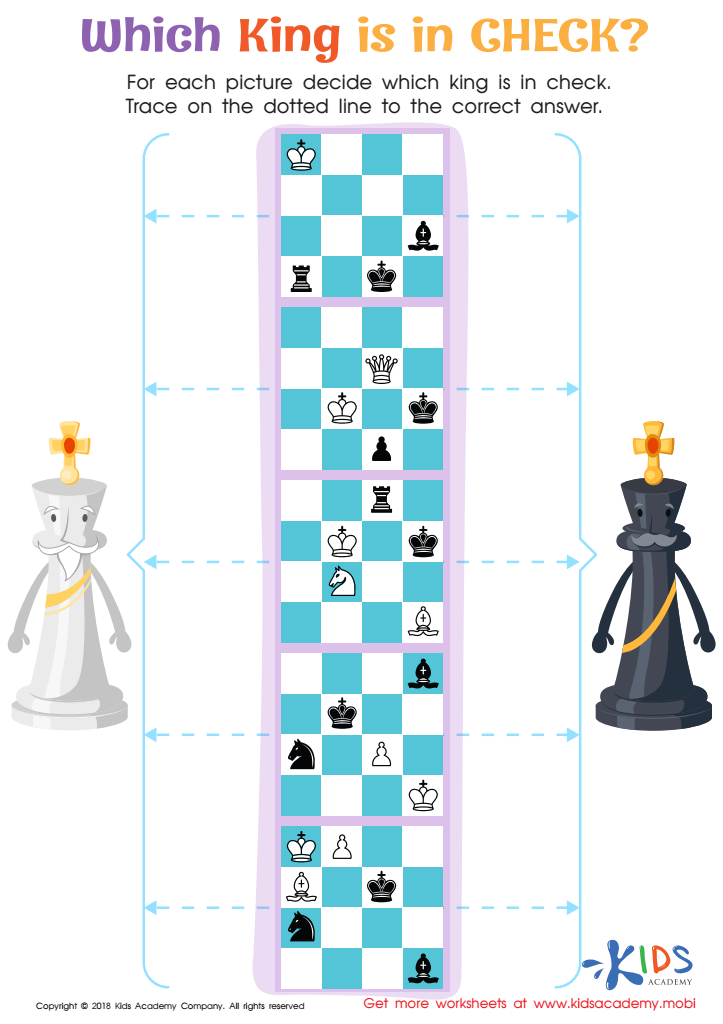
Which King is in Check? Worksheet
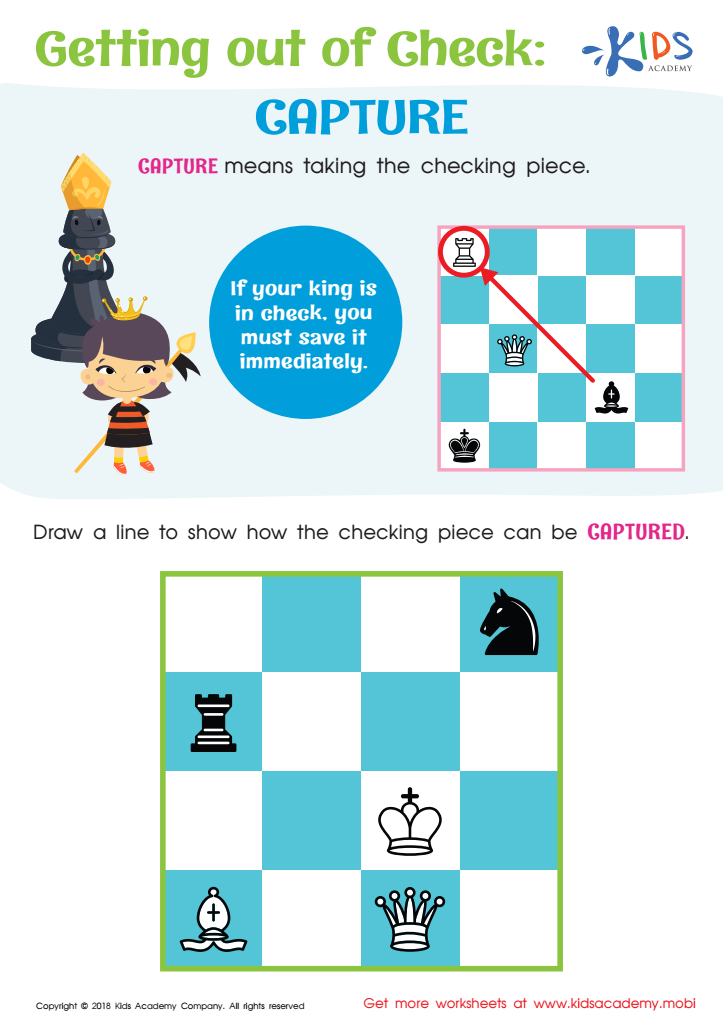
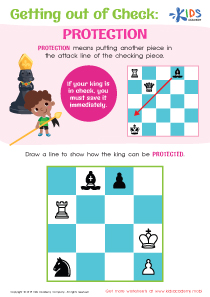
Getting out of Check: Capture








Parents and teachers should care about developing decision-making skills through chess for children aged 3-7 because these skills lay the foundation for important cognitive and social abilities. Chess is not merely a game; it is an engaging tool that teaches strategic thinking, patience, and the consequences of one's actions. For young learners, making decisions on the chessboard involves problem-solving, critical thinking, and foresight – all key skills they will use throughout their lives.
At an early age, children are naturally curious and eager to learn. Introducing them to chess can nurture these qualities by encouraging them to think ahead, anticipate their opponent’s moves, and adapt their strategies accordingly. Moreover, playing chess promotes fairness and sportsmanship, helping children understand the importance of good manners and respect, even in competition.
Furthermore, regular chess practice can enhance concentration levels and improve memory, serving as an effective cognitive workout. These cognitive gains can translate to better performance in school-related tasks, fostering a love for learning. By supporting chess education, parents and teachers empower children to become confident decision-makers who think critically in various aspects of life, both academically and personally.