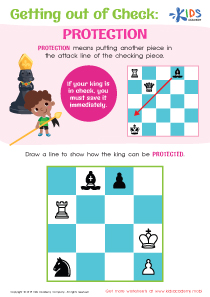
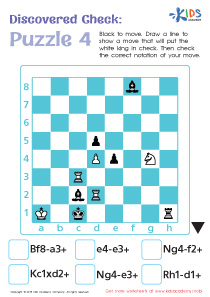
Spatial awareness Chess Worksheets for Ages 3-7
3 filtered results
-
From - To
Our Spatial Awareness Chess Worksheets for ages 3-7 enhance young minds’ understanding of spatial concepts through fun and interactive chess activities. Designed to develop crucial cognitive skills, these worksheets help children grasp distance, position, and movement on the chessboard. Through engaging exercises, kids will learn to visualize moves, predict opponent actions, and improve problem-solving abilities. Perfect for early learners, these educational printables combine playful visuals with effective learning techniques, setting a solid foundation for both chess mastery and overall spatial intelligence. Empower your child's growth with our expertly crafted resources, tailored to nurture young strategic thinkers!
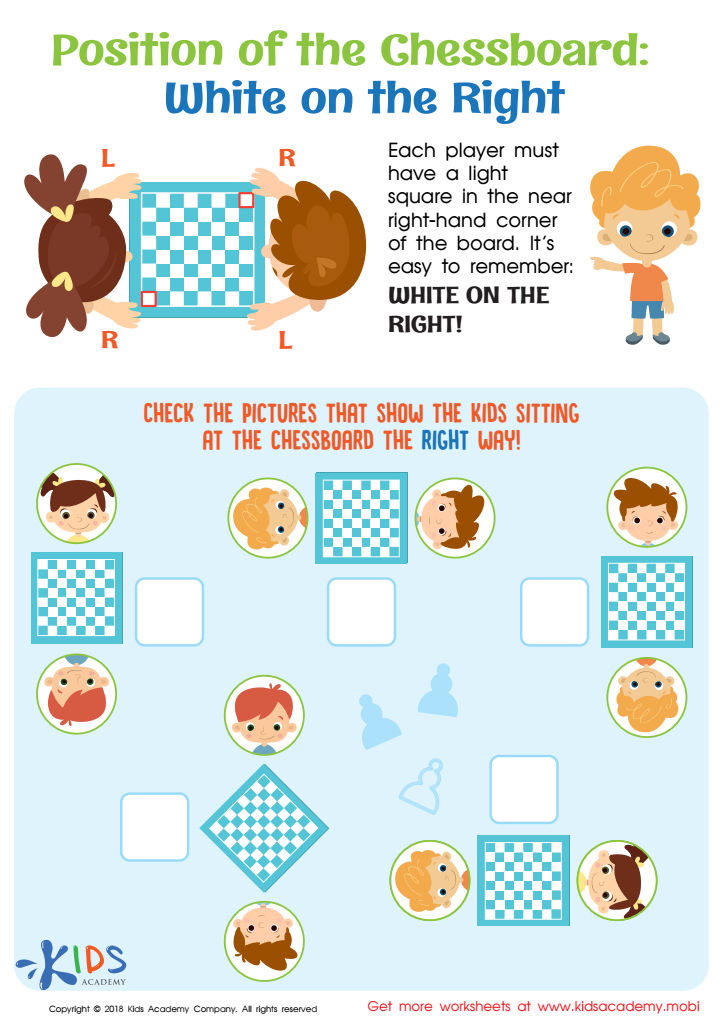
Position of the Chessboard: White on the Right Worksheet
 Assign to My Students
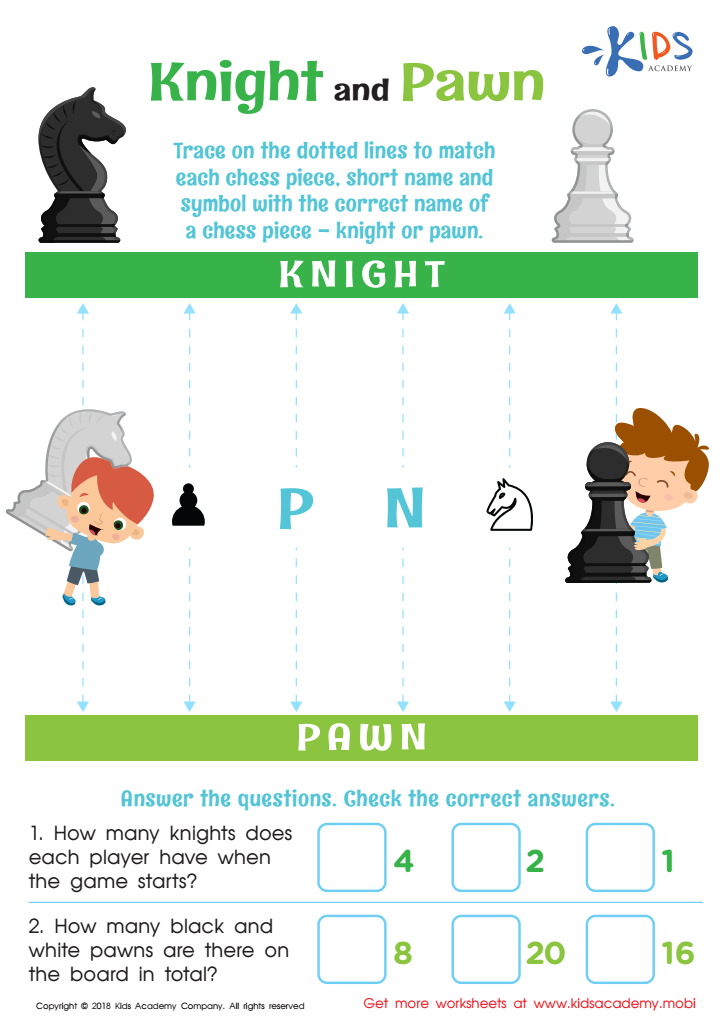
Knight and Pawn Worksheet
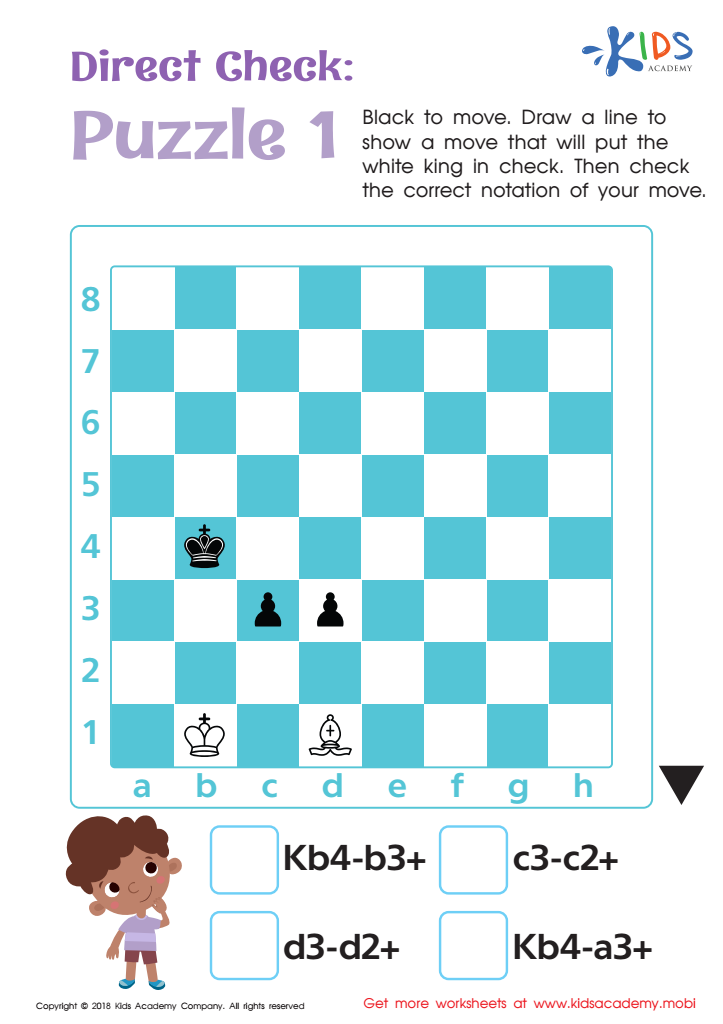
Direct Check: Puzzle 1 Worksheet








Spatial awareness is a vital cognitive skill that helps children understand their surroundings and the relationships between objects. Introducing young children, ages 3-7, to chess can significantly enhance their spatial awareness, bringing long-term cognitive and developmental benefits.
Chess, a game that involves spatial understanding and strategic thinking, challenges children to visualize the board, predict future moves, and comprehend abstract spatial relationships. When kids as young as three start playing with simple versions or components of chess, they engage in recognizing patterns, developing memory related to spatial positioning, and planning ahead—all key facets of spatial awareness.
Strengthening these skills early on aids children in other academic areas, such as math and science, where spatial thinking is crucial. It also helps with daily activities, like navigating their environment and understanding spatial relations in construction play, leading to more precise hand-eye coordination and body awareness.
Teachers and parents should care about incorporating chess in early education because it fosters critical thinking, problem-solving, and decision-making from a young age. These are foundational skills that will benefit children far beyond the chessboard. Encouraging a child's interest in chess can provide a fun, engaging way to boost their cognitive development and equip them with essential life skills.