Fine Motor Skills Color Words Worksheets for Ages 3-7
4 filtered results
-
From - To
Enhance your child's fine motor skills while learning color words with our fun and engaging worksheets designed for ages 3-7! These expertly crafted activities not only help young learners recognize colors and enhance their vocabulary but also strengthen their hand-eye coordination and pencil control. Ideal for preschool and early elementary students, each worksheet offers a variety of tasks like tracing, coloring, and sorting. Perfect for homeschooling or classroom use, these printable resources ensure that learning is both enjoyable and educational. Foster your child’s development through interactive play and give them a head start on essential writing skills!
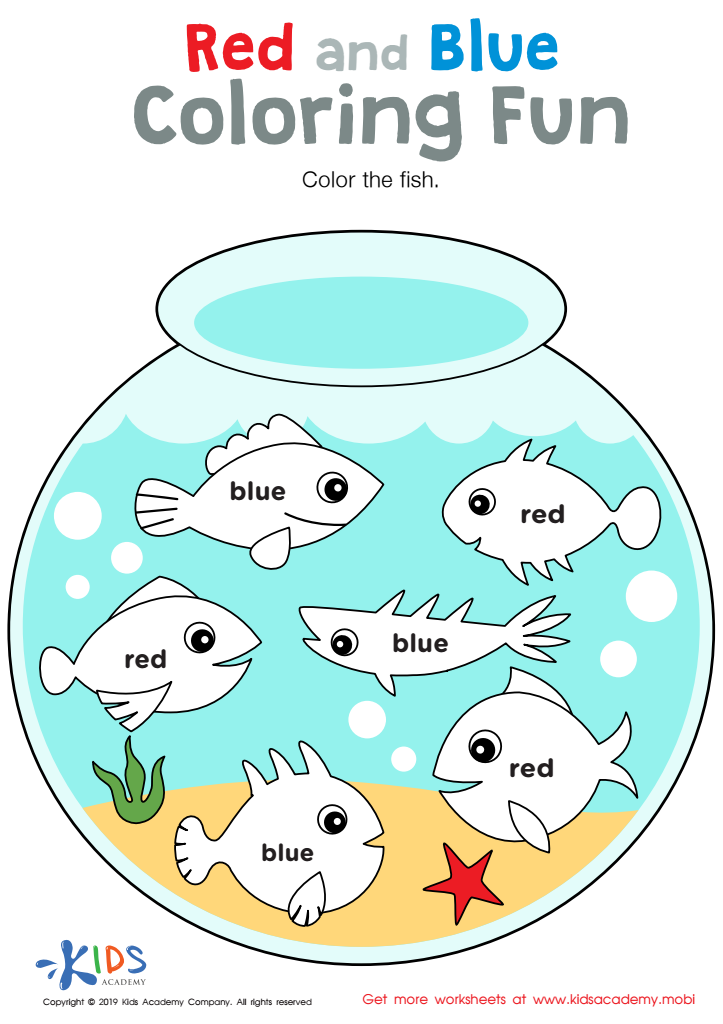
Red and Blue Coloring Fun Worksheet
 Assign to My Students
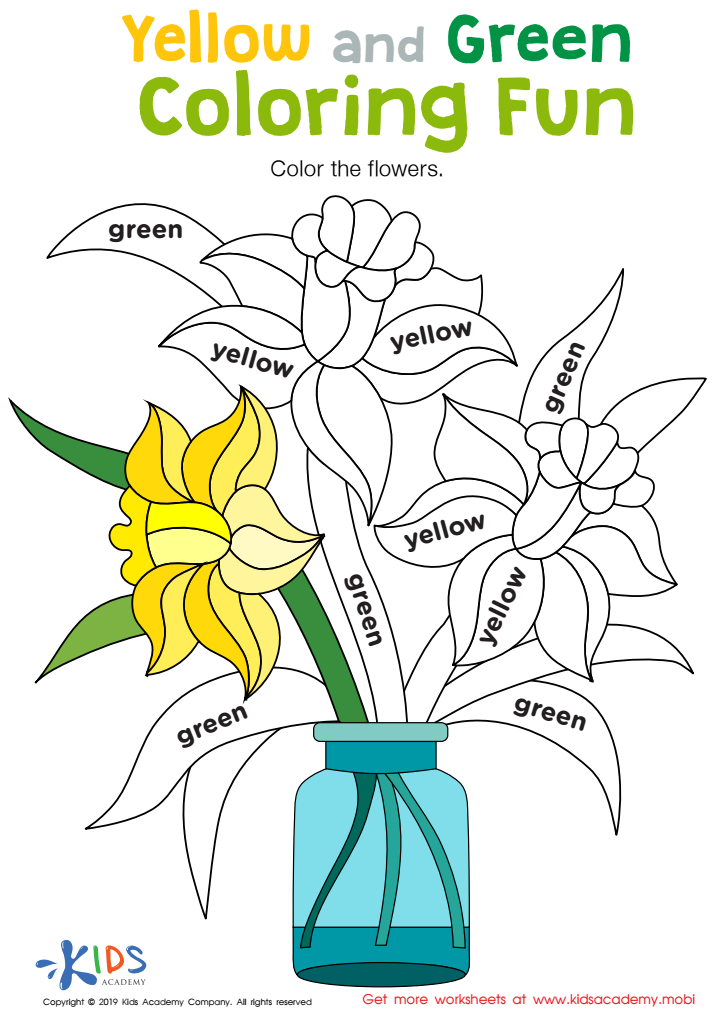
Yellow and Green Coloring Fun Worksheet
Assign to My Students
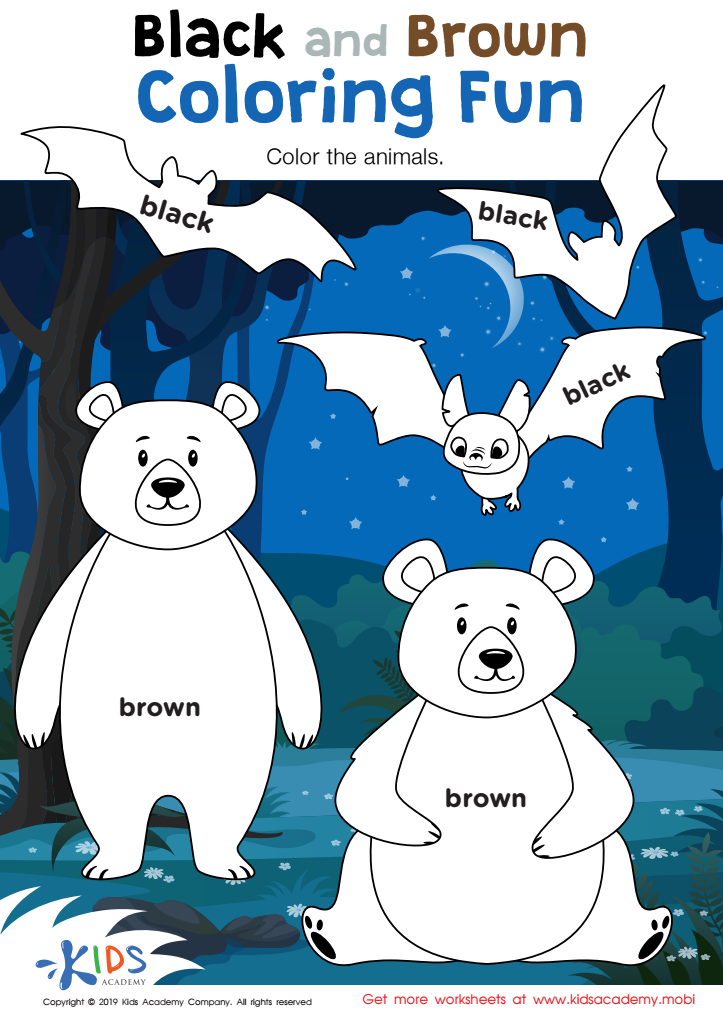
Black and Brown Coloring Fun Worksheet
Assign to My Students
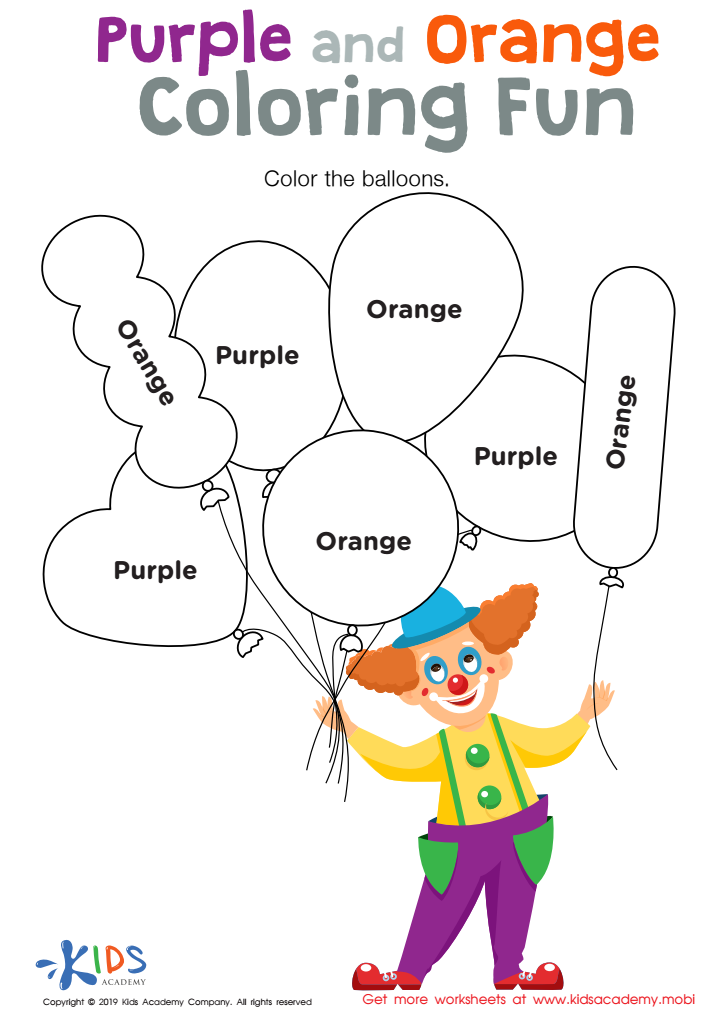
Purple and Orange Coloring Fun Worksheet
Assign to My Students



Fine motor skills color words are essential activities that help young children, ages 3-7, develop crucial hand-eye coordination, precision, and control. These skills involve the coordination of small muscle movements, primarily in the hands and fingers, which are vital for daily tasks such as writing, buttoning clothes, and using scissors. By incorporating color words into fine motor skill activities, children not only enhance their physical dexterity but also simultaneously build their cognitive and linguistic abilities.
For instance, asking children to trace, color, or manipulate objects labeled with color words helps them recognize and learn colors, boosts their vocabulary, and structures language development. It integrates cognitive learning with tangible activities, making it easier for young minds to grasp abstract concepts in a fun and engaging manner.
Additionally, refining these skills early on sets the foundation for academic success. Strong fine motor skills facilitate efficient writing, drawing, and other classroom-related tasks, contributing to a smoother transition into more complex educational requirements. Parents and teachers who focus on developing these abilities are directly supporting a child's independence, confidence, and overall learning potential, ensuring they are well-prepared for both academic and everyday life challenges.








