Addition of fractions Worksheets for Ages 3-7
3 filtered results
-
From - To
Welcome to our engaging Addition of Fractions Worksheets designed specifically for ages 3 to 7! These fun and interactive materials introduce young learners to the fundamental concepts of fractions through colorful visuals and engaging activities. Tailored to foster early mathematics skills, our worksheets provide a hands-on approach to understanding how to add fractions. Children will explore concepts with illustrations that make learning easy and enjoyable. Perfect for both classroom use and at-home learning, our resources support essential number sense development, paving the way for future math confidence. Download now to spark a love for learning and mathematics in your early learners!
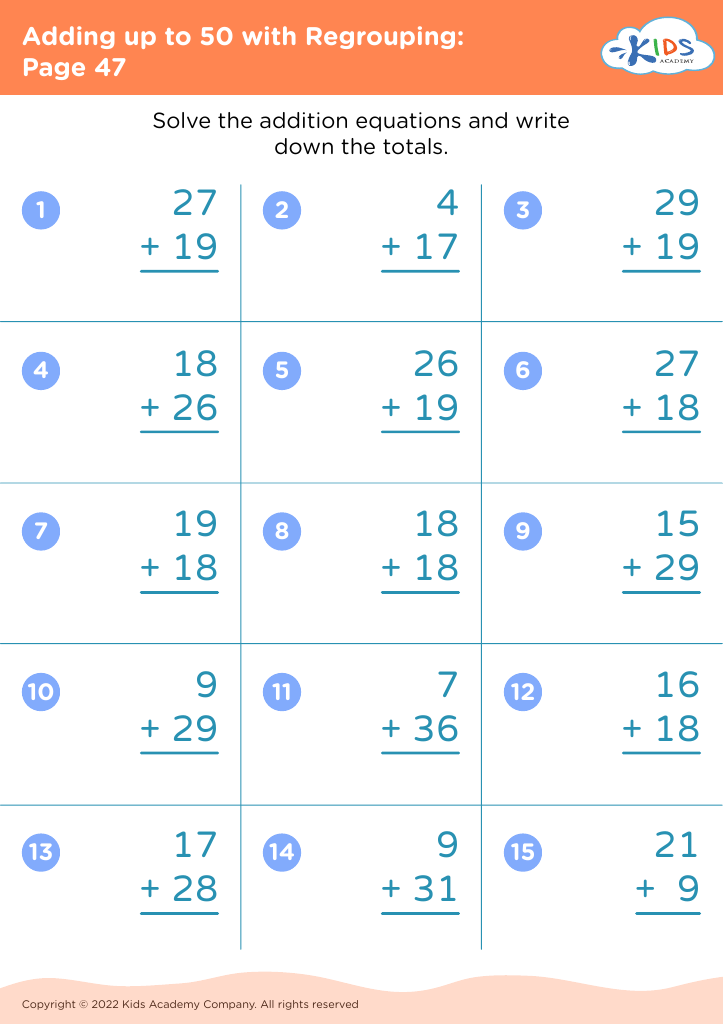
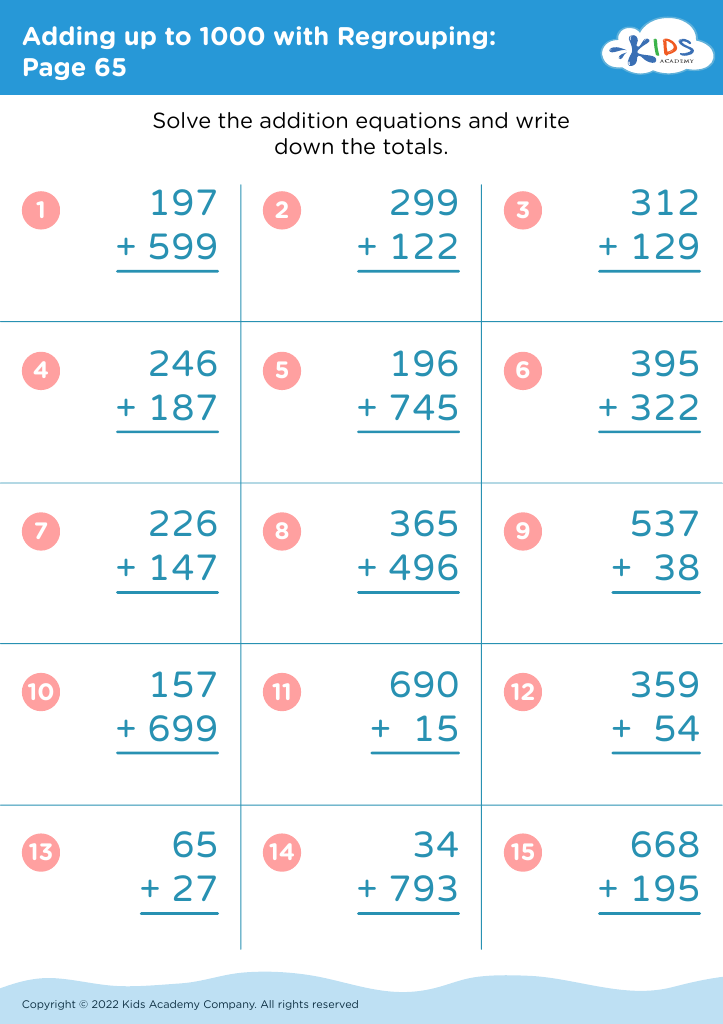
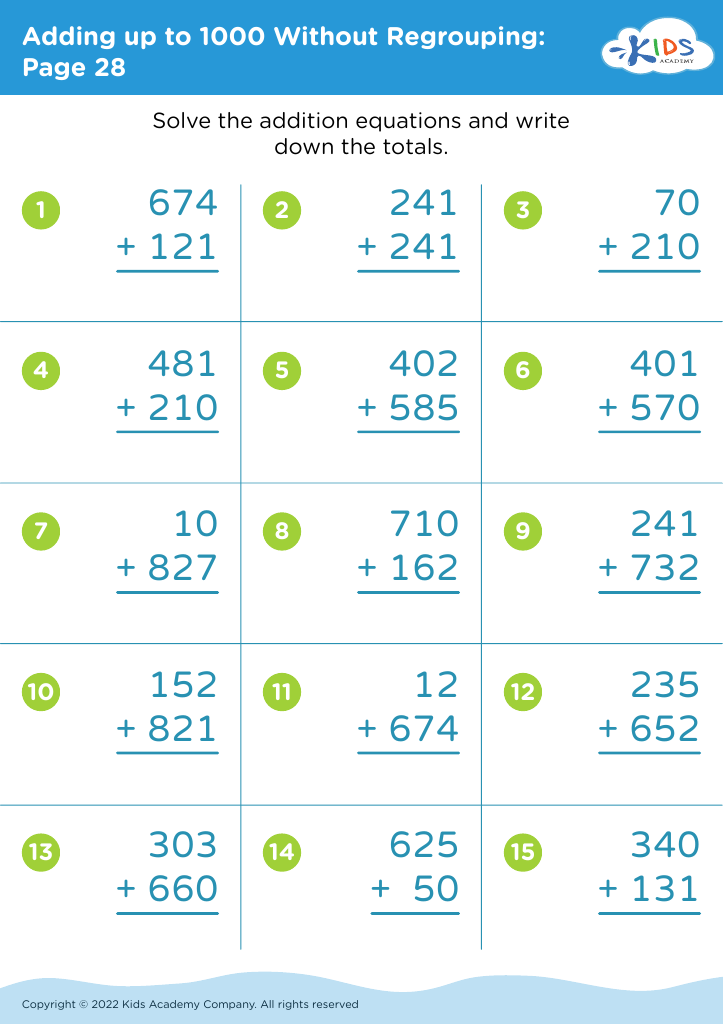







Understanding the addition of fractions is vital for children aged 3-7 as it lays the groundwork for their mathematical development. At this early stage, children are absorbing foundational concepts that will influence their future attitudes towards math. When parents and teachers emphasize fraction addition, they help young learners build essential skills in number sense and problem-solving.
Fractions introduce kids to the idea of parts of a whole, enhancing their spatial awareness and critical thinking. Engaging with addition of fractions fosters a basic understanding of equivalence and the relationships between numbers, which is crucial for further mathematical concepts like division and ratios. This early exposure ignites curiosity and facilitates a smoother transition into more complex topics in later grades.
Moreover, integrating hands-on activities, such as sharing snacks or using fraction bars, makes learning engaging and relatable. This not only enhances comprehension but encourages communication skills as children describe their reasoning. Ultimately, when parents and educators prioritize understanding of fractions, they empower children with confidence and a positive attitude towards math, setting the stage for success in their academic journeys.








