Alphabetical order practice Worksheets for Ages 3-7
3 filtered results
-
From - To
Introducing our "Alphabetical Order Practice Worksheets for Ages 3-7," designed to enhance your child’s early literacy skills! These engaging worksheets help young learners grasp the fundamentals of alphabetical order through fun activities and exercises. Perfect for preschool to early elementary students, our worksheets provide a solid foundation in recognizing and organizing letters, aiding their reading and writing development. With colorful illustrations and thoughtfully crafted tasks, kids will stay engaged while learning. Great for both classroom and at-home practice, these worksheets are an essential tool for fostering a lifelong love of learning in your little ones!
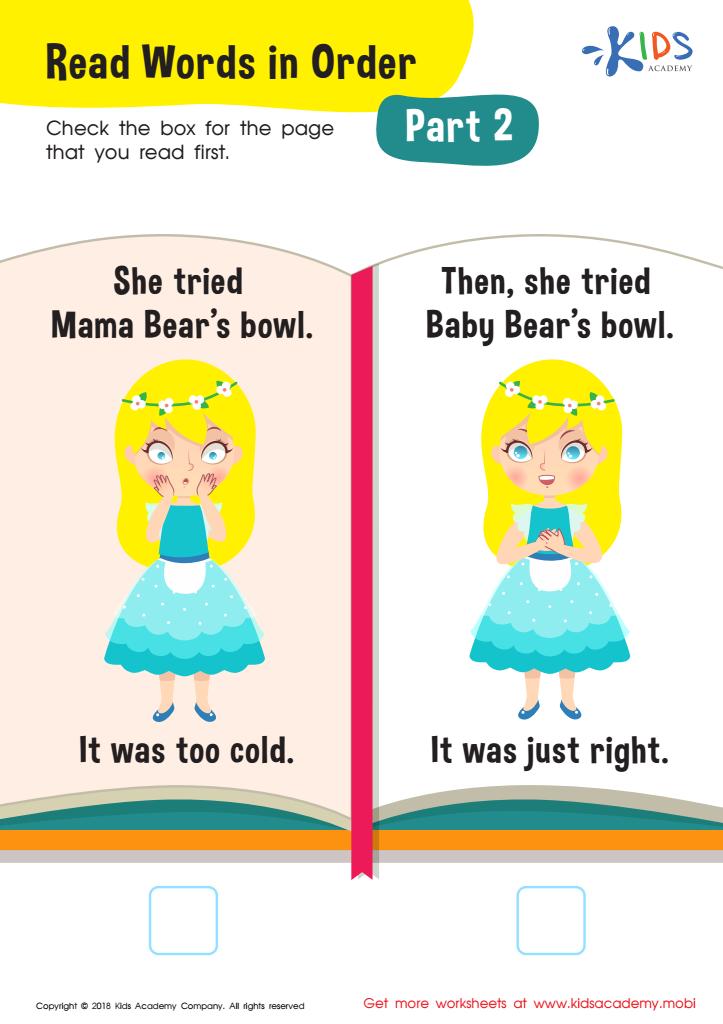
Read Words Order Part 2 Worksheet
 Assign to My Students







Practicing alphabetical order is vital for young children aged 3-7 for several key reasons. Firstly, it lays the foundation for literacy skills by familiarizing children with the sequence of letters in the alphabet, an essential building block for reading and writing. Recognizing and ordering letters boosts their ability to classify and organize information, which enhances cognitive development and problem-solving skills.
Secondly, understanding alphabetical order helps in the development of phonemic awareness — the recognition of individual letter sounds and their correspondence to written symbols. This relationship is crucial for decoding words in reading and encoding them in writing, facilitating smoother transitions to more advanced literacy tasks.
Moreover, engaging in alphabetical order activities broadens vocabulary and language skills. Children are exposed to new words and their correct sequencing, improving both comprehension and memory retention. Fun, hands-on activities like alphabet games, puzzles, and songs make this practice enjoyable, fostering a positive learning attitude in young children.
Lastly, early mastery of alphabetical order equips children with the organizational skills necessary for school activities, such as looking up books in a library or using dictionaries and indexes. This early exposure builds confidence, encouraging lifelong learning and academic success. Therefore, investment in alphabetical order practice is a fundamental step in children's educational foundations.








