
Basic math abilities Worksheets for Ages 3-7
3 filtered results
Difficulty Level
Grade
Age
-
From - To
Subject
Activity
Standards
Discover a treasure trove of Basic Math Abilities Worksheets designed specifically for children aged 3 to 7! Our engaging worksheets help young learners explore essential math concepts such as number recognition, counting, addition, and subtraction through fun activities and colorful illustrations. Perfect for preschool and early elementary students, these resources promote cognitive development while making learning enjoyable. Tailored to accommodate various skill levels, our worksheets help build a strong mathematical foundation, enhancing confidence and problem-solving skills. Whether at home or in the classroom, our worksheets make it easy for educators and parents to nurture a love for math in young children. Start exploring today!
Favorites
With answer key
Interactive
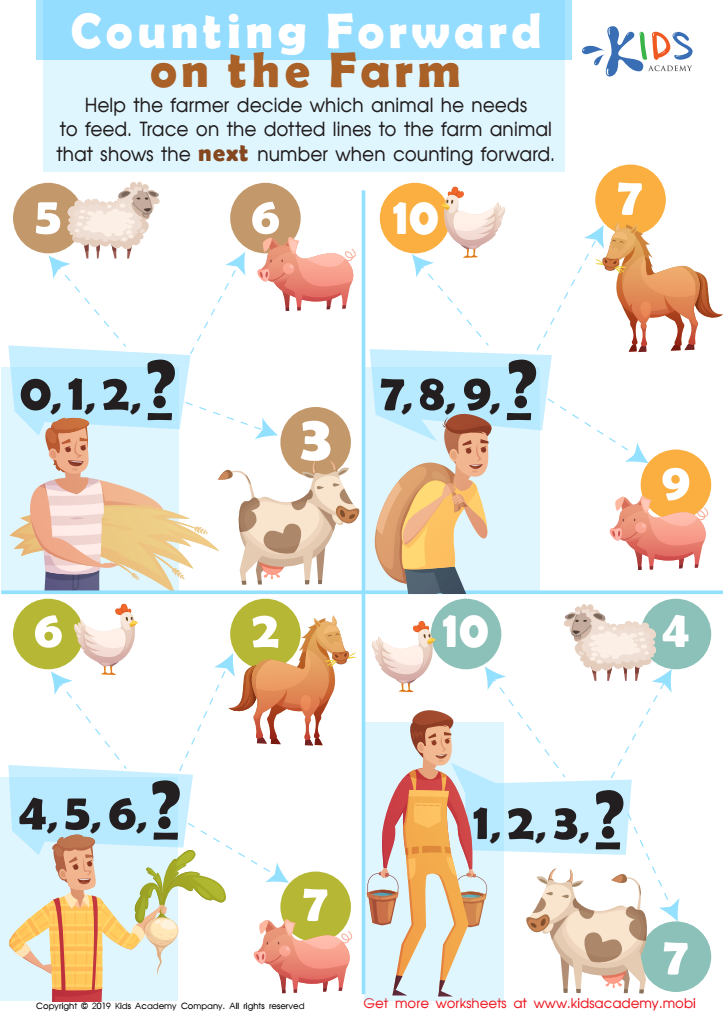
Counting Forward On the Farm Worksheet
Help your child practice counting with this fun worksheet. Have them help a farmer feed the right animal by counting on from a starting point. This activity will help them build number line thinking and refine fine motor skills.
 Assign to My Students
Counting Forward On the Farm Worksheet
Worksheet
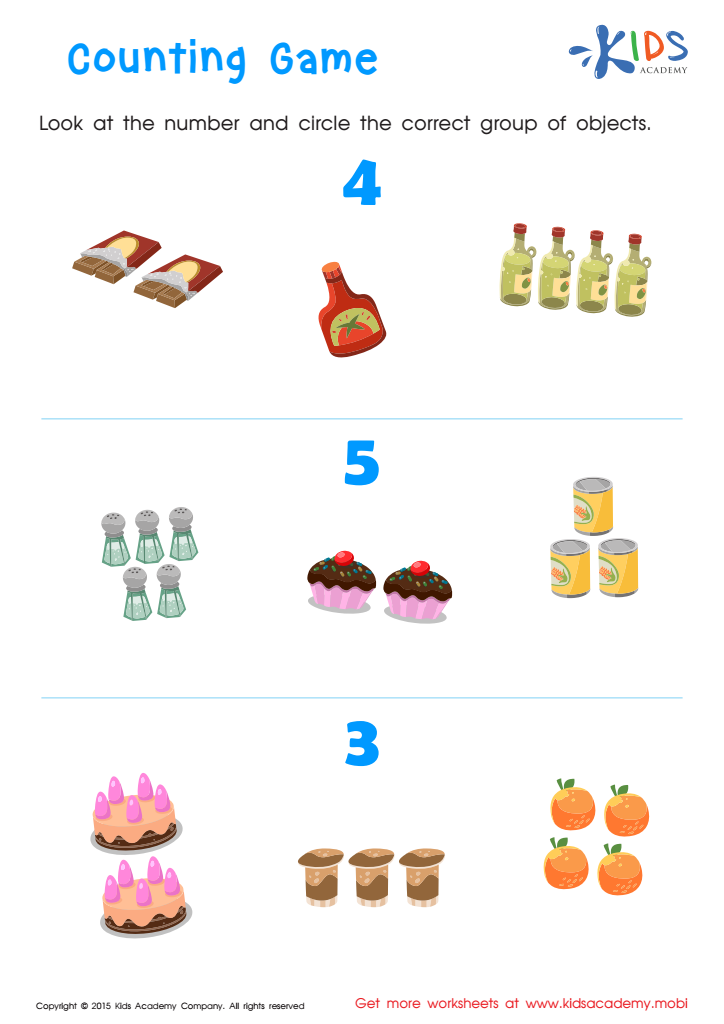
Counting Worksheet
Kids can connect printed numbers to groups of objects on this worksheet, helping them learn math by visually seeing item groups. Give your preschooler a fun, interactive way to learn counting!
Counting Worksheet
Worksheet
Join Kids Academy for Free
Who is primarily going to use this learning content?







Basic math abilities for children ages 3 to 7 are crucial for their overall cognitive development and future academic success. During these formative years, children are naturally curious and eager to learn, making it an ideal time to introduce foundational mathematical concepts such as counting, number recognition, basic addition and subtraction, shapes, and spatial awareness.
These early skills lay the groundwork for more complex mathematical concepts later on. Math is not just about numbers; it enhances critical thinking, problem-solving, and reasoning abilities. Children who develop these skills early are typically more confident in their math abilities, which can impact their attitudes toward learning as they progress in school.
Additionally, proficiency in basic math is linked to success in various subjects, as mathematical reasoning is often integrated with literacy skills, science, and even social studies. By fostering these early math skills, parents and teachers empower children to navigate everyday situations, from understanding time and measurements to managing money and recognizing patterns.
Lastly, engaging children in fun, age-appropriate math activities can foster a positive association with learning, making it enjoyable rather than daunting. Investing in basic math abilities equips children with essential life skills, supports academic achievement, and sets them on a path to lifelong learning.








