
Chess piece identification Worksheets for Ages 3-7
3 filtered results
Difficulty Level
Grade
Age
-
From - To
Subject
Activity
Standards
Discover our engaging Chess Piece Identification Worksheets designed specifically for children aged 3-7. These fun and interactive worksheets introduce young learners to the exciting world of chess, helping them identify and understand different chess pieces. Through colorful illustrations and easy-to-follow activities, kids will explore the unique roles of each piece, enhancing their cognitive and motor skills. Ideal for use at home or in the classroom, our worksheets foster critical thinking and promote focus, turning chess into a memorable learning adventure. Start your child's journey into chess today and watch their analytical skills grow while they play!
Favorites
With answer key
Interactive
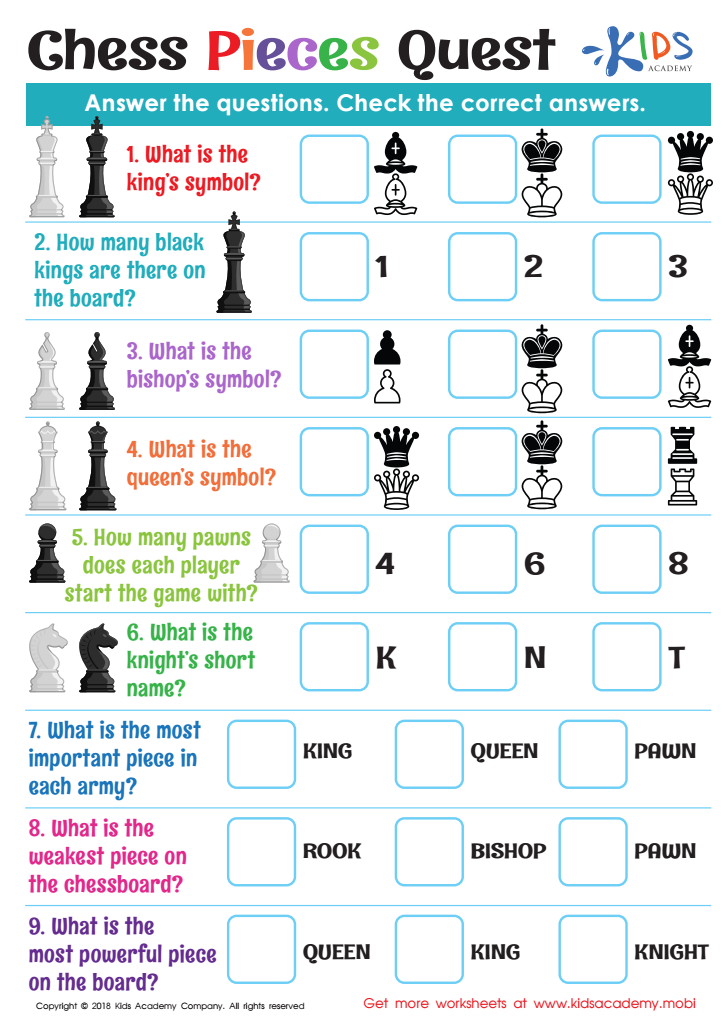
Chess Pieces Quest Worksheet
Help your child prepare for the chess quest by refreshing their knowledge of the symbols and characteristics of each chess piece. Then, have them try the 9 questions on this worksheet. These questions will assess their understanding of the symbols and how many pieces each player starts with.
 Assign to My Students
Chess Pieces Quest Worksheet
Worksheet
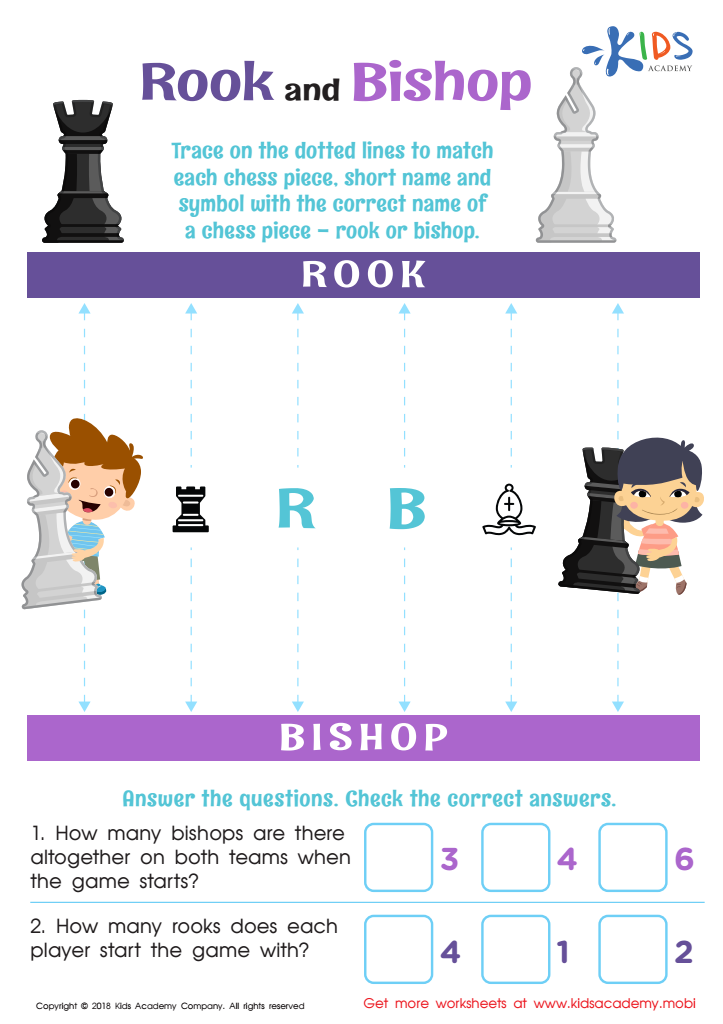
Rook and Bishop Worksheet
This tracing sheet helps your child learn chess pieces by matching each piece, short name and symbol to the correct name. After tracing, have them answer the questions and check their answers. It's a great way for them to become familiarized with chess.
Rook and Bishop Worksheet
Worksheet
Join Kids Academy for Free
Who is primarily going to use this learning content?








Chess piece identification for children ages 3-7 is vital for several reasons. First, learning the specific names and shapes of chess pieces fosters early cognitive development. Recognizing different pieces enhances memory skills and encourages focus, as children must differentiate between the knight, bishop, and rook, among others.
Second, chess promotes critical thinking and problem-solving skills. By understanding each piece's function and movement, children engage in strategic thinking, which translates to better decision-making in various aspects of life, including academics. This foundational skill set can provide an advantage in school, especially in subjects like math and science.
Third, chess teaches valuable social skills. As children learn to identify and respectfully interact with their peers during a game, they acquire important lessons in sportsmanship, cooperation, and patience.
Finally, introducing chess at a young age can instill a love for the game that lasts a lifetime. By engaging children in the language and strategies of chess through piece identification, parents and teachers can enrich their educational experience, providing an avenue for both fun and learning. Ultimately, early chess exposure cultivates well-rounded individuals prepared to navigate complex situations in the future.








