Community awareness Worksheets for Ages 3-7
5 filtered results
-
From - To
Boost your child's understanding of the world with Community Awareness Worksheets for Ages 3-7! Our engaging, age-appropriate worksheets inspire curiosity and teach fundamental skills about community roles, safety, and services. Packed with vibrant illustrations and interactive activities, these worksheets help kids recognize community helpers, understand local environments, and grasp essential social concepts. Perfect for both home and classroom use, our resources promote critical thinking, empathy, and responsible citizenship from an early age. Foster your little one's community awareness and prepare them for future social interactions with our thoughtfully designed educational materials!
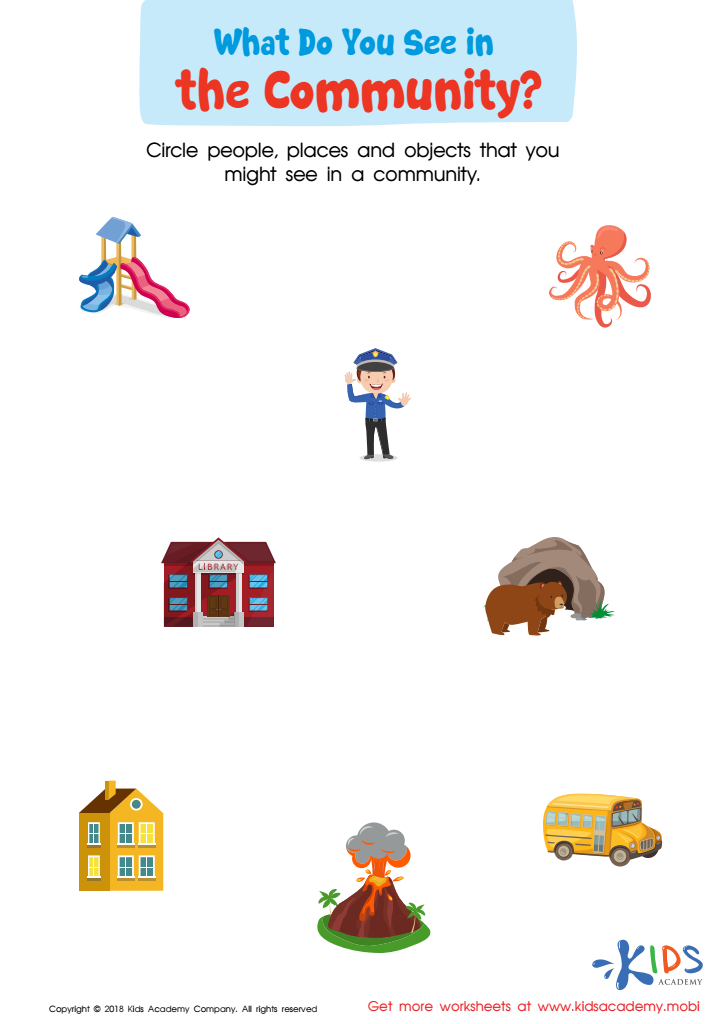
What Do You See in the Community Worksheet
 Assign to My Students
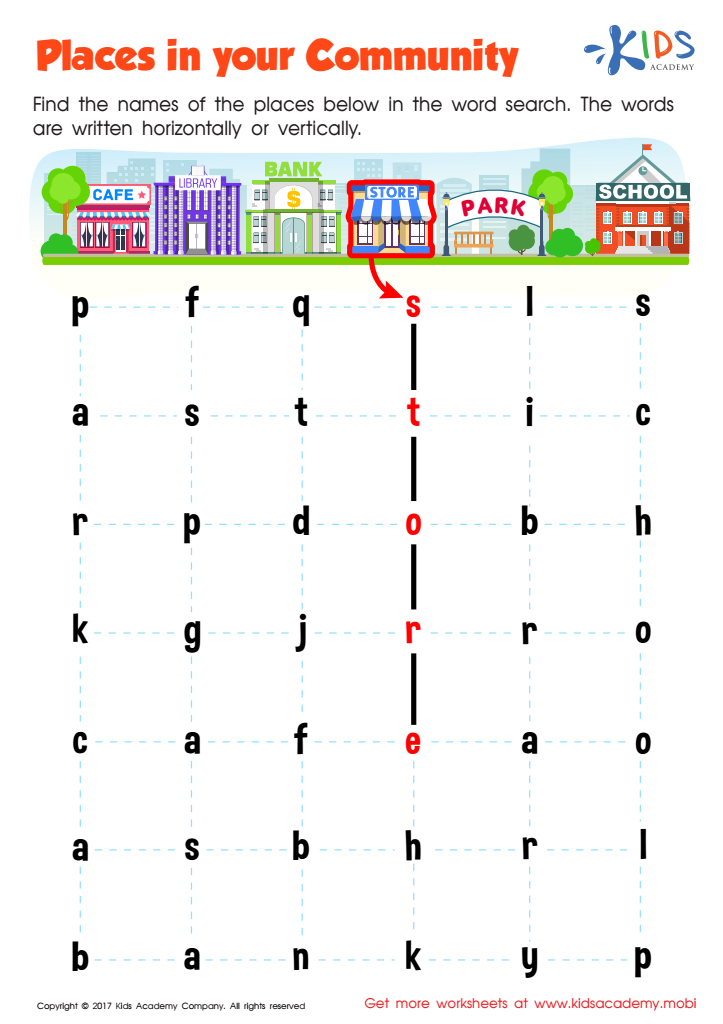
Places in Your Community Worksheet
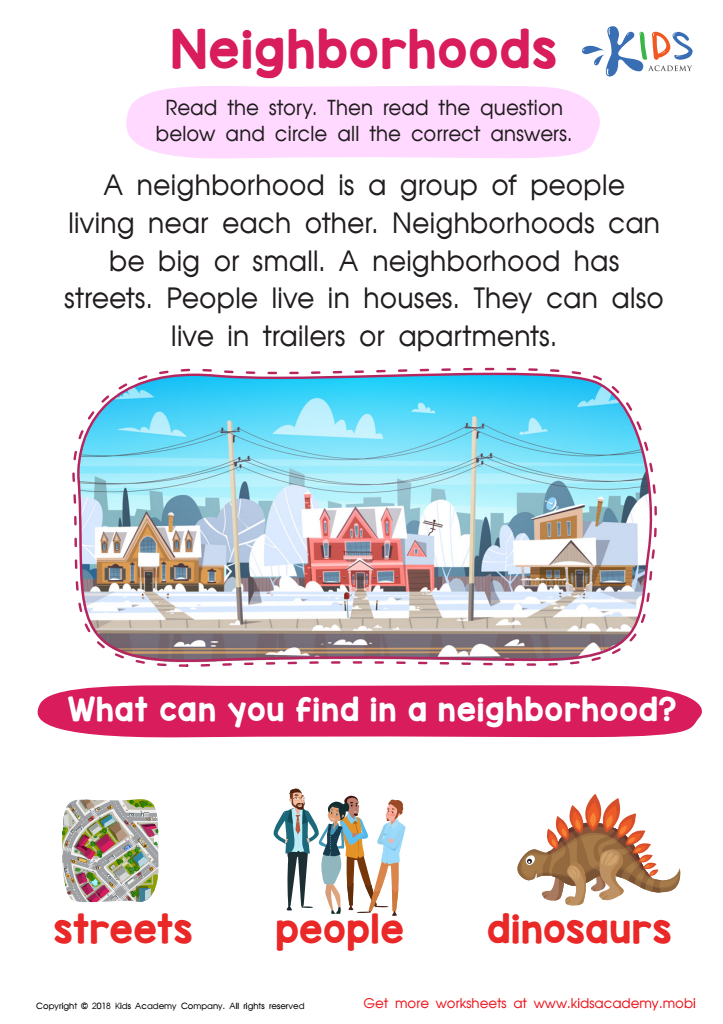
Neighborhoods Worksheet
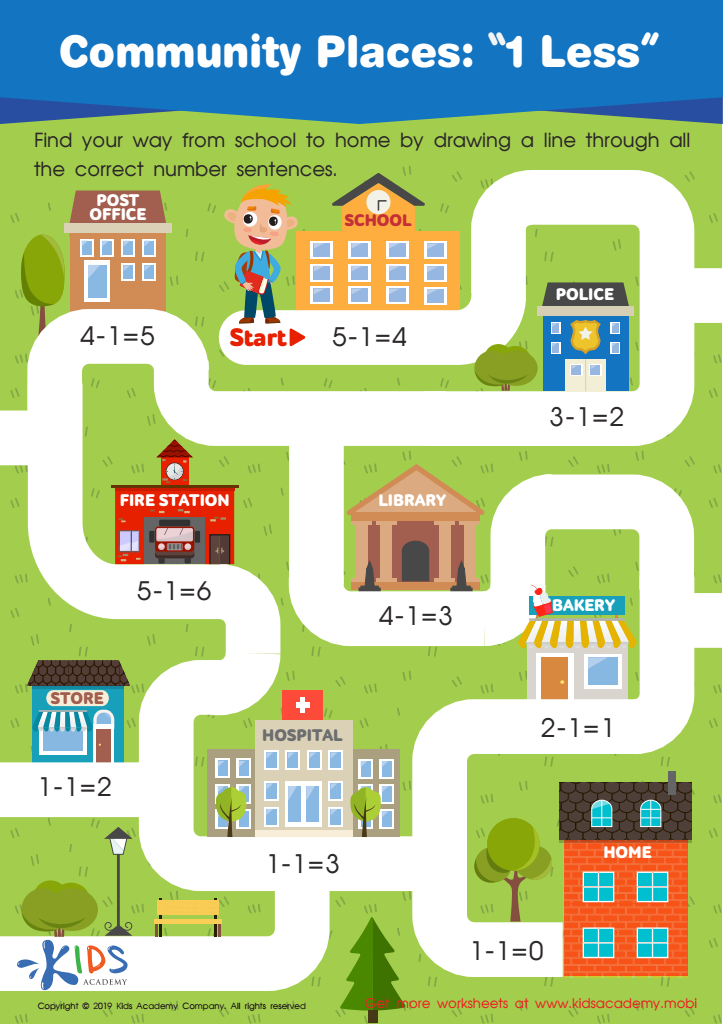
Community Places: 1 Less Worksheet
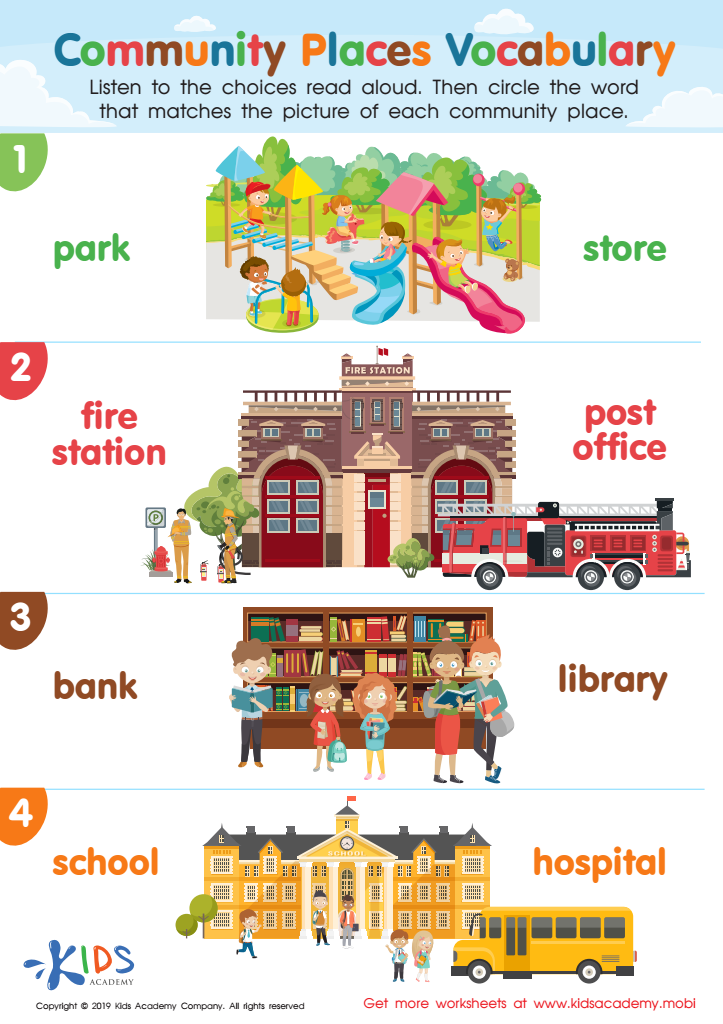
Community Places Vocabulary Worksheet








Community awareness is crucial for children ages 3-7 for several reasons. At this early stage of development, children are highly impressionable and begin to form core social, emotional, and ethical understandings. Introducing young children to the concept of community helps them recognize their role within it and nurtures a sense of belonging and responsibility. When parents and teachers emphasize community awareness, children learn important values like empathy, cooperation, and respect for others. These are foundational skills that will serve them well throughout their lives, fostering better social interactions and relationships.
Moreover, community awareness helps children understand diversity and inclusion. Experiencing and learning about different cultures, traditions, and lifestyles broadens their perspectives, promotes tolerance, and combats prejudicial attitudes. It also makes them more adaptable and open-minded, preparing them for a globally connected future.
Teaching children about community safety, such as knowing trusted adults and recognizing safe places, is another vital aspect. Understanding where they fit within a community, and who can be turned to for help, enhances their sense of security and well-being.
In summary, cultivating community awareness in young children is essential as it builds the foundation for socially responsible, compassionate, and well-rounded individuals, ready to contribute positively to the world around them.








