
Differentiating push/pull Worksheets for Ages 3-7
3 filtered results
Difficulty Level
Grade
Age
-
From - To
Subject
Activity
Standards
Introducing our captivating collection of Differentiating Push/Pull Worksheets designed for children ages 3-7! These interactive worksheets transform everyday actions into fun learning experiences, helping young minds grasp the essential concepts of pushing and pulling through engaging activities. Each worksheet is thoughtfully crafted to cater to various learning levels, ensuring seamless understanding for all children. By identifying push and pull actions in different scenarios, kids enhance their critical thinking and fine motor skills. Let your child explore, learn, and enjoy the wonders of motion with our incredible push/pull worksheets. Inspire curiosity and foster foundational STEM learning today!
Favorites
With answer key
Interactive
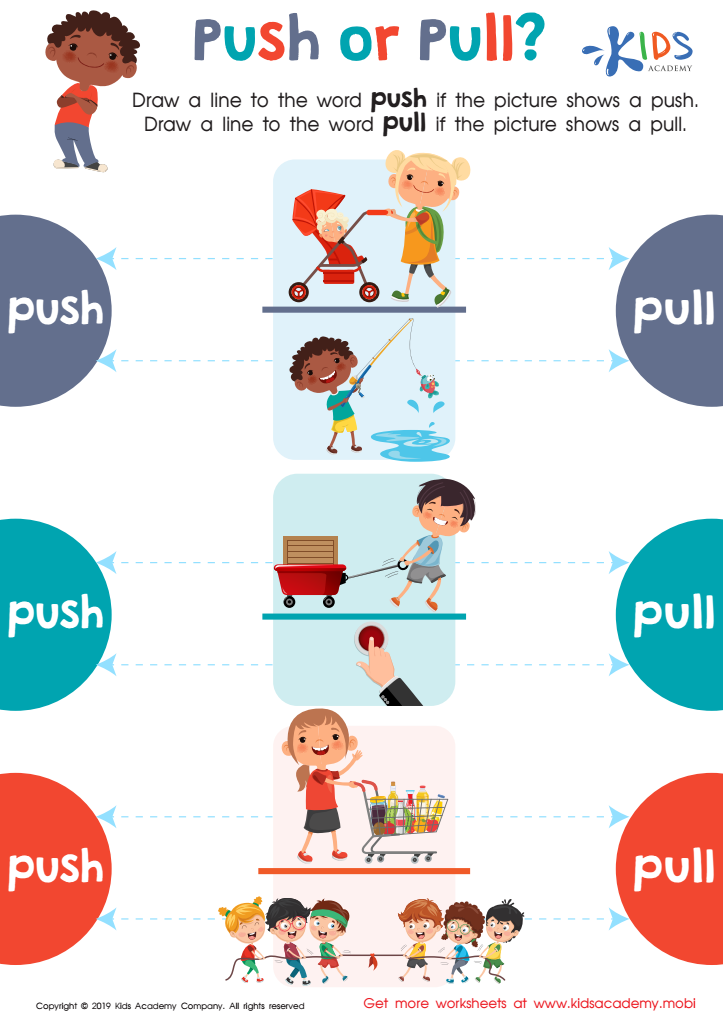
Push or Pull? Worksheet
Young kids may struggle to differentiate push and pull. When they start writing, they may use them interchangeably and wrongly. This worksheet clarifies the concepts: pushing means moving something away, pulling means bringing something closer. It provides pictures and traceable lines for kids to connect each image to the correct word. This helps them understand and remember the difference for future writing and reading.
 Assign to My Students
Push or Pull? Worksheet
Worksheet
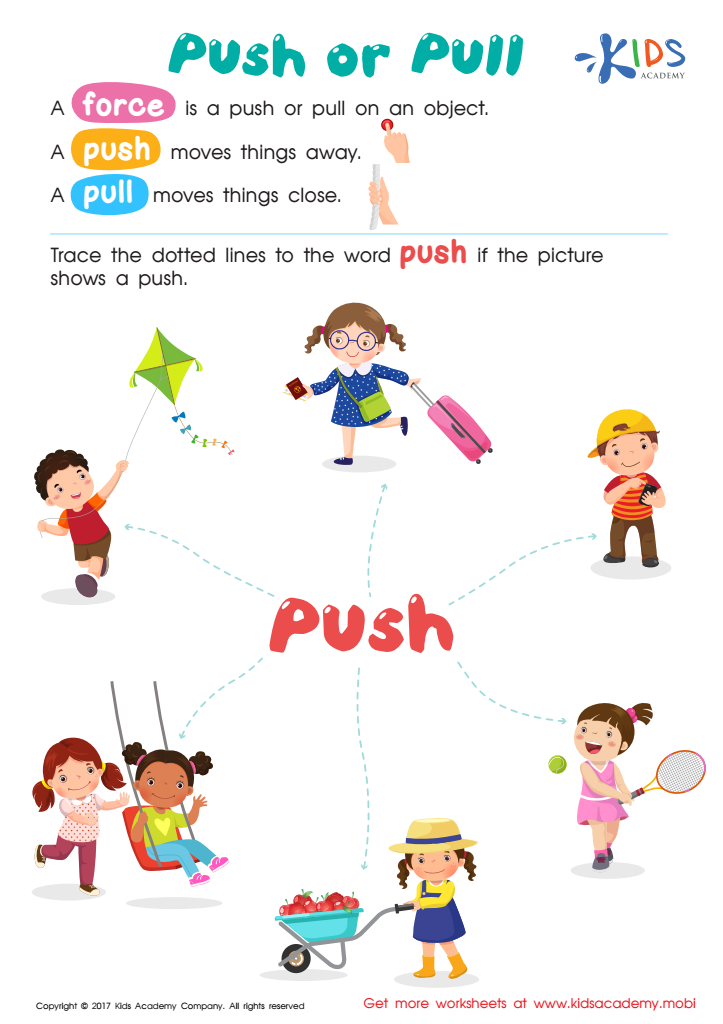
Push or Pull Worksheet
and which involve pulling! With this fun worksheet, your child will learn about force and its simple application in everyday activities. Get them started with Push or Pull! (80 words)
Push or Pull Worksheet
Worksheet
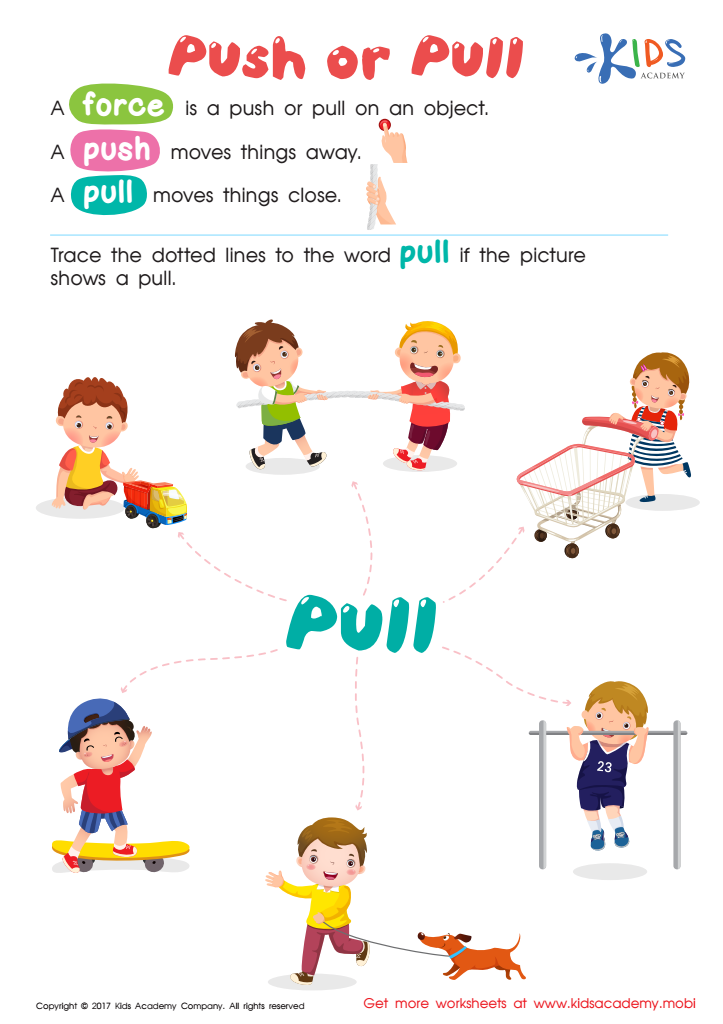
Pull or Push Worksheet
With this fun worksheet, they'll explore physics by sorting objects into categories according to their mode of motion. It's a great way to get them interested in science.
Pull or Push Worksheet
Worksheet
Join Kids Academy for Free
Who is primarily going to use this learning content?


.jpg)


Understanding the difference between push and pull is vital for young children's cognitive and motor development. For kids aged 3-7, this basic scientific concept builds a foundational understanding of physics and strengthens problem-solving skills. Such knowledge can also enhance fine and gross motor skills, encouraging better coordination and physical health. When parents or teachers facilitate learning environments where different forces are engaged through play, kids recognize cause and effect relations. For example, pulling a toy train compared to pushing a ball helps them grasp practical physics, fostering improved reasoning and predictive abilities.
Additionally, distinguishing between push and pull can make a significant impact on social and emotional growth. Cooperative play, where children decide whether to push or pull objects like shared wagons, involves negotiation and teamwork, which are key in developing social skills. Emotional intelligence benefits from trying, sometimes failing, and ultimately understanding one concept versus another. Thus, differentiating these forces isn’t just limited to academic advantage; it broadens experiences that polish critical thinking, teamwork, and basic motion knowledge, all in formative years crucial for holistic development. Educators and parents engaged in teaching these differences significantly contribute to well-rounded, inquisitive future learners.








