
Drawing skills Worksheets for Ages 3-7
10 filtered results
Difficulty Level
Grade
Age
-
From - To
Subject
Activity
Standards
Enhance your child's creativity and motor skills with our Drawing Skills Worksheets for Ages 3-7. These carefully designed activities engage young learners through fun and educational art exercises. From tracing simple shapes to creating their own masterpieces, our worksheets support the development of hand-eye coordination, fine motor abilities, and artistic expression. Perfect for preschoolers and early elementary students, these printable resources provide a perfect balance of challenge and enjoyment, making learning to draw an exciting adventure. Encourage your budding artist today with Kids Academy's comprehensive collection of drawing skills worksheets!
Favorites
With answer key
Interactive
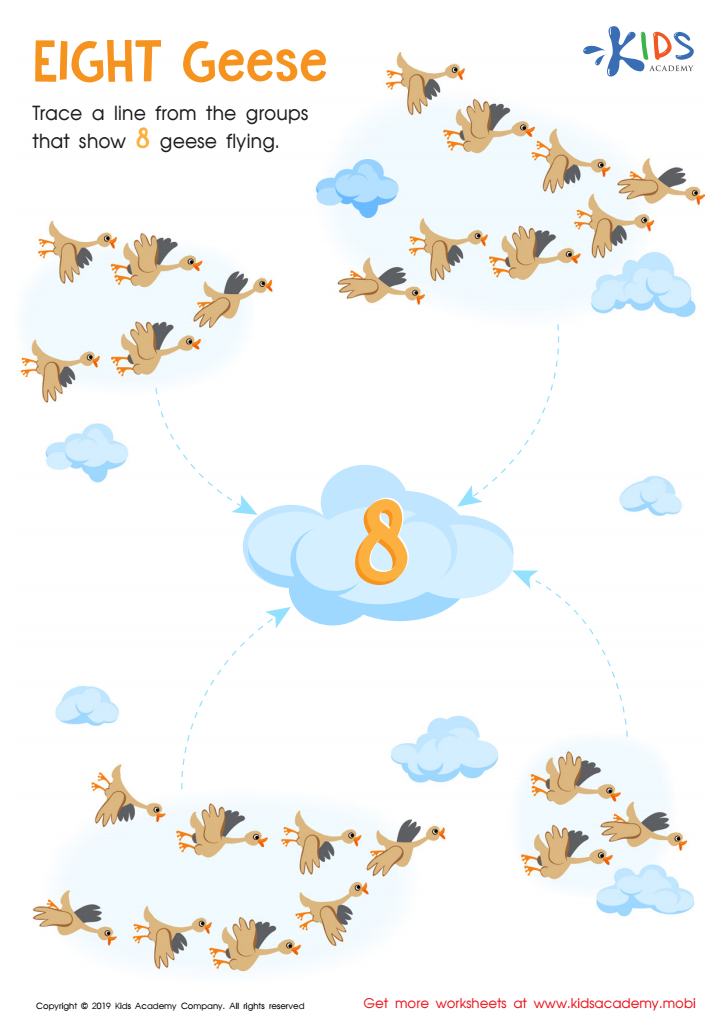
Eight Geese Worksheet
Assess your child's counting skills with this worksheet. Help them count the geese in each group, then trace a line from the groups showing 8. Give your kids a boost by providing lots of exercises and learning aids to help with counting. They likely count objects they come across, like spoons and stones. Use this opportunity to give them practice and help them learn.
 Assign to My Students
Eight Geese Worksheet
Worksheet
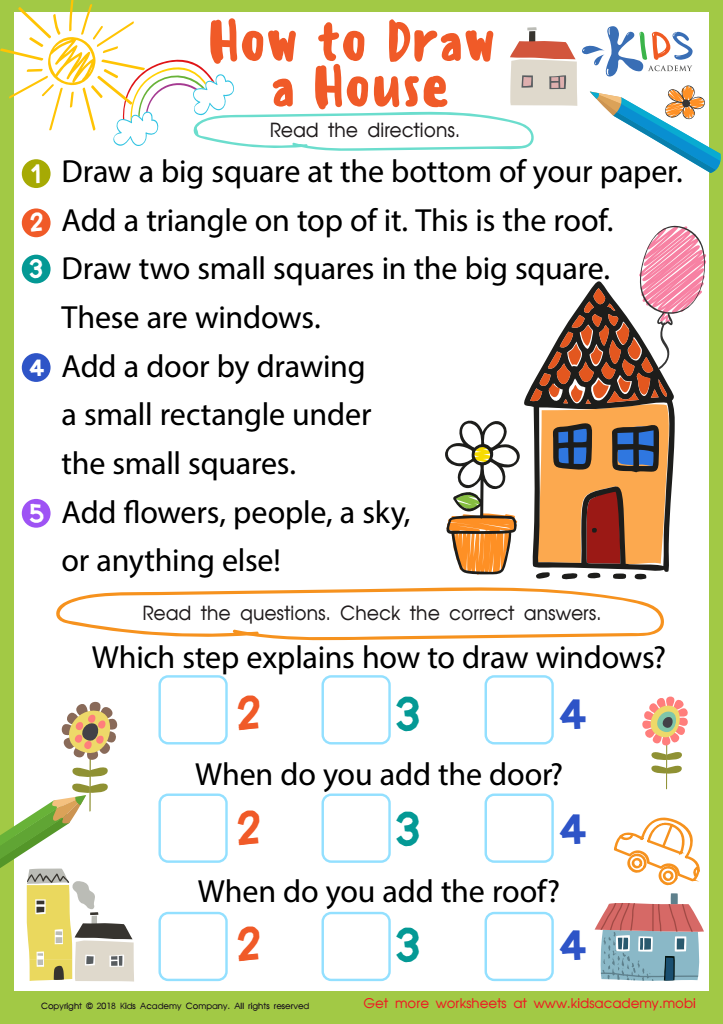
How to Draw House Worksheet
Does your child love to draw? Why not try teaching them some easy tricks? Get them to follow directions on this worksheet and learn how to draw a house. Read the questions at the end and ensure they get the answers right. Your kids will surely love it!
How to Draw House Worksheet
Worksheet
Join Kids Academy for Free
Who is primarily going to use this learning content?








Caring about drawing skills for children aged 3-7 is essential as it plays a pivotal role in their overall development. At this stage, drawing is not just about creating images; it's a critical form of self-expression and communication for young children. Through drawing, kids articulate their emotions, thoughts, and experiences in a way that words often can't capture. This helps parents and teachers gain insights into a child's inner world and better understand their needs and concerns.
Developing drawing skills also enhances fine motor abilities. Holding crayons and pencils, and maneuvering them on paper, strengthens the small muscles in their hands and fingers, which are also necessary for writing. In addition, drawing supports hand-eye coordination, spatial awareness, and problem-solving skills as children decide which shapes to create and how to position them.
From a cognitive perspective, drawing fosters creativity and imagination, encouraging children to think in new and innovative ways. When kids create stories or scenes in their artwork, they practice narrative thinking, which enhances their comprehension skills and deepens their understanding of the world around them.
In summary, nurturing drawing skills in early childhood is fundamental as it supports emotional, physical, cognitive, and creative growth. These foundational skills contribute significantly to a child's academic success and personal development.








