
Fraction Addition Worksheets for Ages 3-7
19 filtered results
Difficulty Level
Grade
Age
-
From - To
Subject
Activity
Standards
Explore our engaging Fraction Addition Worksheets designed for young learners aged 3-7! These worksheets are perfect for introducing foundational math concepts in a fun and interactive way. Little ones will practice adding fractions through colorful visuals and simple exercises that encourage hands-on learning. Our resources are specifically crafted to build confidence and enhance numerical skills, ensuring children grasp fundamental concepts early on. Whether at home or in the classroom, these worksheets cater to various learning styles and abilities, making fraction addition both enjoyable and accessible. Start your child's mathematical adventure today with our delightful fraction addition activities!
Favorites
With answer key
Interactive
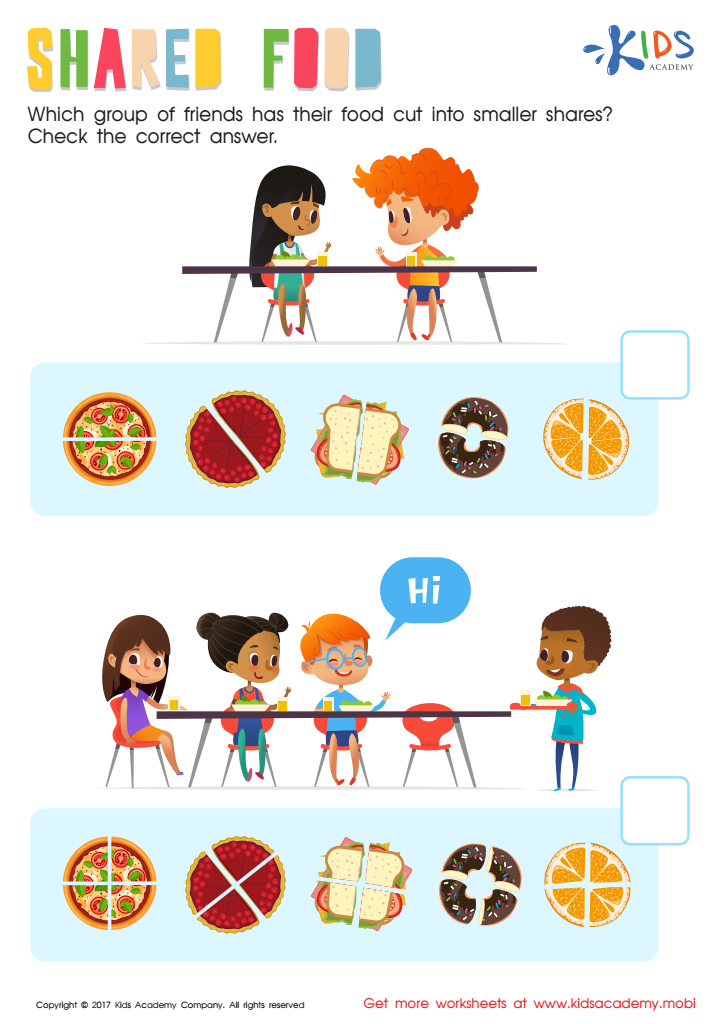
Shared Food Worksheet
In this worksheet, kids learn about sharing and cutting shapes into equal parts. There are two groups of friends: one with two, the other with four. Ask your child which group has their food cut into smaller shares, and help them find the right answer.
 Assign to My Students
Shared Food Worksheet
Worksheet
Join Kids Academy for Free
Who is primarily going to use this learning content?







.jpg)
Understanding fraction addition is crucial for children ages 3-7 as it lays the foundation for essential mathematical skills they will use throughout their lives. At this age, children are beginning to recognize and understand parts of a whole, which aligns beautifully with the concept of fractions. When parents and teachers engage children in activities involving simple fractions, they help nurture critical thinking and problem-solving skills.
Activities such as cutting food items into pieces, using visual aids, and interactive games can make learning fractions enjoyable and effective. These methods not only help children grasp the basics of fractions but also develop a positive attitude toward mathematics by fostering curiosity and creativity. Moreover, early exposure to fraction addition helps bridge the gap to more complex mathematical concepts as they grow, such as addition and subtraction of whole numbers, decimals, and even advanced math topics later in school.
By caring about fraction addition, adults help create confident and competent learners who value mathematics, encouraging a lifelong appreciation and understanding of the subject. Investing time in these foundational concepts ensures children are better prepared for future academic challenges and everyday situations where math plays a vital role.








