Graph reading skills Worksheets for Ages 3-7
3 filtered results
-
From - To
Our "Graph Reading Skills Worksheets for Ages 3-7" are expertly designed to introduce young learners to the basics of interpreting graphs. Through engaging activities and vibrant visuals, children will explore bar graphs, pictographs, and more. These worksheets help kids enhance their analytical thinking and data interpretation skills in a fun and accessible way. With age-appropriate challenges and interactive exercises, your child will gain confidence in reading and understanding graphical information. Perfect for early learners, these resources pave the way for stronger math foundations and a love for data science from an early age. Download today to make learning enjoyable and effective!
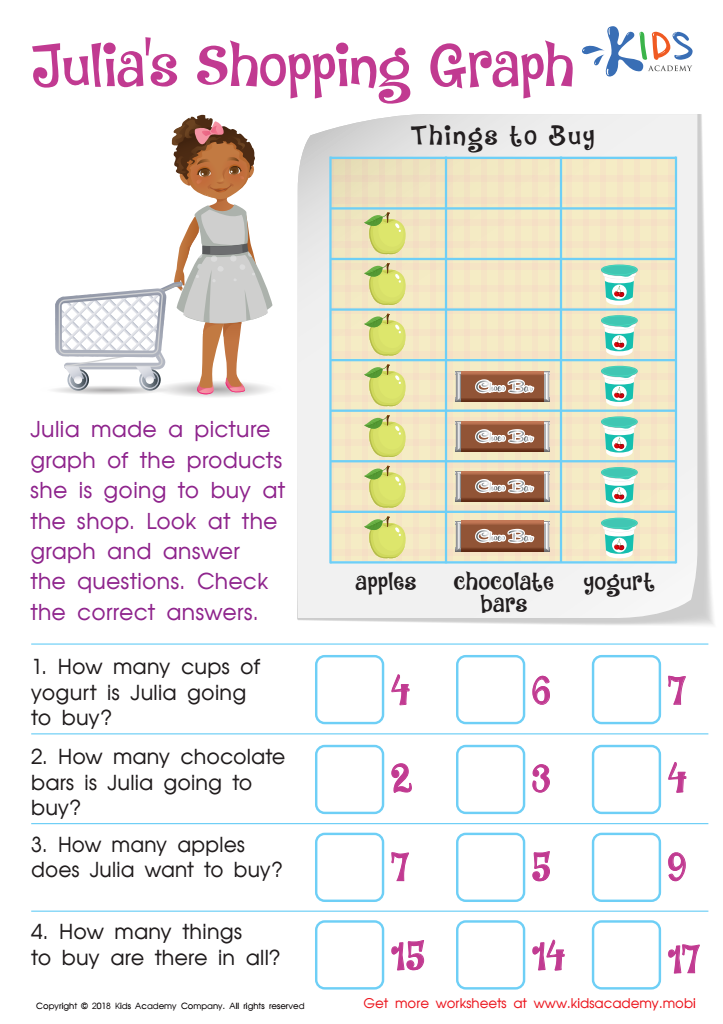
Julia's Shopping Graph Worksheet
 Assign to My Students
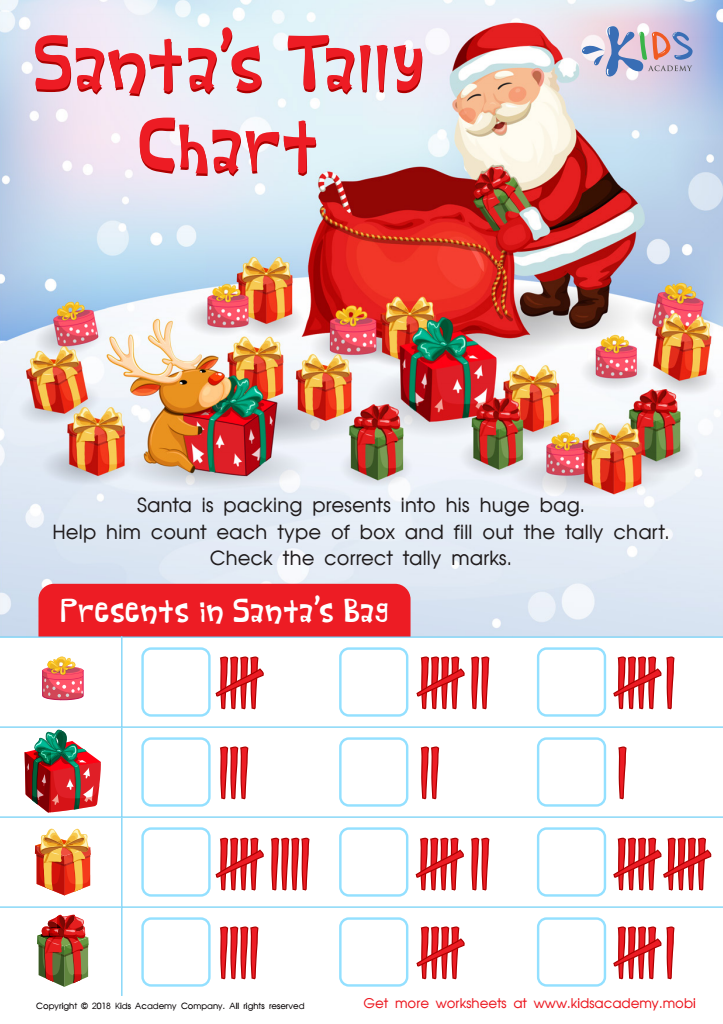
Santa Tally Chart Worksheet
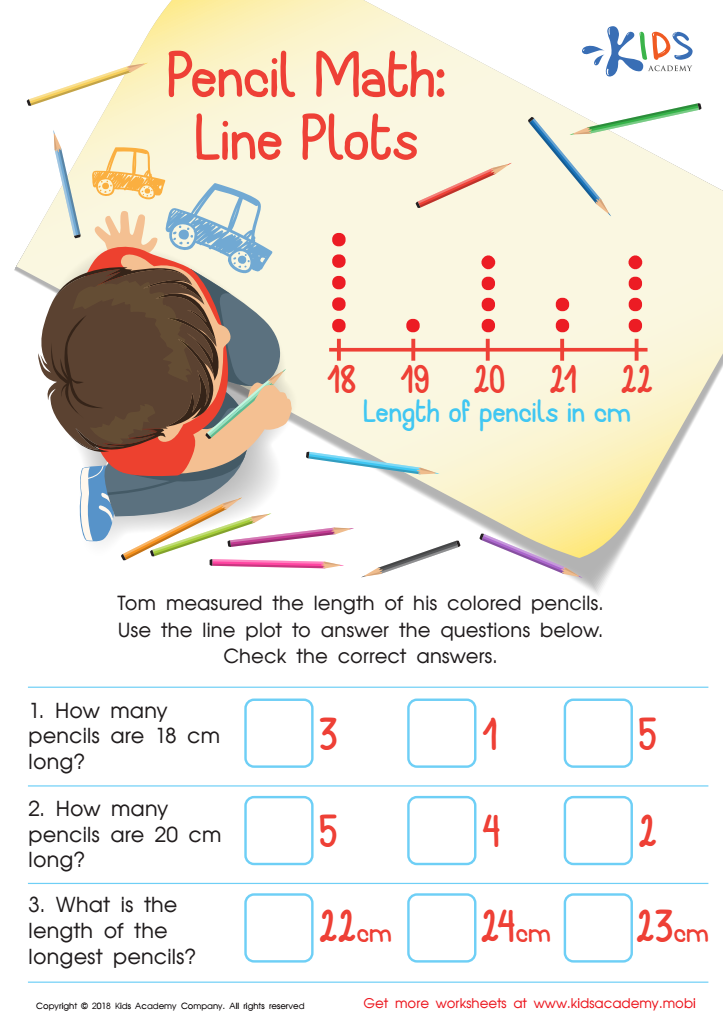
Pencil Math: Line Plots Worksheet






.jpg)
Developing graph reading skills in children aged 3-7 is crucial for their cognitive development and foundational mathematical understanding. Graphs are simple yet powerful tools that help young learners visualize and interpret data, making abstract concepts more tangible and easier to grasp. Early exposure to graphs fosters critical thinking and enhances problem-solving skills, as children learn to describe, compare, and analyze information.
Teaching graph reading at a young age lays the groundwork for more complex mathematical tasks encountered later in schooling. It enhances their ability to recognize patterns, understand quantities, and appreciate scales—key components of mathematical literacy. Furthermore, these skills are transferrable across various subjects, including science, social studies, and even literacy, where organizing information visually aids comprehension and retention.
Engaging young children with graphs can also be a fun and interactive way to involve them in practical, real-life situations. For instance, activities like charting favorite fruits or daily weather conditions pique their interest and relate mathematical concepts to their everyday experiences.
Overall, nurturing graph reading skills in early childhood helps in creating a solid educational foundation, boosting confidence in mathematics, and encouraging a lifelong interest in learning and exploration. Parents and teachers play a pivotal role in guiding and supporting children’s journeys through these essential skills.








