
Handwriting development Worksheets for Ages 3-7
3 filtered results
Difficulty Level
Grade
Age
-
From - To
Subject
Activity
Standards
Explore our collection of handwriting development worksheets designed specifically for children ages 3 to 7. These engaging and interactive printables are tailored to enhance fine motor skills and improve letter formation, ensuring a solid foundation for preschool and early elementary learners. Our worksheets feature a variety of fun activities, from tracing letters to practicing simple words, all aimed at fostering a love for writing. With colorful designs and themed worksheets, your child will enjoy learning as they develop confidence in their handwriting abilities. Enhance your child’s writing journey today and watch their progress soar with our carefully crafted resources!
Favorites
With answer key
Interactive
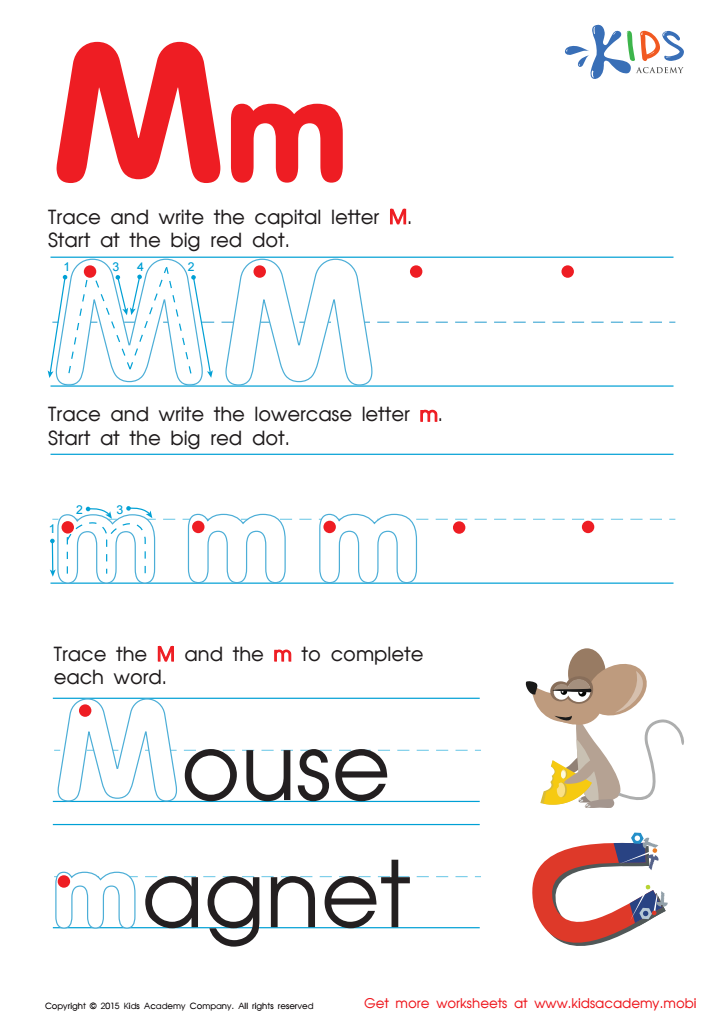
Letter M Tracing Page
Trace and write the letter "M" to help kids learn the alphabet. Start at the red dot and practice several times. Trace the capital letter first, then move on to the lowercase. Complete words like "mouse" and "magnet" in the further exercise. Get more free printables here.
Letter M Tracing Page
Worksheet
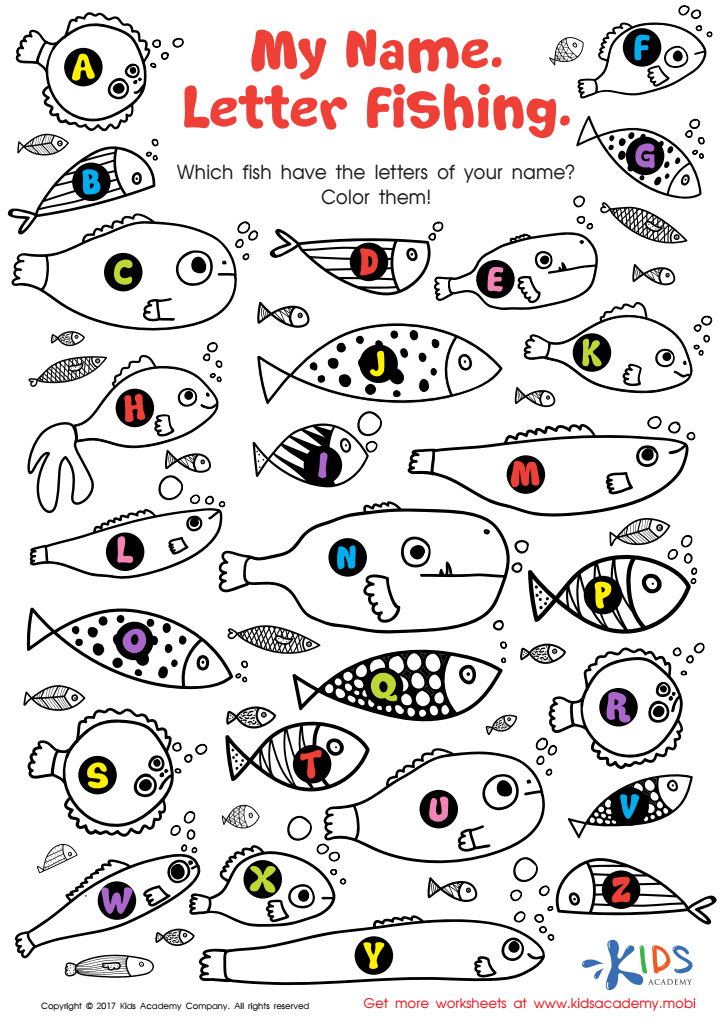
My Name: Letter Fishing Worksheet
Dive into the deep sea and search for fish with a letter on them. Can you find all the letters from your name? Color your favorite fish with crayons and be creative! On the other side, use the letters you found to write your name. Have fun coloring and finding the letters of your name! (80 words)
Download (PDF)
 Assign to My Students
Assign to My Students
My Name: Letter Fishing Worksheet
Worksheet
Join Kids Academy for Free
Who is primarily going to use this learning content?







Handwriting development in children aged 3 to 7 is a crucial aspect of their cognitive and motor skill growth, and both parents and teachers play a vital role in this journey. During these formative years, effective handwriting skills lay the foundation for academic success and self-expression.
Firstly, handwriting helps develop fine motor skills, which are essential for tasks beyond writing, such as buttoning clothes or using utensils. Children learn to coordinate their hand movements, promoting hand-eye coordination and dexterity.
Moreover, handwriting enhances cognitive development. As children practice letter formation, they strengthen their memory and learning retention, essential for literacy. Developed handwriting skills can boost confidence, as legible writing reflects a child's ability to communicate effectively and express their thoughts clearly.
Furthermore, early interventions by parents and teachers can prevent future difficulties, such as reluctance to write or decreased self-esteem in school settings. Encouraging positive handwriting experiences transforms writing into a joyful and engaging activity rather than a chore. Investing in handwriting development nurtures not only skilled writers but well-rounded, confident individuals ready to tackle various challenges in life and learning. Ultimately, fostering good handwriting skills lays a vital foundation for future academic and personal growth.








