Identify numbers Worksheets for Ages 3-7
3 filtered results
-
From - To
Discover a fun way for young learners aged 3-7 to identify and recognize numbers with our engaging worksheets! Designed for early learning, these resources enhance number skills through colorful illustrations and interactive activities. Our worksheets help children practice number recognition, counting, and basic math in a playful environment. Ideal for parents and teachers, these free printables cater to various learning styles, ensuring every child enjoys their educational journey. We believe that mastering numbers is a critical step in early education, laying the foundation for future mathematical success. Explore our collection today and watch your child's confidence in numbers bloom!
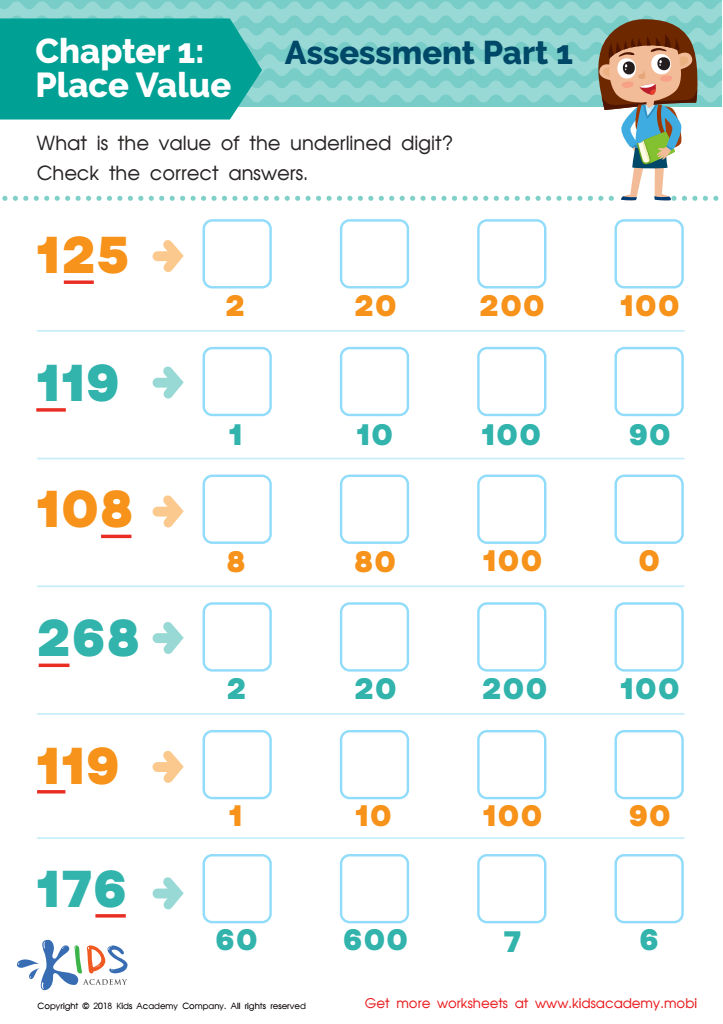
Place Value: Chapter 1 Worksheet
 Assign to My Students








Identifying numbers is a crucial foundational skill for children aged 3-7, as it lays the groundwork for all future math learning. During this sensitive period of cognitive development, children are naturally curious and eager to learn about their environment, including numbers. By helping children identify numbers, parents and teachers can enhance their mathematical vocabulary, problem-solving skills, and understanding of basic concepts such as quantity, sequence, and patterns.
Early exposure to numbers fosters critical thinking and helps children make connections in their everyday lives, from counting objects to reading simple math signs. Additionally, developing numerical literacy along with related concepts promotes sequential thinking, which is essential across various subjects. Moreover, being able to identify numbers supports children's confidence and versatility when engaging in group activities, as math concepts often intersect with games, storytelling, and exploration.
Parents and teachers should prioritize number identification as it guides successful transitions into the school system, where mathematical skills become more formalized. Encouraging games, songs, and hands-on activities can make learning enjoyable. Ultimately, when children develop strong number recognition skills, they are better equipped for academic success and will approach math with curiosity and enthusiasm throughout their educational journey.








