
Learning scientific vocabulary Worksheets for Ages 3-7
3 filtered results
Difficulty Level
Grade
Age
-
From - To
Subject
Activity
Standards
Explore our engaging Learning Scientific Vocabulary Worksheets designed specifically for children aged 3-7! These worksheets provide a playful and interactive approach to introduce young learners to essential scientific terms and concepts. With vibrant illustrations and fun activities, kids will cultivate curiosity and build a solid foundation in science. The worksheets not only enhance vocabulary but also encourage critical thinking and language skills. Suitable for home or classroom use, these resources make learning exciting and enjoyable. Help your child embark on their scientific journey today with our comprehensive collection tailored for young minds! Suitable for educators and parents alike.
Favorites
With answer key
Interactive
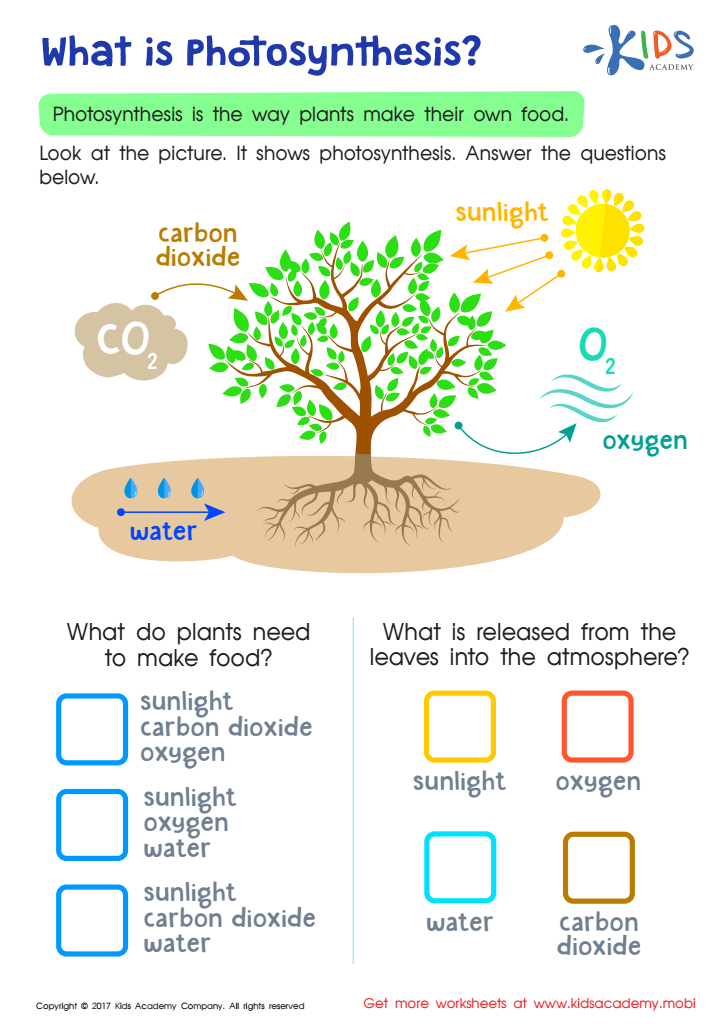
What is Photosynthesis Printable
Plants need to eat too; they make their own food from the air. Introduce them to photosynthesis with this fun worksheet!
 Assign to My Students
What is Photosynthesis Printable
Worksheet
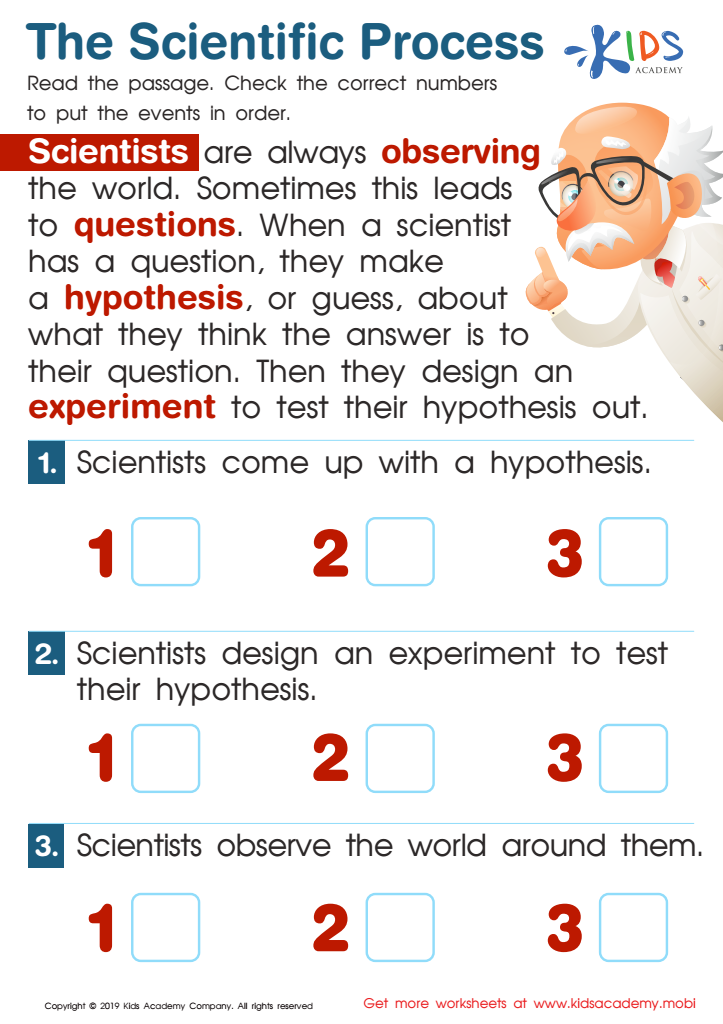
The Scientific Process Worksheet
Help your kids read the passage, then ask them to explain what they've learnt. Ask the questions and help put the events in order. Through this worksheet, your kids will learn more about science and practice reading skills. It's a fun way to explore science! (80 words)
The Scientific Process Worksheet
Worksheet
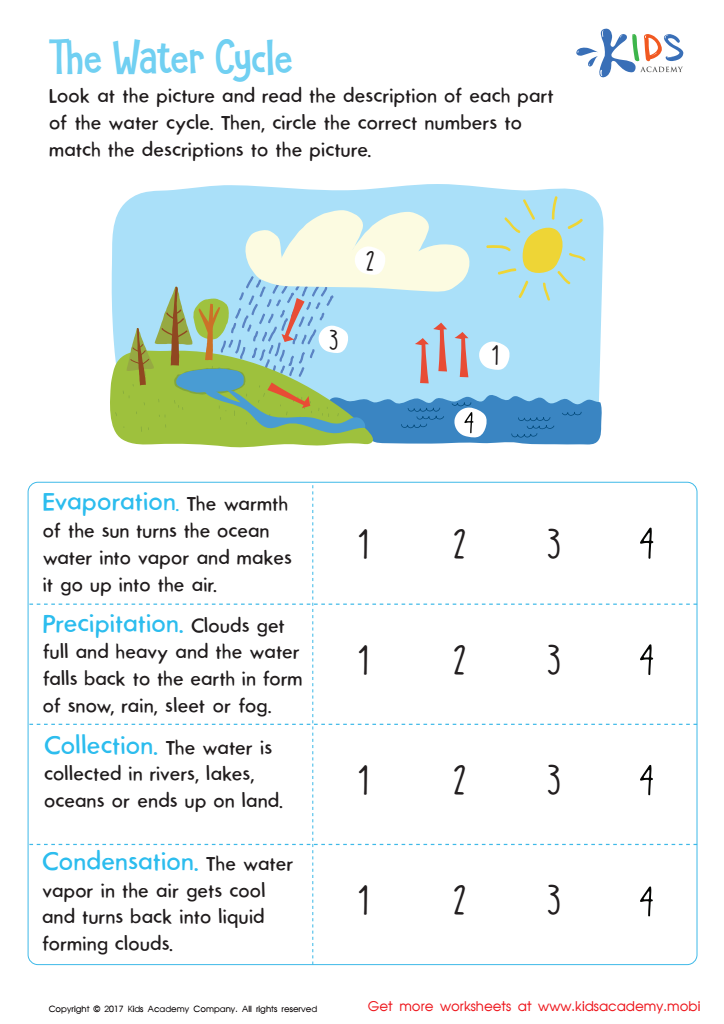
The Water Cycle Worksheet
Kids love science because it sparks their curiosity, so use this worksheet to introduce them to earth science and build a strong foundation for future learning.
The Water Cycle Worksheet
Worksheet
Learning Skills
Join Kids Academy for Free
Who is primarily going to use this learning content?






Learning scientific vocabulary at an early age is vital for children aged 3-7, as it lays the groundwork for critical cognitive skills and fosters a deep curiosity about the world around them. When parents and teachers introduce scientific terms in a playful and engaging manner, they help children articulate their observations, ask questions, and think critically.
At this developmental stage, children are naturally curious and eager to explore. Providing them with the right vocabulary allows them to express their newfound knowledge and engage in meaningful conversations. Recognizing and using scientific language enables young learners to understand concepts related to nature, space, biology, and other areas, fostering a sense of wonder.
Moreover, exposure to scientific vocabulary can enhance cognitive development, improve literacy skills, and prepare children for future academic success in STEM fields. A strong foundation in scientific terms also encourages a positive attitude towards science, promoting lifelong learning and exploration.
Ultimately, when parents and teachers prioritize the learning of scientific vocabulary, they empower young learners, equipping them with the tools needed to navigate and understand their environment, while instilling a passion for discovery that can last a lifetime.








