
Learning subtraction Worksheets for Ages 3-7
4 filtered results
Difficulty Level
Grade
Age
-
From - To
Subject
Activity
Standards
Discover our engaging Learning Subtraction Worksheets designed specifically for children aged 3-7. These worksheets provide a fun and interactive way for young learners to grasp the concept of subtraction through visual aids, colorful illustrations, and step-by-step exercises. Tailored to accommodate different learning styles, our resources promote essential early math skills while keeping kids excited about learning. Each worksheet encourages practice in a stress-free environment, helping children build confidence as they master subtraction. Perfect for homeschooling, classrooms, or extra practice at home, these printable worksheets will support your child’s math journey, making learning subtraction enjoyable and effective!
Favorites
With answer key
Interactive
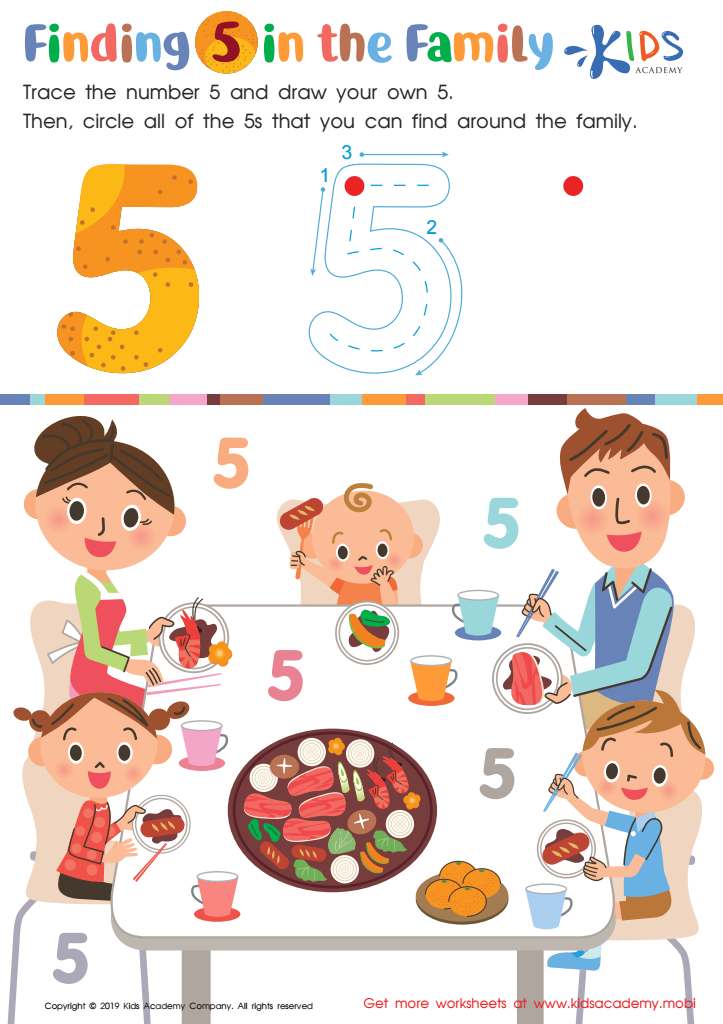
Finding 5 in the Family Worksheet
This worksheet helps kids identify and write the number 5. Ask what the family is doing and who the family members are. Help them trace and draw the 5, then have them circle all 5s in the picture.
 Assign to My Students
Finding 5 in the Family Worksheet
Worksheet
Join Kids Academy for Free
Who is primarily going to use this learning content?






Learning subtraction is foundational for children aged 3-7, as it plays a crucial role in their cognitive development and everyday problem-solving abilities. At this early stage, children are naturally curious and eager to understand the world around them. Mastering subtraction helps them grasp basic math concepts, enhances their logical reasoning skills, and encourages critical thinking.
Additionally, subtraction supports a child's ability to develop stronger numeracy skills, laying the groundwork for more advanced math concepts in the future. As kids learn to subtract, they begin to understand the relationship between numbers, enhancing their grasp of addition and other mathematical operations. This foundational understanding equips them with the confidence to tackle more complex problems as they progress through their education.
Beyond academics, subtraction fosters essential life skills, such as resource management and decision-making. For instance, subtracting items from a set helps children understand sharing and the consequences of choices made.
Lastly, early educators and parents play a vital role in creating a supportive learning environment, one that encourages exploration and practice of subtraction in a fun and engaging manner, promoting a lifelong love of learning and mathematics. By emphasizing the importance of subtraction, they contribute significantly to children's overall development and future academic success.








