Logical thinking improvement Worksheets for Ages 3-7
5 filtered results
-
From - To
Enhance your child's cognitive abilities with our "Logical Thinking Improvement Worksheets for Ages 3-7." Designed to engage young minds, these worksheets focus on developing essential skills such as pattern recognition, problem-solving, and critical thinking. Each activity offers a fun, interactive approach that promotes creativity and logical reasoning through games, puzzles, and engaging exercises. Perfect for at-home learning or classroom activities, our worksheets cater to various learning styles, ensuring each child can thrive. Encourage your little learners to explore and think independently while fostering a strong foundation in logical thinking, preparing them for future academic success. Start their journey today!
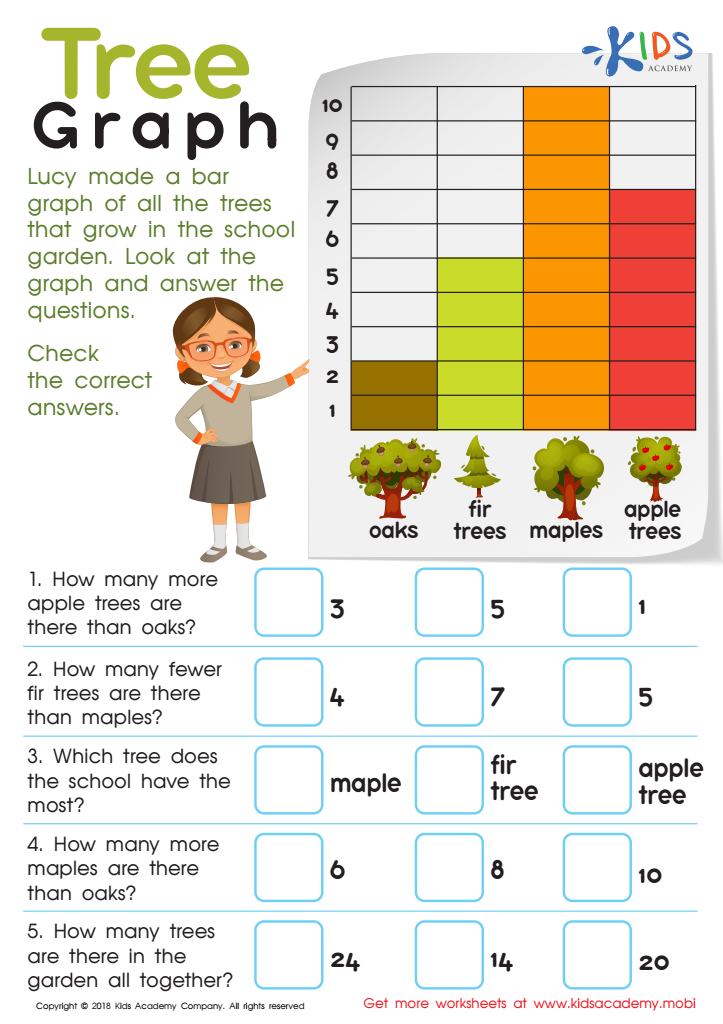
Tree Graph Worksheet
 Assign to My Students
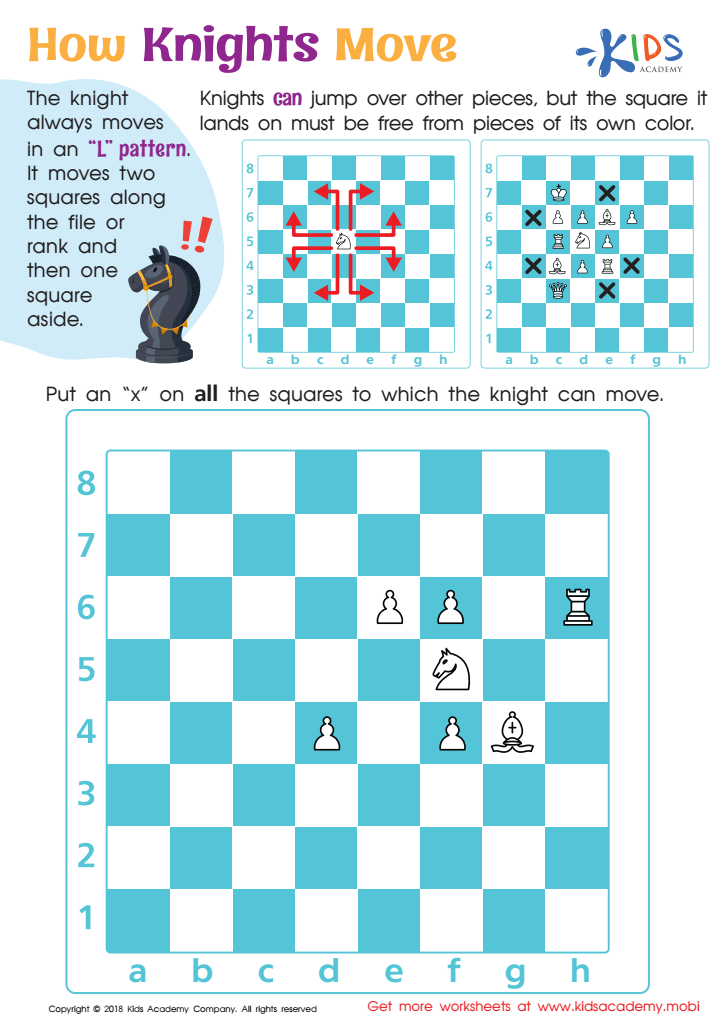
How Knights Move Worksheet
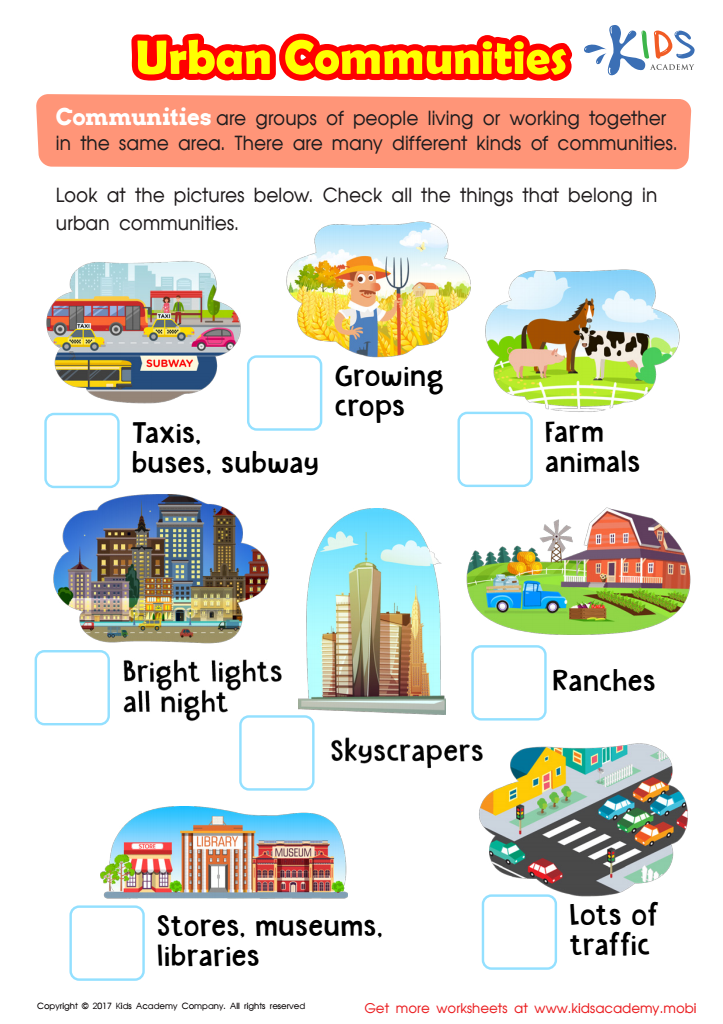
Urban Communities Printable
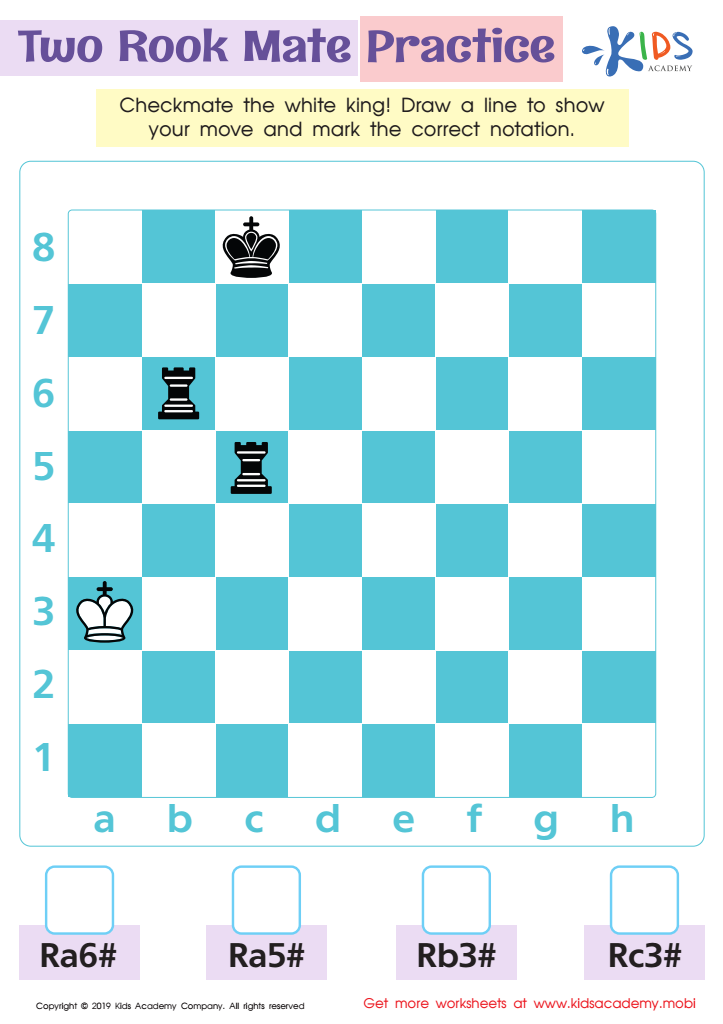
Two Rook Mate Practice Worksheet
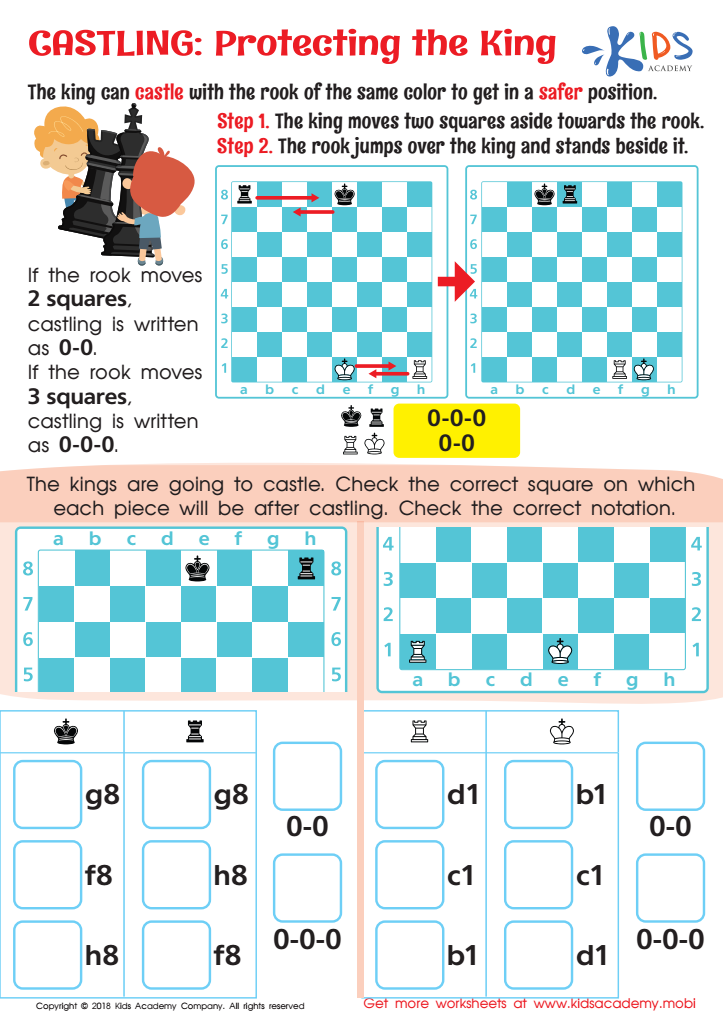
Castling: Protecting the King Worksheet








Logical thinking is a crucial skill that lays the foundation for problem-solving, reasoning, and decision-making in children aged 3-7. During these formative years, the brain is highly receptive to learning, making it an ideal time to nurture logical thinking abilities. Parents and teachers should care about improving this skill because it fosters critical cognitive development essential for later academic success.
Enhancing logical thinking helps children understand relationships, categorize objects, and recognize patterns, which are foundational skills for subjects like mathematics and science. It also encourages creativity, enabling children to come up with innovative solutions to everyday challenges.
Moreover, logical thinking supports social skills by helping children understand concepts of fairness, consequences, and empathy in interactions with peers. As they learn to think critically, children become more confident in expressing their ideas and approaches to problem-solving.
By prioritizing logical thinking development, adults empower children to become independent thinkers and lifelong learners. Engaging them in activities that promote this skill, such as puzzles, games, and storytelling, not only enriches their cognitive abilities but also fosters a love for learning. Overall, investing in logical thinking from a young age sets the stage for a child's future success in school and beyond.








