Number sequence learning Worksheets for Ages 3-7
3 filtered results
-
From - To
Explore our engaging Number Sequence Learning Worksheets designed for children aged 3-7! These fun and interactive activities help young learners develop essential counting and sequencing skills through vibrant illustrations and age-appropriate challenges. Our worksheets employ a playful approach that captures children's interest, making learning enjoyable. From filling in missing numbers to identifying patterns, each worksheet supports cognitive development in a nurturing way. Perfect for both classroom and home learning, these resources are ideal for strengthening your child's number sense and laying a strong mathematical foundation. Download your worksheets today and watch your little ones master number sequences with confidence!
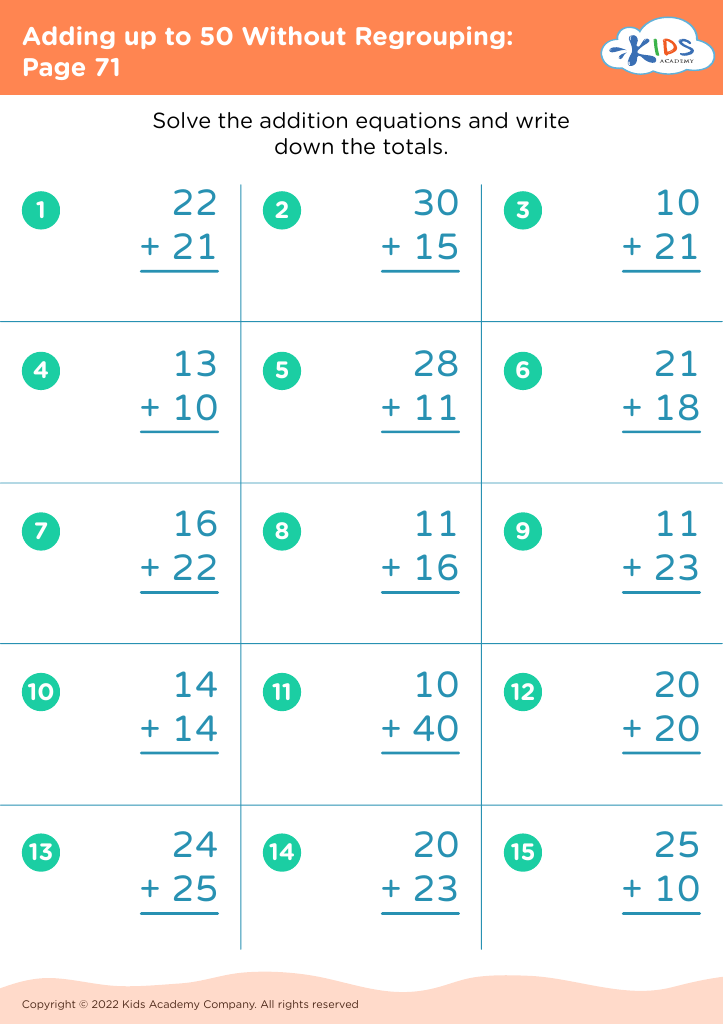
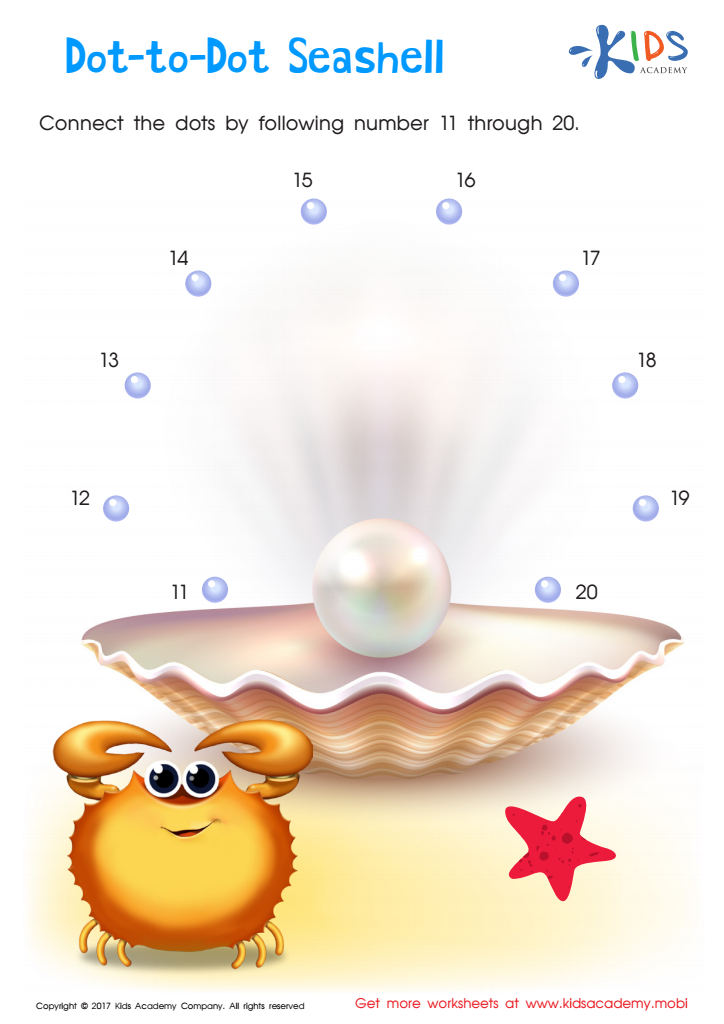
Ordering 11–20: Dot–to–dot Seashell Printable
 Assign to My Students
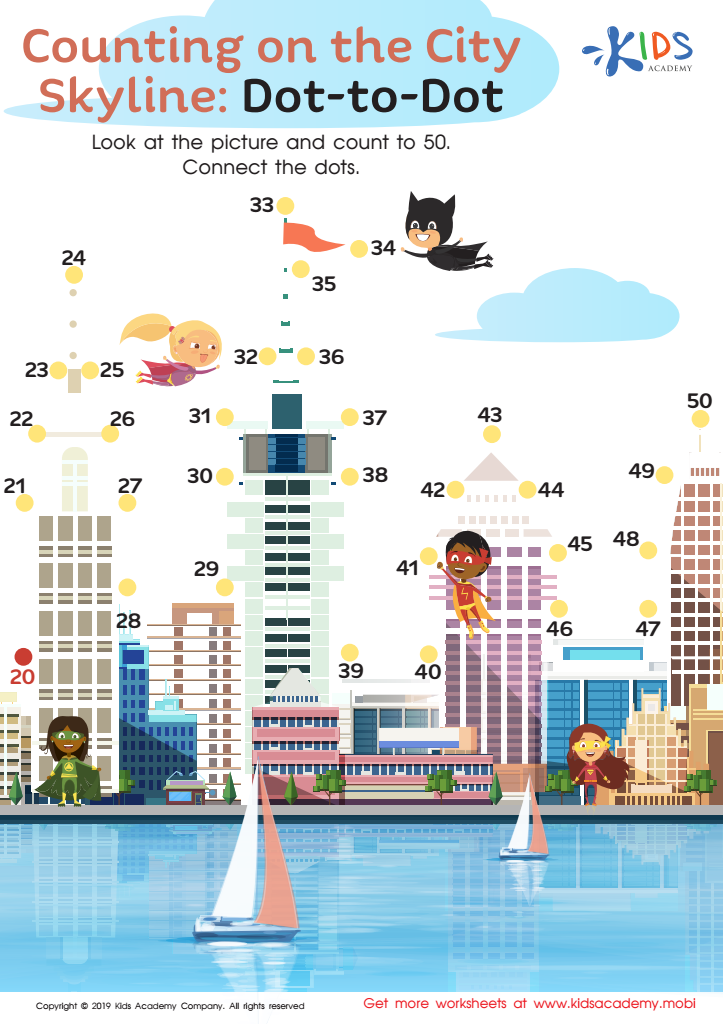
Counting on the City Skyline: Dot-to-Dot Worksheet







Number sequence learning is a crucial foundational skill for children aged 3-7, as it lays the groundwork for later mathematical abilities and cognitive development. This concept not only helps children understand the order of numbers but also enhances their computational skills and promotes logical thinking. Early exposure to number sequences enables young learners to grasp concepts such as counting, addition, and subtraction more easily.
Parents and teachers should care about this learning because it significantly impacts a child's overall academic success. Mastering number sequences aids in developing number sense, which is essential for everyday activities such as telling time, making change, and understanding quantity. Moreover, engaging with number sequences fosters perseverance and problem-solving skills as children learn to recognize patterns and relationships.
Furthermore, early interventions and support in this area can help prevent future struggle with mathematics, creating a strong sense of confidence in their abilities. Collaborative activities—such as games and songs that involve number sequences—make the learning process enjoyable, nurtured through positive reinforcement by adults. Ultimately, prioritizing number sequence learning in early education supports a well-rounded development, preparing children for complex mathematical concepts they will encounter in later years.








