
Phonics application Worksheets for Ages 3-7
3 filtered results
Difficulty Level
Grade
Age
-
From - To
Subject
Activity
Standards
Discover our engaging Phonics Application Worksheets designed specifically for children aged 3-7! These interactive resources are perfect for helping young learners master essential phonics skills through fun activities. Each worksheet features vibrant illustrations and age-appropriate exercises that promote letter recognition, sound blending, and word formation. Our comprehensive collection encourages early literacy development while making learning enjoyable. Parents and teachers can utilize these worksheets to enhance classroom instruction or provide additional practice at home. Unlock your child's potential and foster a love for reading with our expertly crafted phonics worksheets. Download now to support your little one's learning journey!
Favorites
With answer key
Interactive
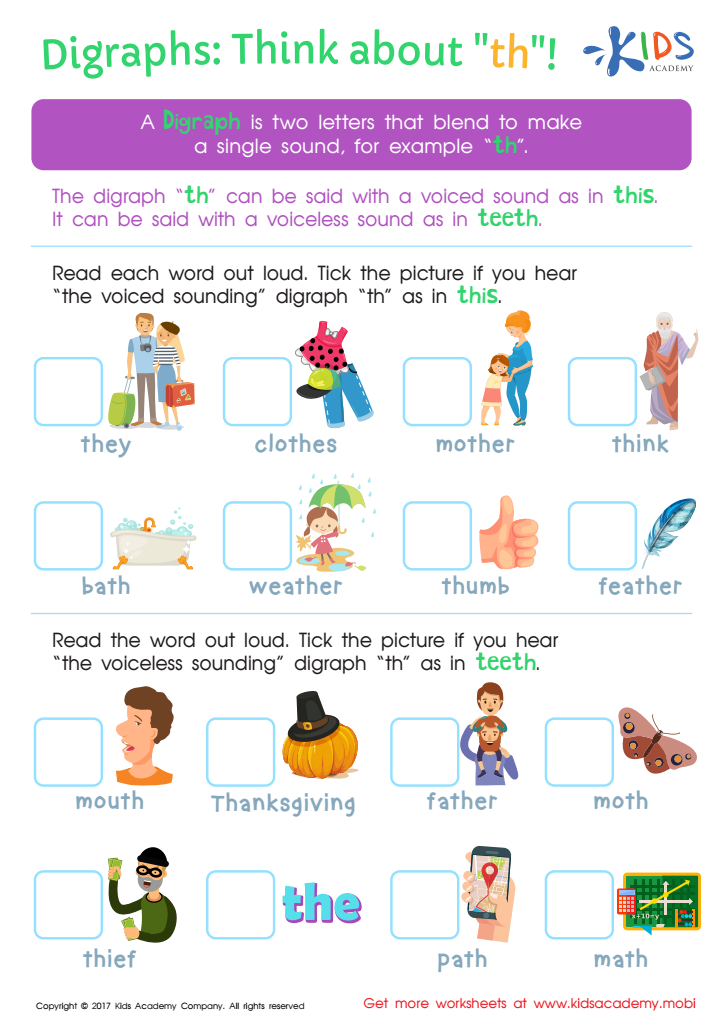
Digraphs: Think About "th" Worksheet
Help your child master phonics with this illustrated digraph Th printable worksheet. It will help recognize "Th" words, differentiate voiced and voiceless sounds and understand key concepts. Use similar words while they work to reap its full benefits!
 Assign to My Students
Digraphs: Think About "th" Worksheet
Worksheet
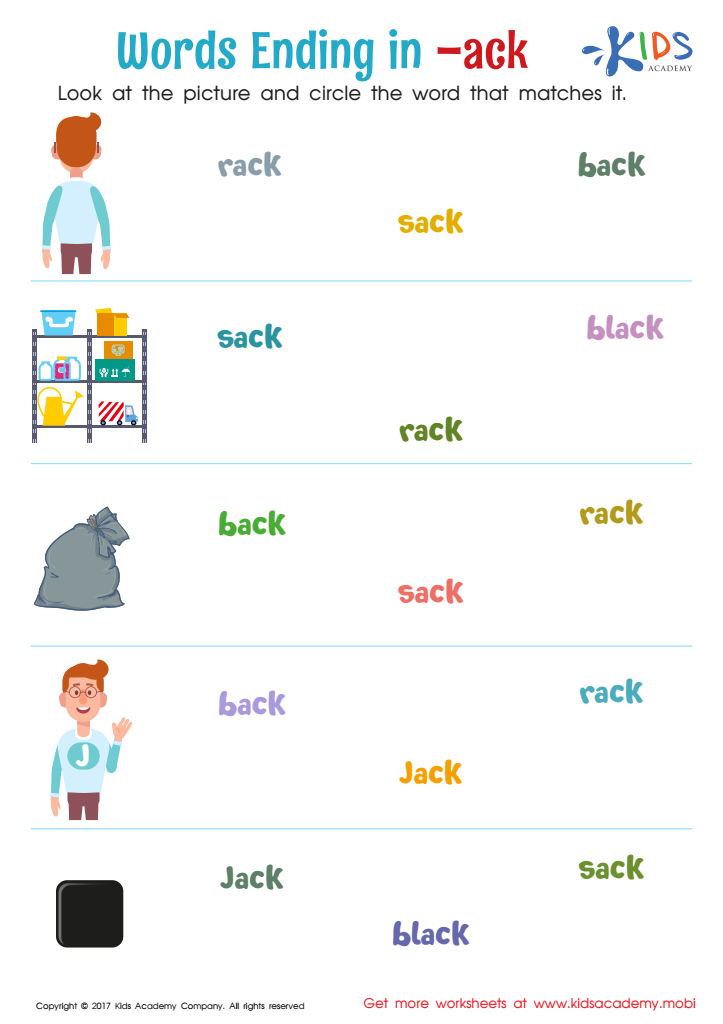
Words Ending in "ack" Spelling Worksheet
Worksheet
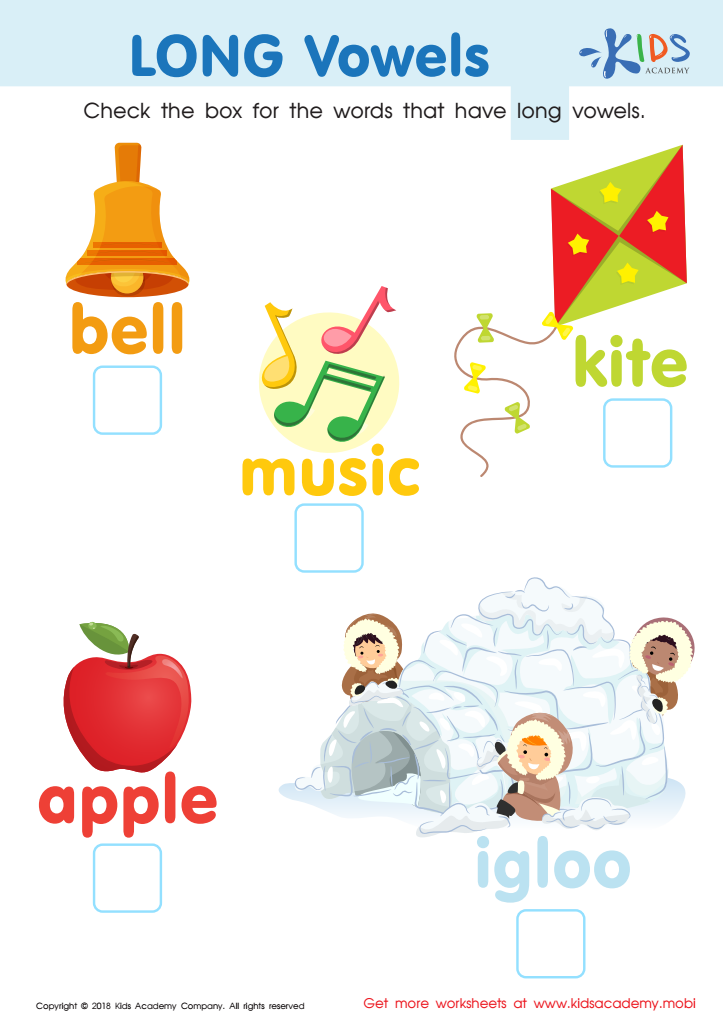
long vowels Worksheet
Have your early learner identify long vowels with this quick review. Ask them to name each picture aloud and listen out for the long vowel sounds to separate them from the shorter ones. Circle the ones that are long! Watch out for words with two vowels - they can be tricky!
long vowels Worksheet
Worksheet
Join Kids Academy for Free
Who is primarily going to use this learning content?





.jpg)


Phonics is a fundamental building block for literacy development in young children, particularly between the ages of 3 and 7. It teaches children the relationships between letters and sounds, enabling them to decode words and foster early reading skills. For parents and teachers, a strong grasp of phonics significantly impacts a child's ability to read fluently, spell correctly, and comprehend written text.
Early exposure to phonics helps to promote a child's love for reading, as they gain the confidence to tackle books independently. Additionally, phonics instruction has been shown to improve overall academic performance, not just in reading and writing, but across subjects requiring literacy skills.
Supporting phonics application also addresses different learning styles, accommodating both auditory and visual learners. As children engage with phonics through games, songs, and activities, they develop critical thinking and problem-solving abilities.
Furthermore, early mastery of phonics can identify potential reading difficulties early on, allowing for timely intervention. Ultimately, investing in phonics education equips children with essential skills, paving the way for lifelong reading habits and effective communication. For both parents and teachers, fostering phonics is a vital contribution to a child’s success in school and beyond.








