
Practice problem-solving Worksheets for Ages 3-7
5 filtered results
Difficulty Level
Grade
Age
-
From - To
Subject
Activity
Standards
Discover an engaging collection of practice problem-solving worksheets designed for children aged 3-7! Our resources aim to enhance critical thinking skills through fun and interactive activities. Each worksheet is carefully crafted to cater to the developmental stages of young learners, promoting teamwork and independent thinking. Kids will develop essential skills while solving puzzles, completing patterns, and engaging in hands-on tasks that fuel their creativity and curiosity. Perfect for home or classroom use, these worksheets empower teachers and parents to support their child's learning journey effectively. Help your little ones build confidence as they tackle problems with enthusiasm and joy!
Favorites
With answer key
Interactive
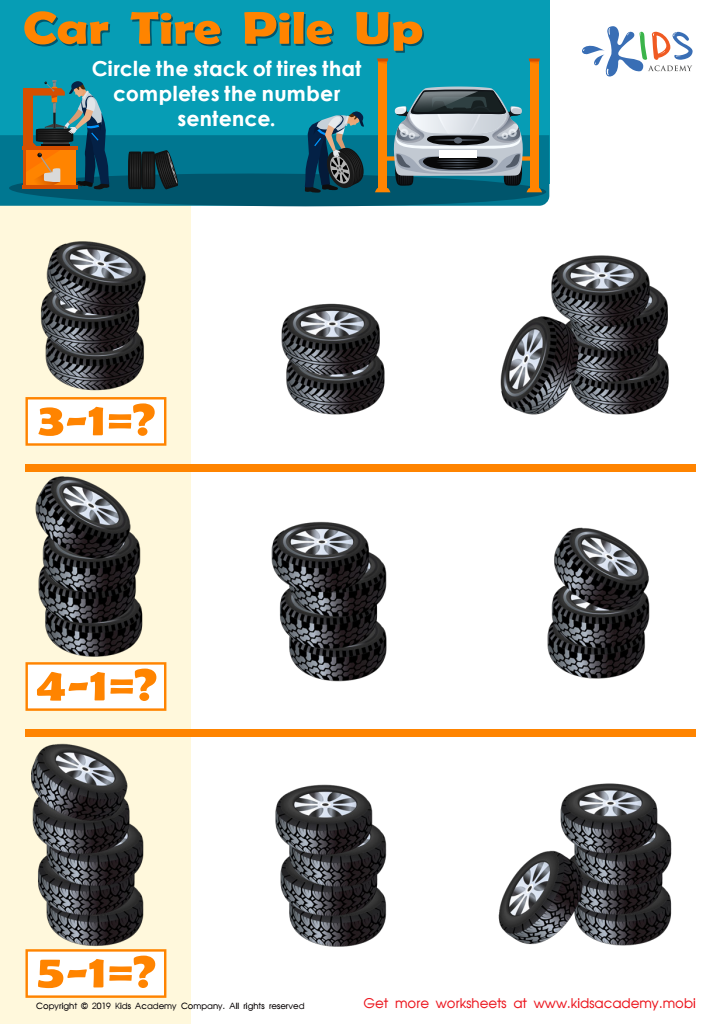
Car Tire Pile Up Worksheet
Examine the pic with your kids. Can they recognize the items piled up? The tires are organized in different quantities. Equations are on the left. Have your children work out the equations, counting the tire stacks to identify the correct answer.
 Assign to My Students
Car Tire Pile Up Worksheet
Worksheet
Join Kids Academy for Free
Who is primarily going to use this learning content?








Practice problem-solving for children ages 3-7 is vital for their cognitive and emotional development, making it essential for parents and teachers to prioritize it. At this developmental stage, children are naturally curious and eager to explore their environment. When they engage in problem-solving activities, they learn to think critically, reason logically, and develop essential cognitive skills that lay the groundwork for future learning.
Problem-solving also fosters creativity, enabling children to come up with innovative solutions to challenges they encounter. Additionally, it enhances their social skills as they often work in groups, learning to communicate effectively, negotiate, and collaborate with their peers.
Moreover, early problem-solving experiences contribute to better emotional resilience. When children face obstacles and learn to navigate them, they become more confident individuals who can handle frustrations and setbacks. This resilience will serve them well as they encounter more complex problems in school and life.
By supporting problem-solving education, parents and teachers help children build a toolkit of skills that extend beyond academics, promoting a lifelong love of learning and adaptability. Ultimately, nurturing these abilities during early childhood sets the stage for responsible, capable adults who can tackle challenges creatively and effectively.








