Sentence completion Worksheets for Ages 3-7
5 filtered results
-
From - To
Enhance your child's language skills with our fun and engaging Sentence Completion Worksheets designed specifically for ages 3-7. These worksheets stimulate young minds, fostering creativity, and improving literacy through interactive activities. Each worksheet presents simple, age-appropriate sentences where children fill in the blanks, encouraging them to think critically and use context clues. Perfect for early learners, these exercises also aid in vocabulary building and comprehension. Happy learning with our vibrant, educational printables, thoughtfully crafted to support your child's developmental milestones in a joyful and effective way. Download now and watch your little ones thrive!
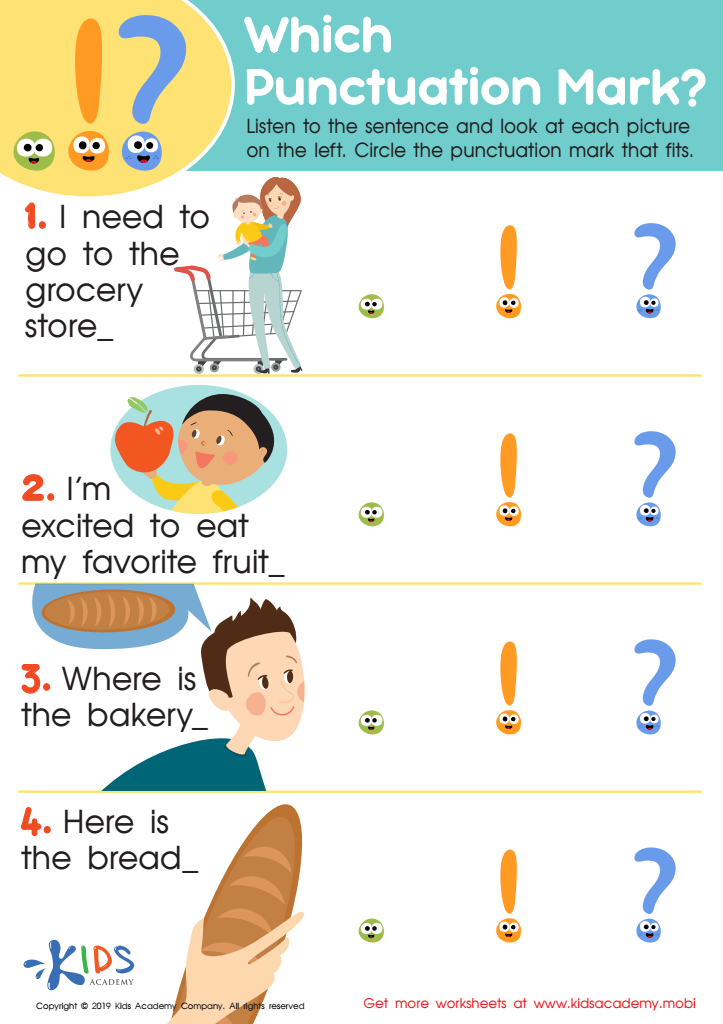
Which Punctuation Mark Worksheet
 Assign to My Students
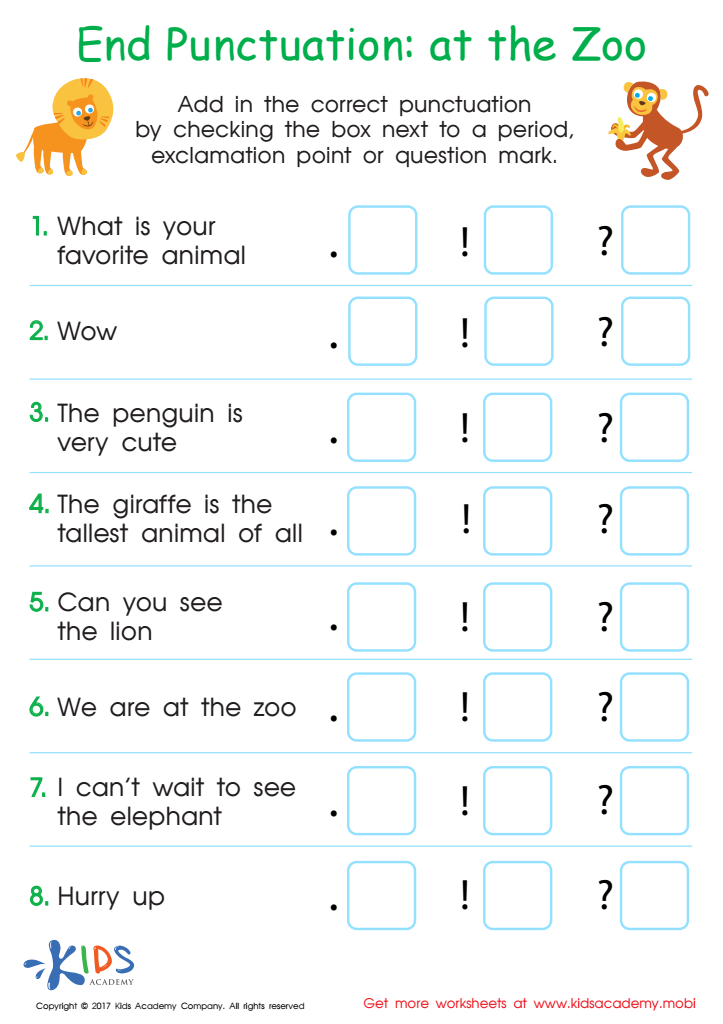
End Punctuation: At the Zoo Worksheet
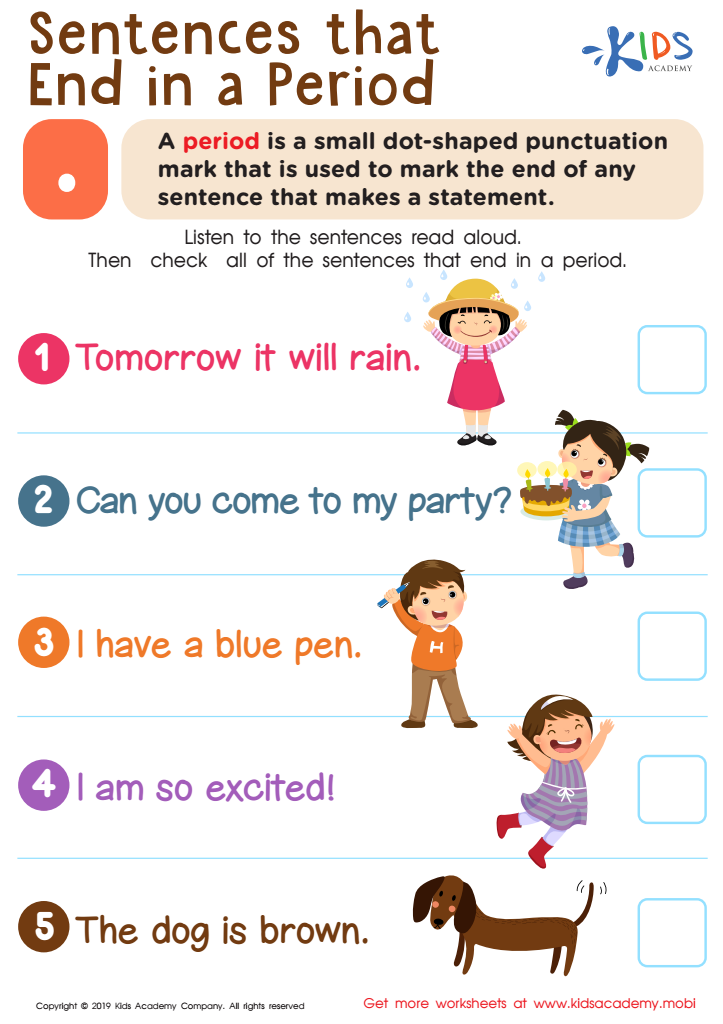
Sentences That End in a Period Worksheet
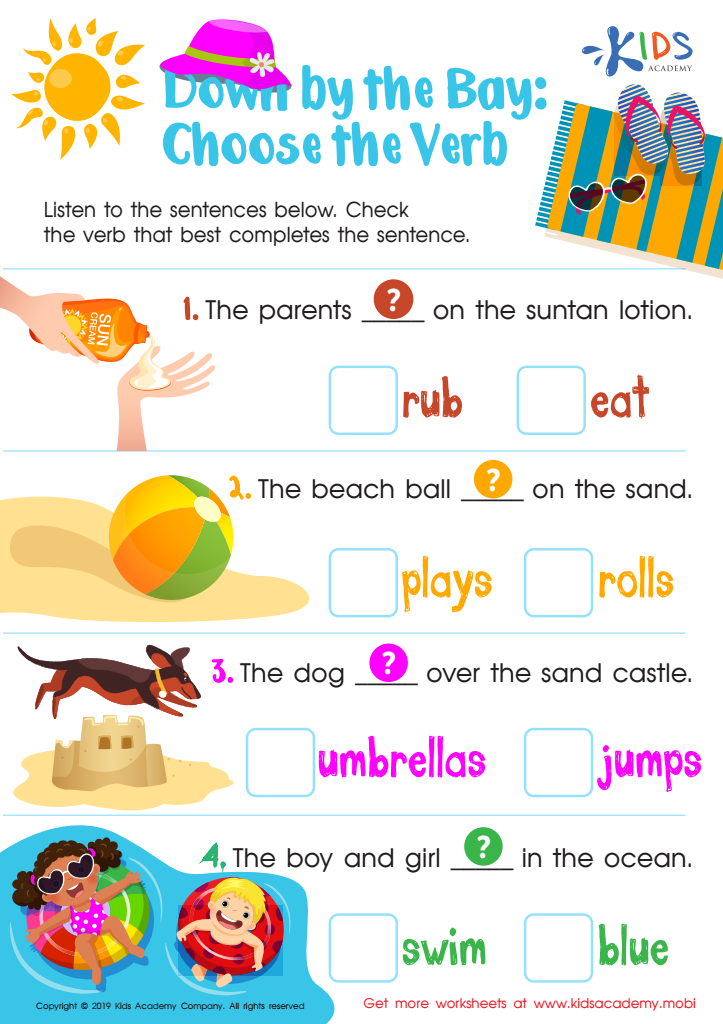
Down by the Bay: Choose the Verb Worksheet
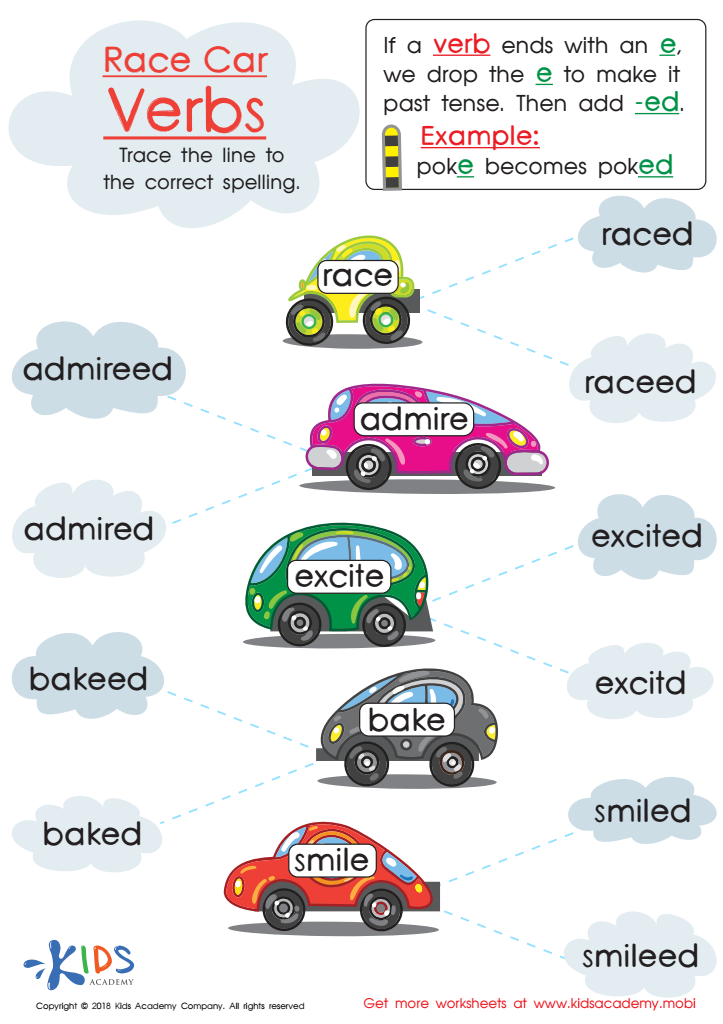
Race Car Verbs Worksheet







Sentence completion activities are crucial for young children's language development, making them important for both parents and teachers to implement. For children ages 3-7, who are in the foundational stages of language acquisition and cognitive development, these activities offer several vital benefits.
Firstly, they enhance vocabulary. By completing sentences, children are exposed to new words and phrases in context, helping them grasp the meanings and uses of these terms. This enriched vocabulary fosters better communication skills, further boosting their ability to express thoughts and ideas clearly and confidently.
Secondly, sentence completion exercises teach grammar and sentence structure subtly but effectively. Children learn how to construct coherent sentences by filling in the blanks, improving their understanding of syntax and making them better writers in the future.
Additionally, these activities foster critical thinking and creativity. Children need to think about what makes sense semantically and grammatically, promoting cognitive skills such as problem-solving and logical reasoning.
Parents and teachers should care about sentence completion because it supports early literacy. Early proficiency in these areas lays a strong foundation for future academic success. Engaging children in these activities in a fun, supportive environment can ignite a lifelong love of learning and improve educational outcomes significantly.








