
Understanding bar graphs Worksheets for Ages 3-7
4 filtered results
Difficulty Level
Grade
Age
-
From - To
Subject
Activity
Standards
Our "Understanding Bar Graphs Worksheets for Ages 3-7" are designed to introduce young learners to the basics of data interpretation. These engaging and colorful worksheets help children grasp the concept of bar graphs by using simple and relatable illustrations. Each activity is carefully crafted to develop essential skills such as counting, comparing, and understanding the representation of information. Our worksheets encourage curiosity and critical thinking, ensuring that your child builds a solid foundation in math while having fun. Perfect for both classroom and at-home learning, these resources are ideal for young minds eager to explore the world of data!
Favorites
With answer key
Interactive
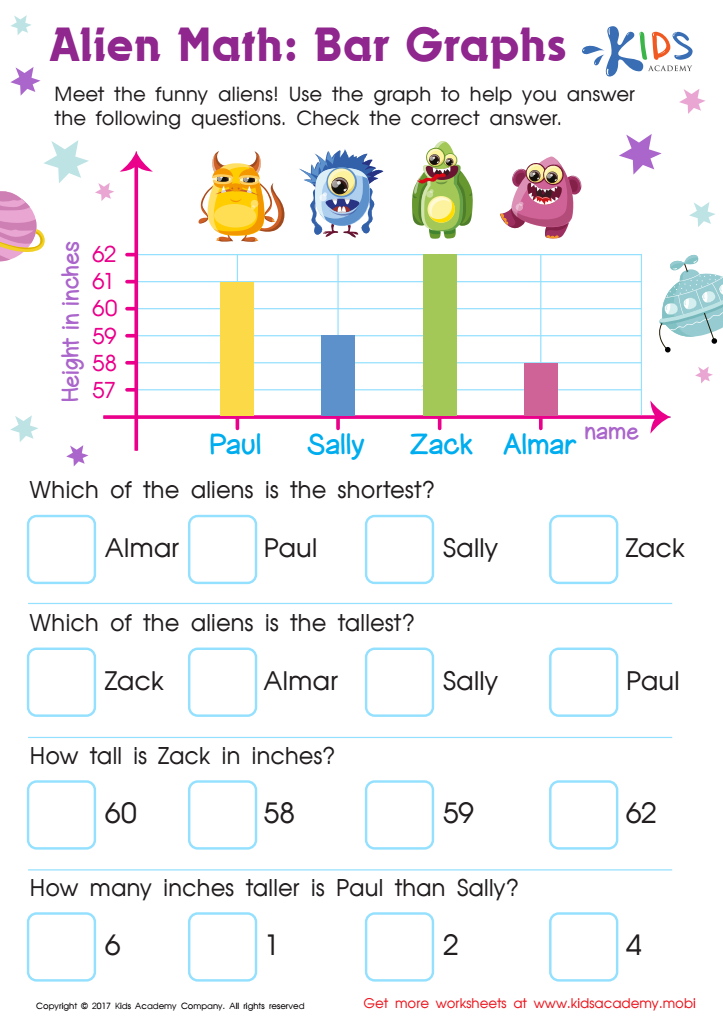
Bar Graphs Worksheet
Let's blast off to outer space and visit our funny alien friends with this bar graphs worksheet PDF! Kids gain valuable measurement and data analysis skills by comparing sizes of the aliens and working with bar graphs.
 Assign to My Students
Bar Graphs Worksheet
Worksheet
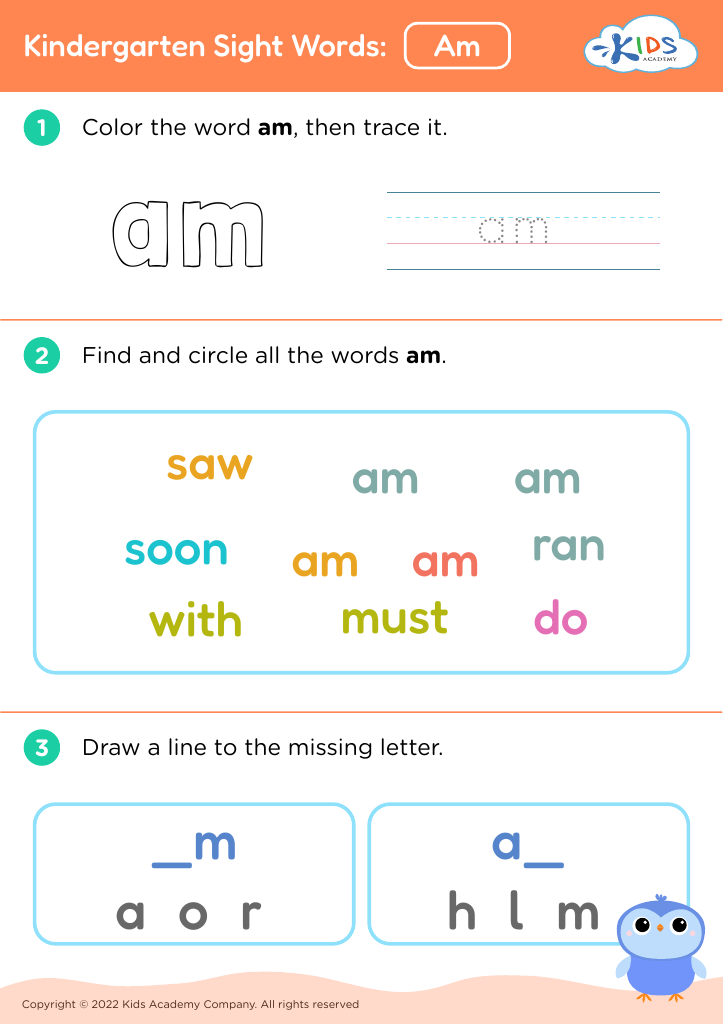
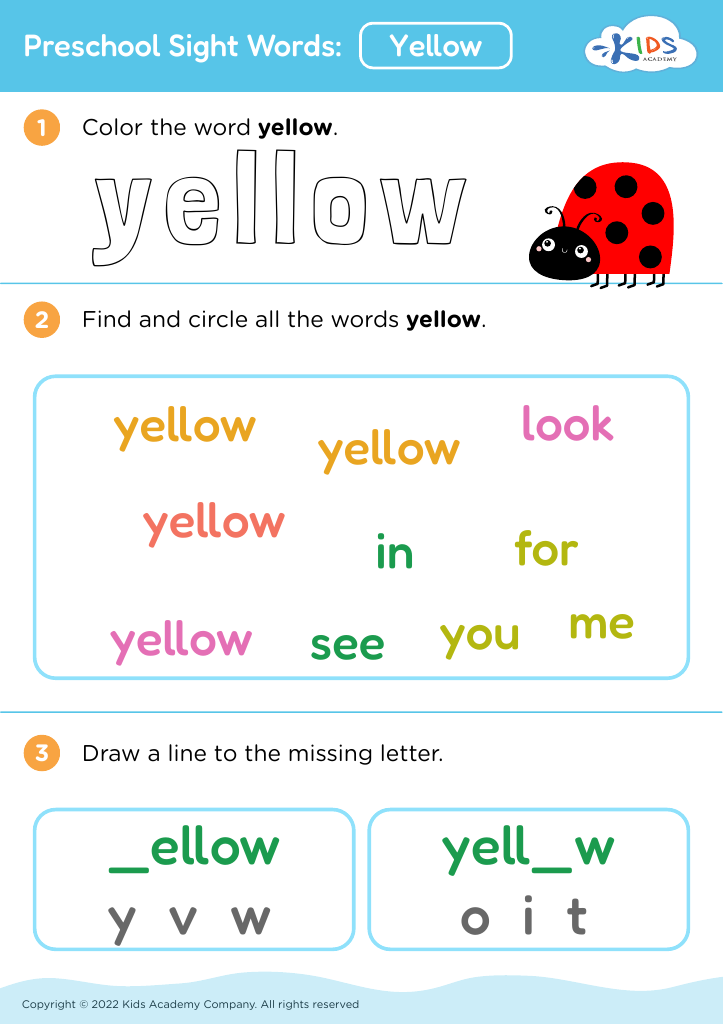
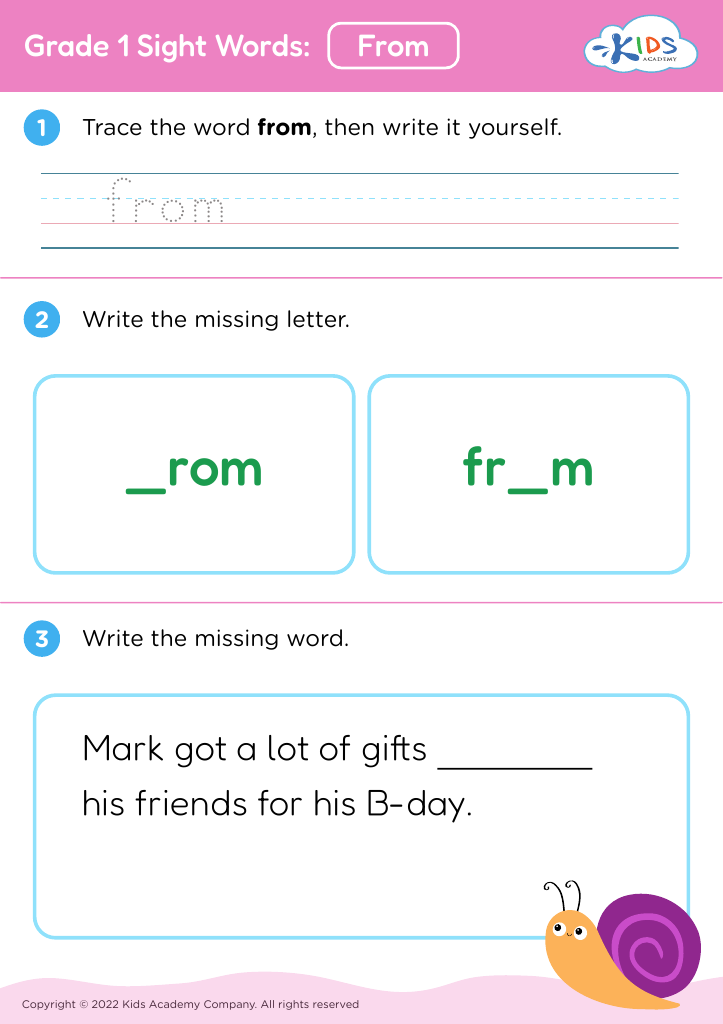
Join Kids Academy for Free
Who is primarily going to use this learning content?








Understanding bar graphs at an early age is crucial for young children as it lays the foundation for essential math and cognitive skills. Bar graphs are a simple and effective way to visually represent data, and introducing this concept between ages 3 to 7 can provide many educational benefits.
Firstly, bar graphs help children understand the concept of comparison and measurement. By comparing various quantities represented in a graph, children learn how to identify more, less, and equal amounts. This enhances their ability to think critically and make informed decisions based on visual data.
Secondly, early exposure to bar graphs supports the development of organizational and analytical skills. It teaches children how to categorize information and recognize patterns, which are fundamental skills in problem-solving and logical thinking.
Moreover, understanding bar graphs aligns with Common Core Standards in early math education. These standards emphasize the importance of data interpretation and representation, ensuring that children are well-prepared for more advanced mathematical concepts in later grades.
Parents and teachers play a critical role in facilitating this learning by providing hands-on activities and interactive tools, such as building bar graphs using blocks or drawing them together. This makes learning fun and engaging while fostering a lifelong appreciation for data literacy and mathematics.








