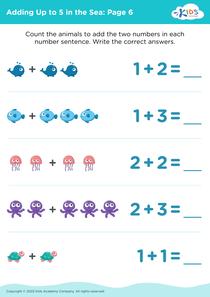
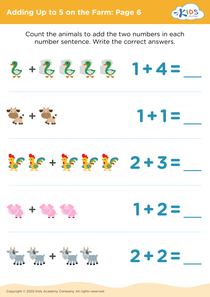
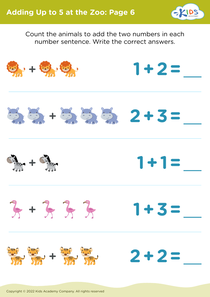
Animal recognition Adding in the Forest Worksheets for Ages 3-7
15 filtered results
-
From - To
Introduce your little ones to the wonders of the forest with our "Animal Recognition Adding in the Forest Worksheets" designed for ages 3-7! These engaging worksheets combine the excitement of animal exploration with essential math skills. Young learners will recognize various animals while practicing addition in a fun and interactive way. From counting furry friends to adding up their delightful forest companions, these activities will ignite curiosity and foster a love for nature. Ideal for preschool and early grade educators, these worksheets promote both cognitive and sensory development. Unlock your child's potential with these enjoyable, educational resources today!
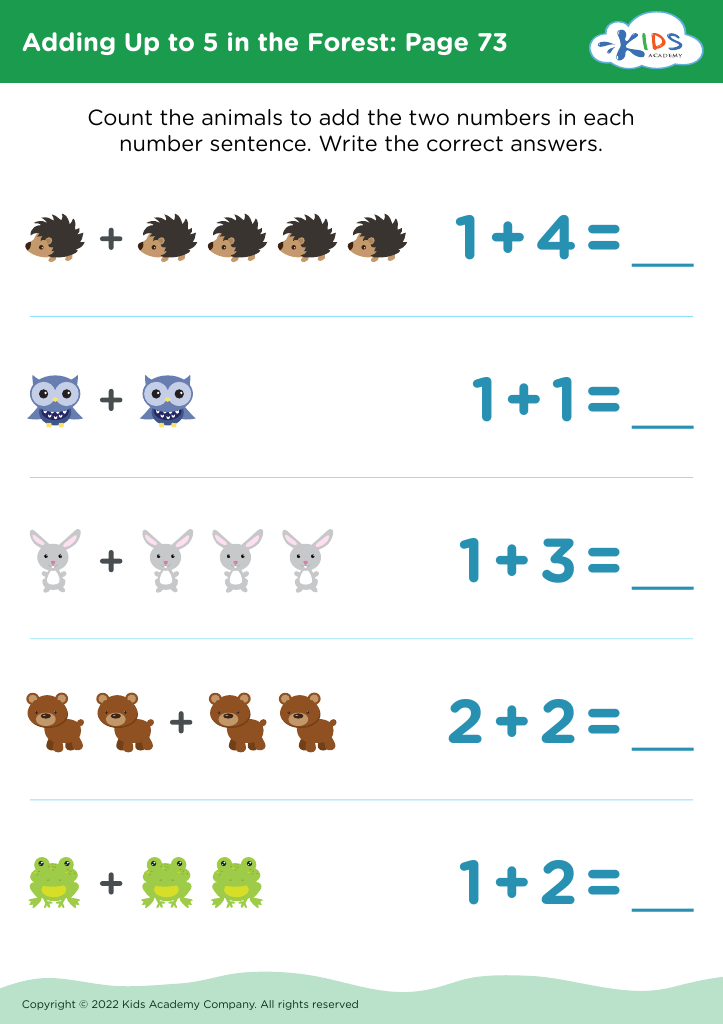
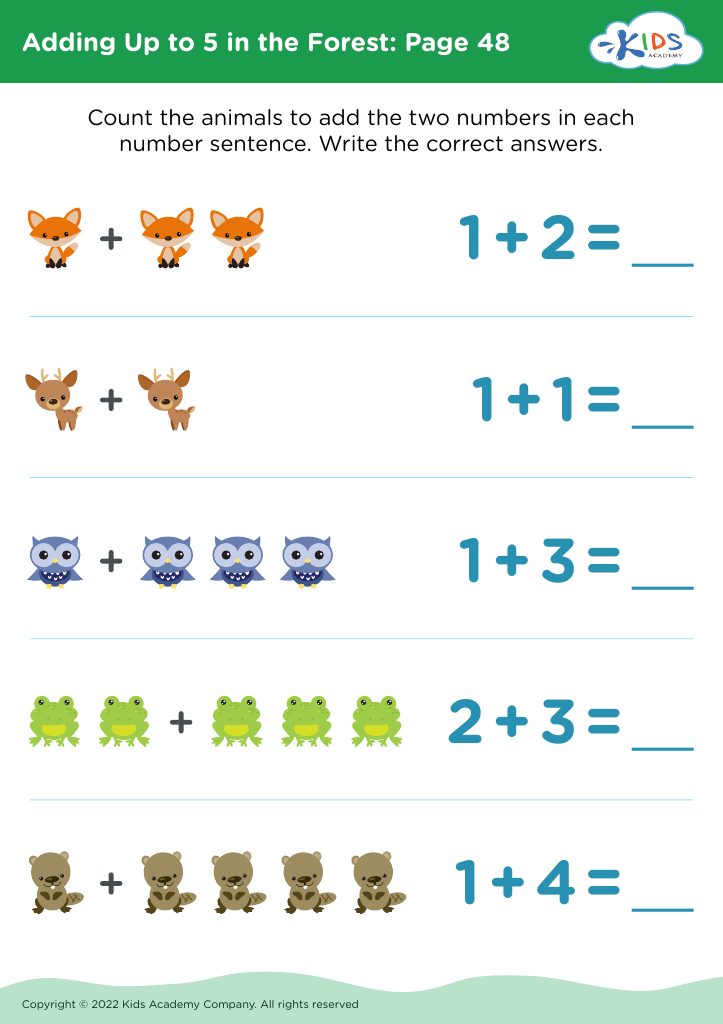
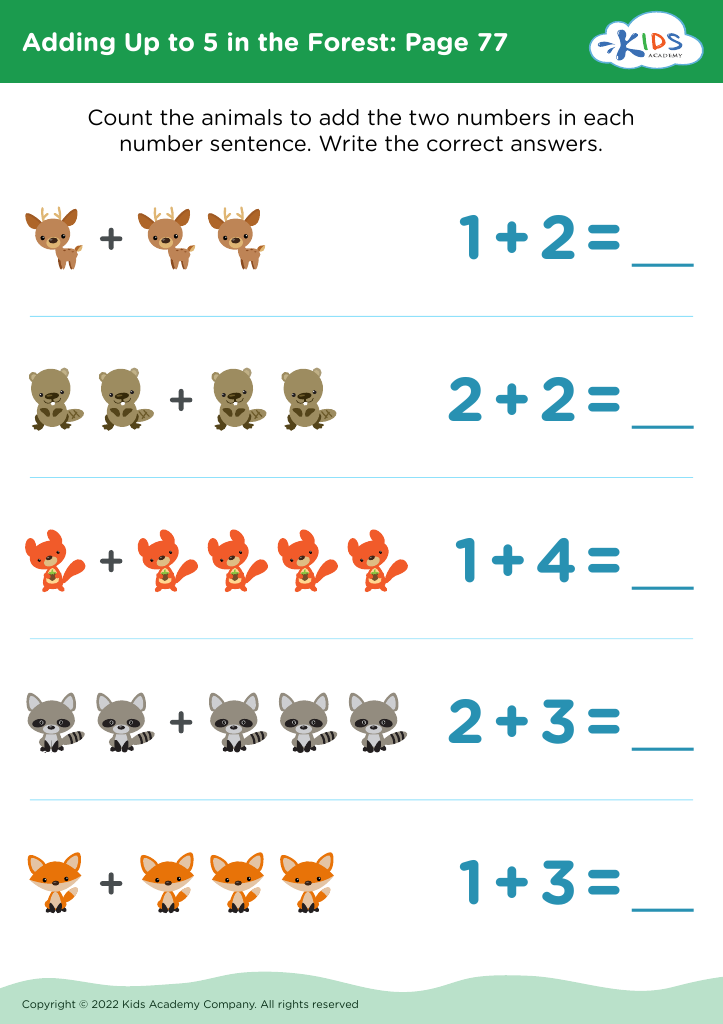
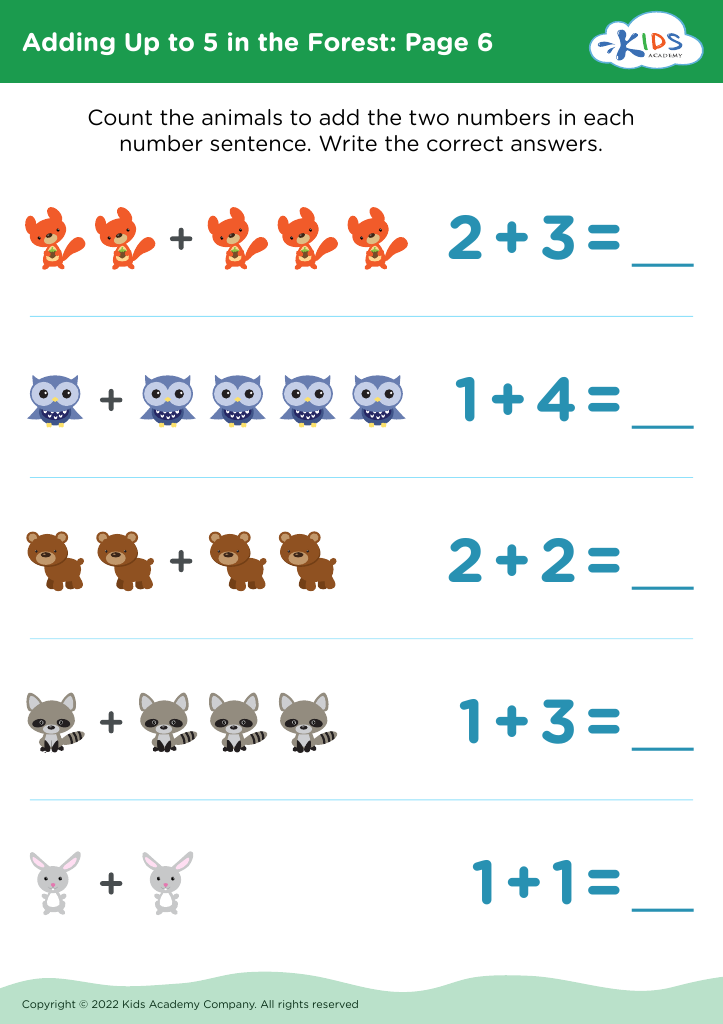
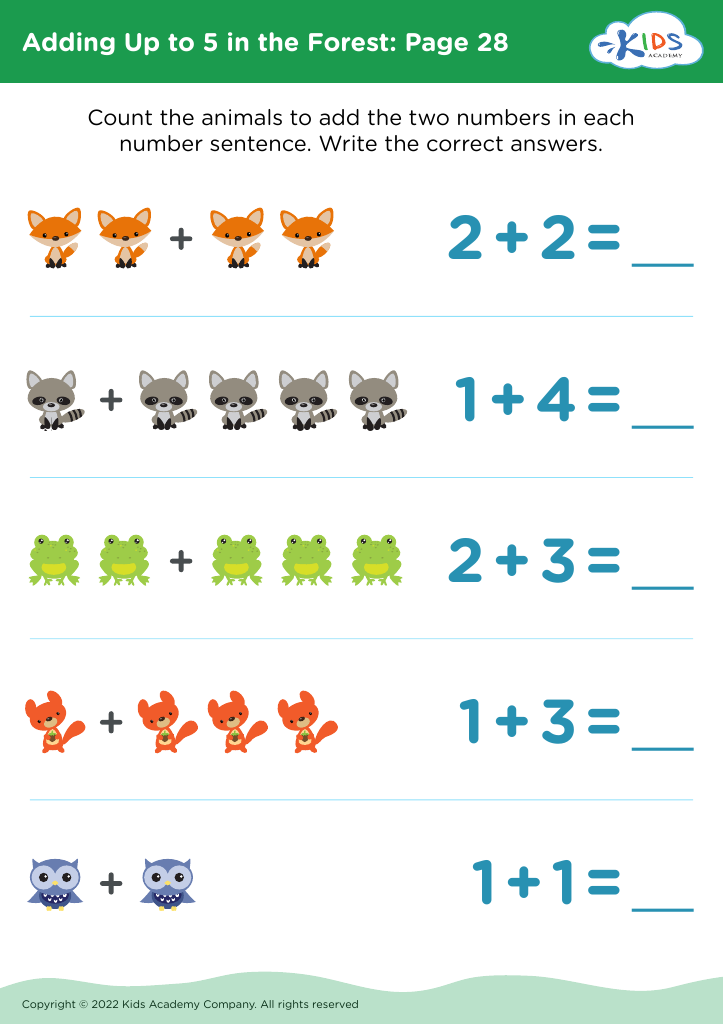
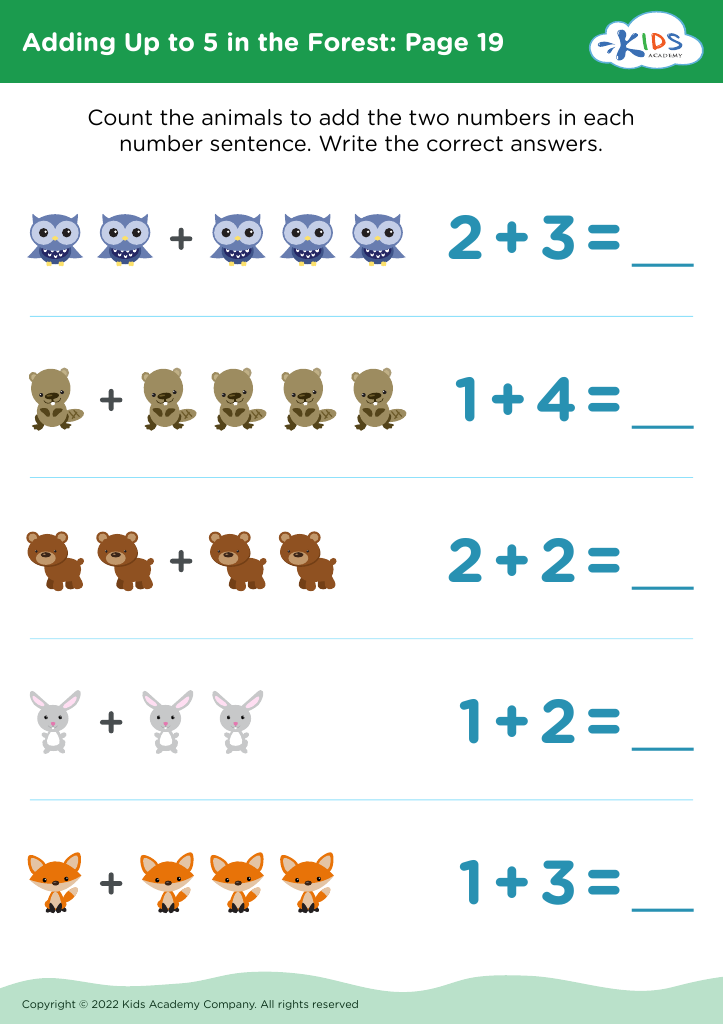
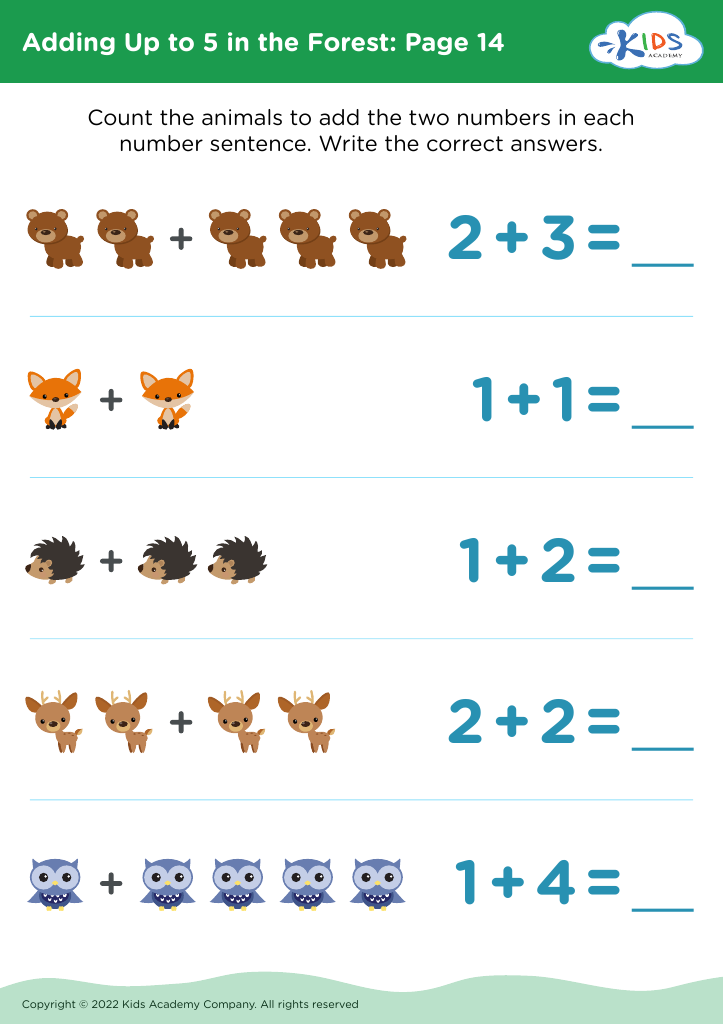
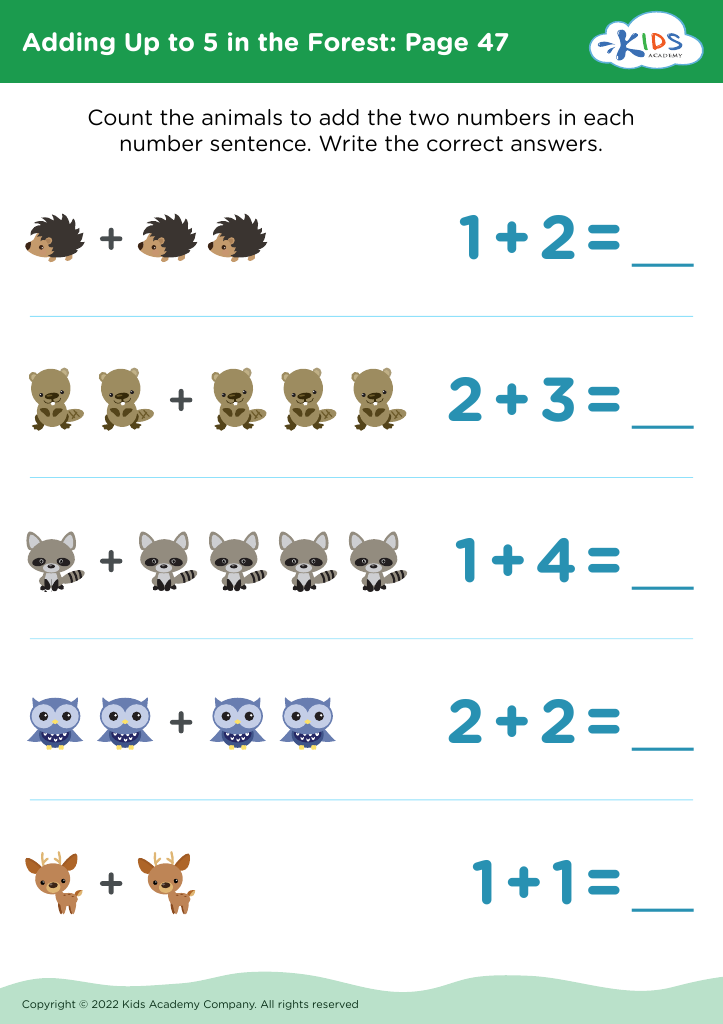
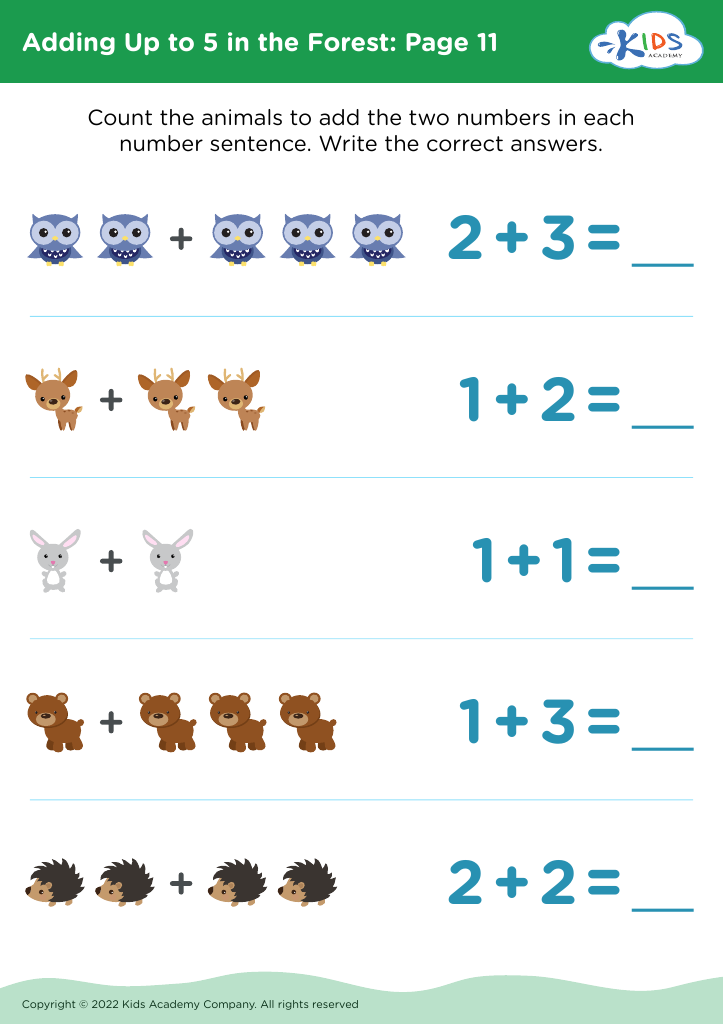
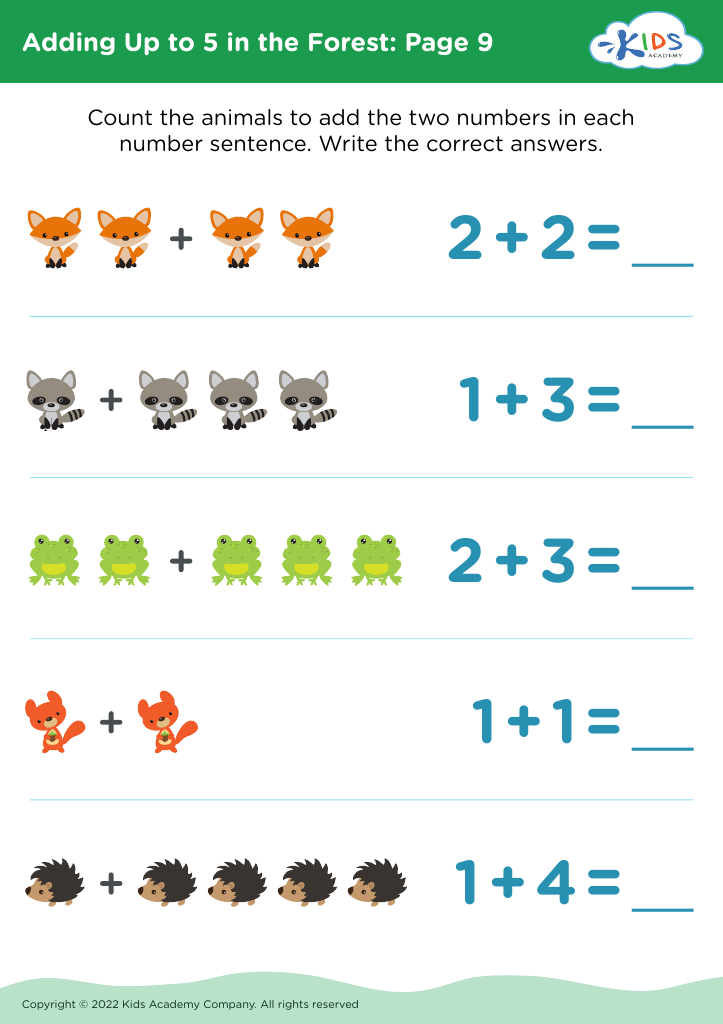
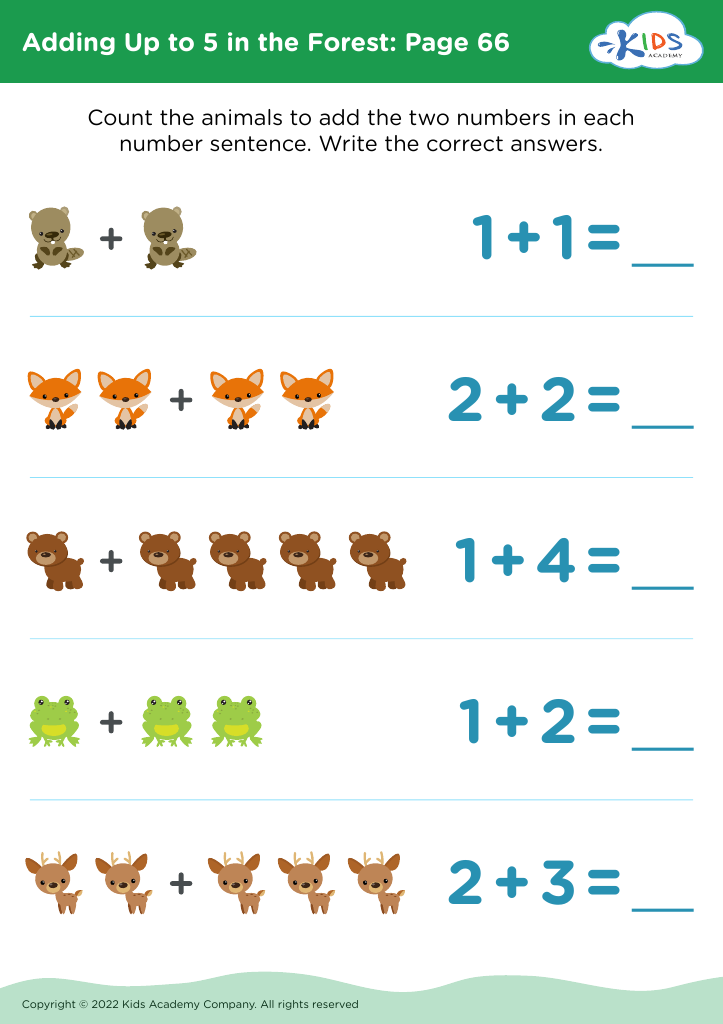
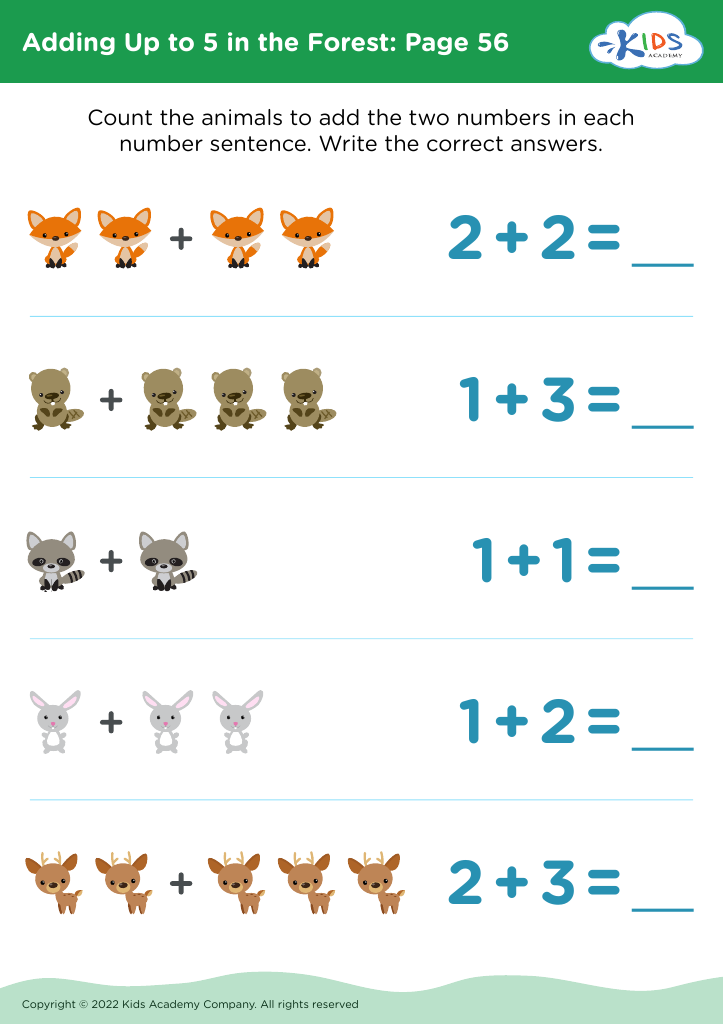
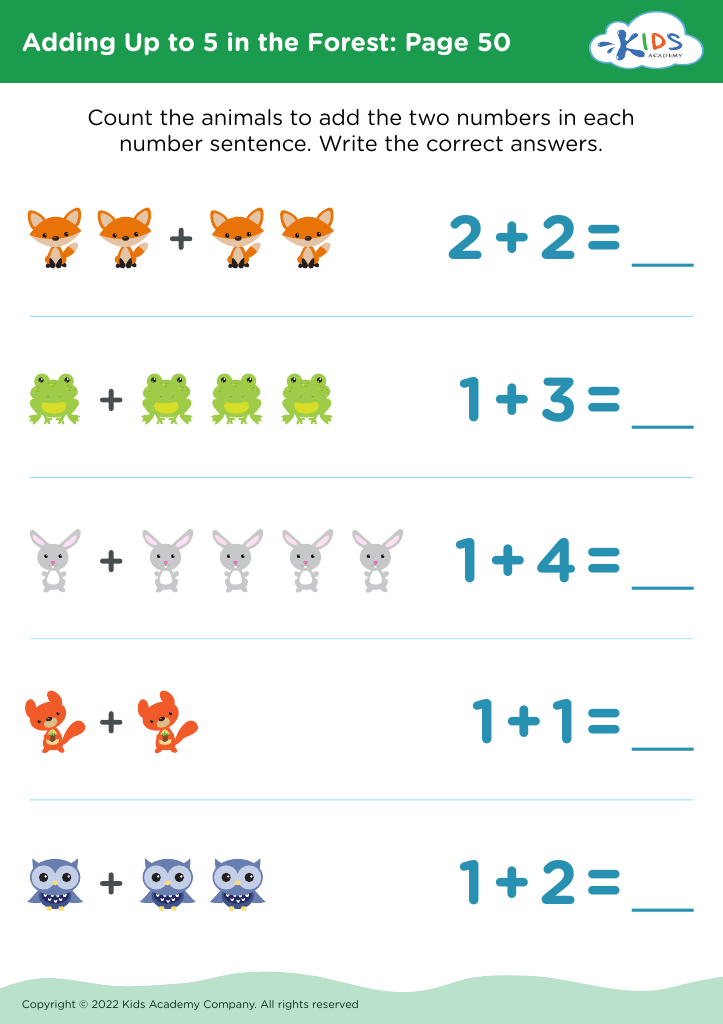
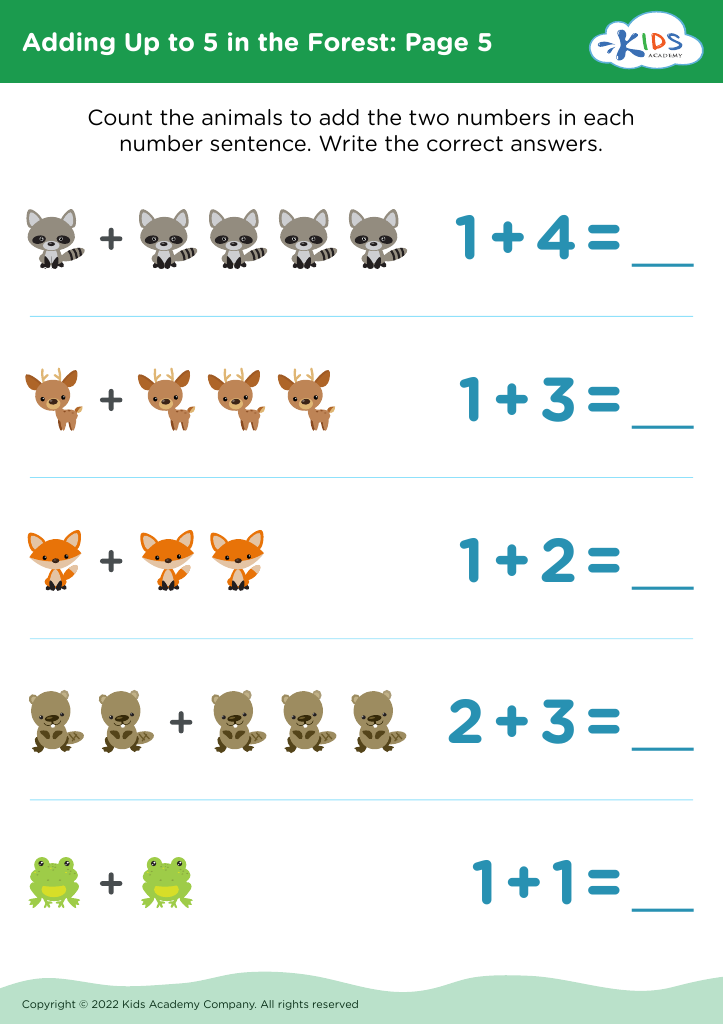
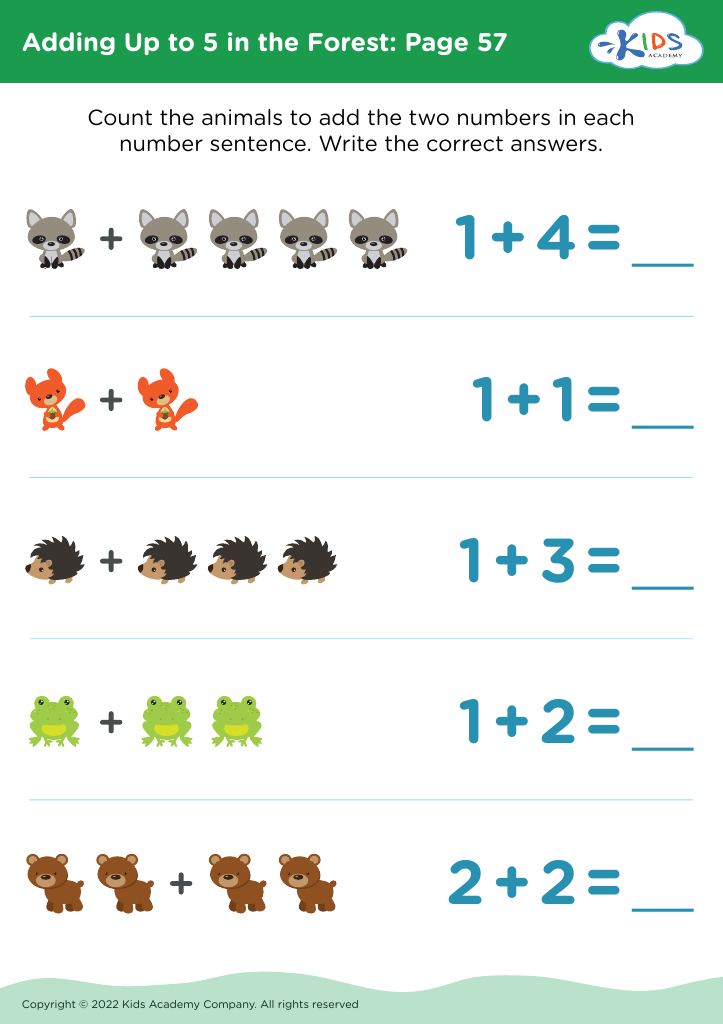



Animal recognition in "Adding in the Forest" offers numerous benefits for children aged 3-7, making it an essential focus for parents and teachers. Firstly, recognizing animals fosters curiosity and encourages exploration of the natural world. Engaging with nature allows young learners to develop a deeper understanding of biodiversity, promoting respect for wildlife and the environment.
Additionally, incorporating animal recognition into educational activities helps enhance cognitive development. Children improve their observational skills and memory retention by identifying different animals and their characteristics. This foundational knowledge can also reinforce math concepts, such as counting and sorting, through playful integration of animals as approachable learning tools.
Socially, discussing animals allows children to connect with their peers over shared interests, cultivating teamwork and cooperative play. It also offers opportunities to develop empathy, as they learn about the lives and habitats of different creatures. Furthermore, storytelling and imaginative play involving animals contribute to language development, enhancing vocabulary and communication skills.
Ultimately, animal recognition enriches children's lives, stimulating intellectual curiosity, nurturing values of compassion, and promoting a keen appreciation for the environment, making it a valuable area for parents and teachers' active engagement.