Basic Addition Skills Adding in the Forest Worksheets for Ages 3-7 - Page 3
55 filtered results
-
From - To
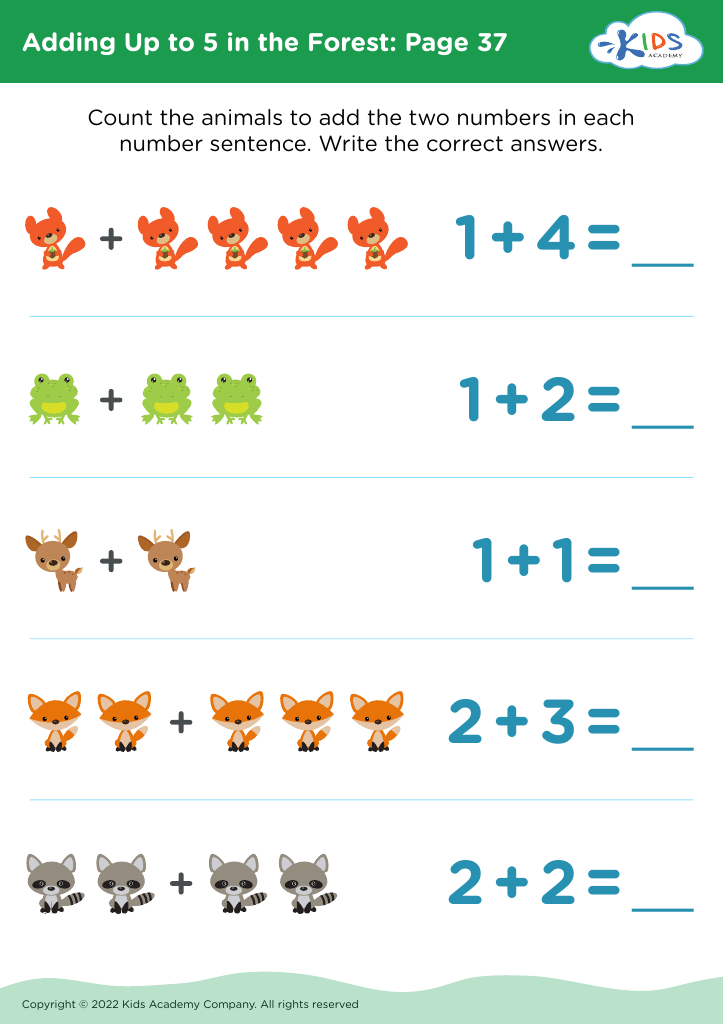
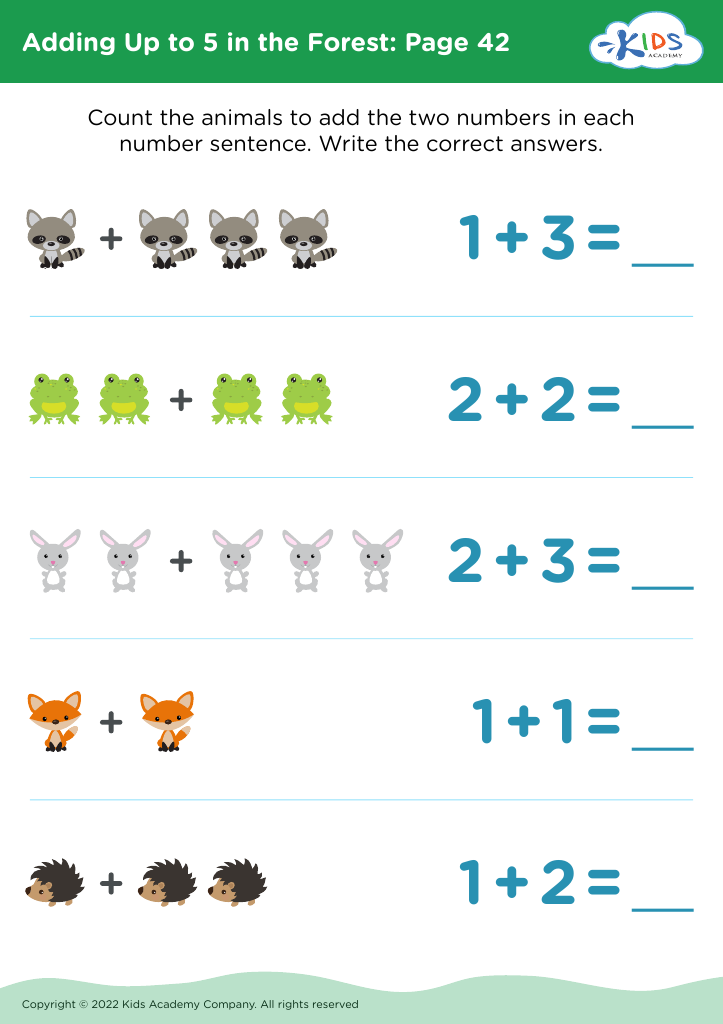
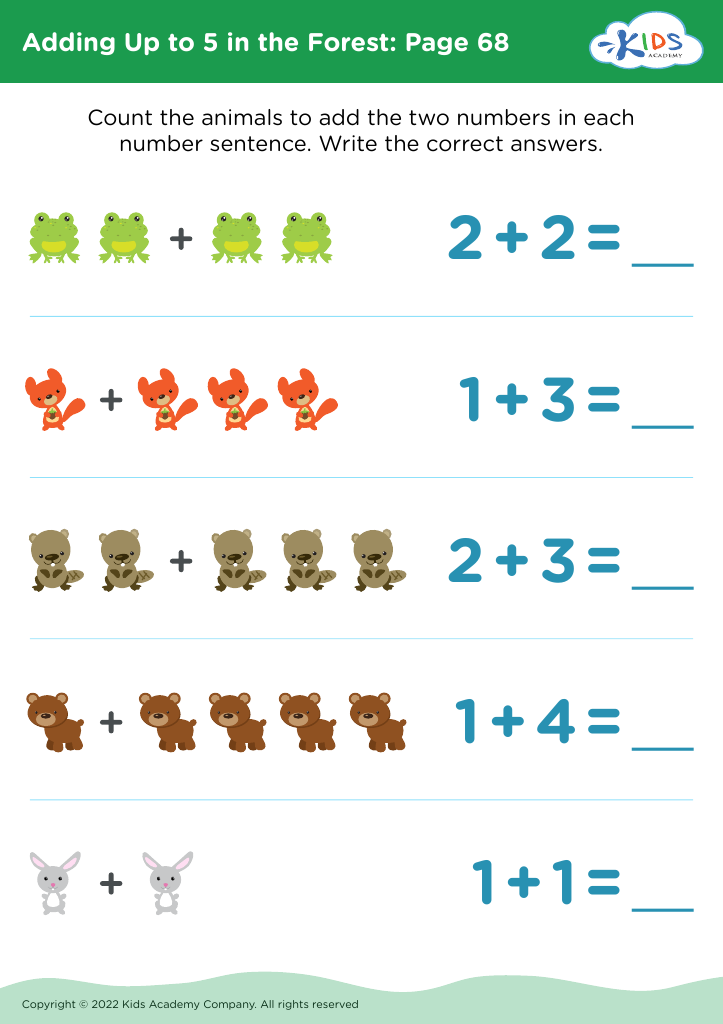
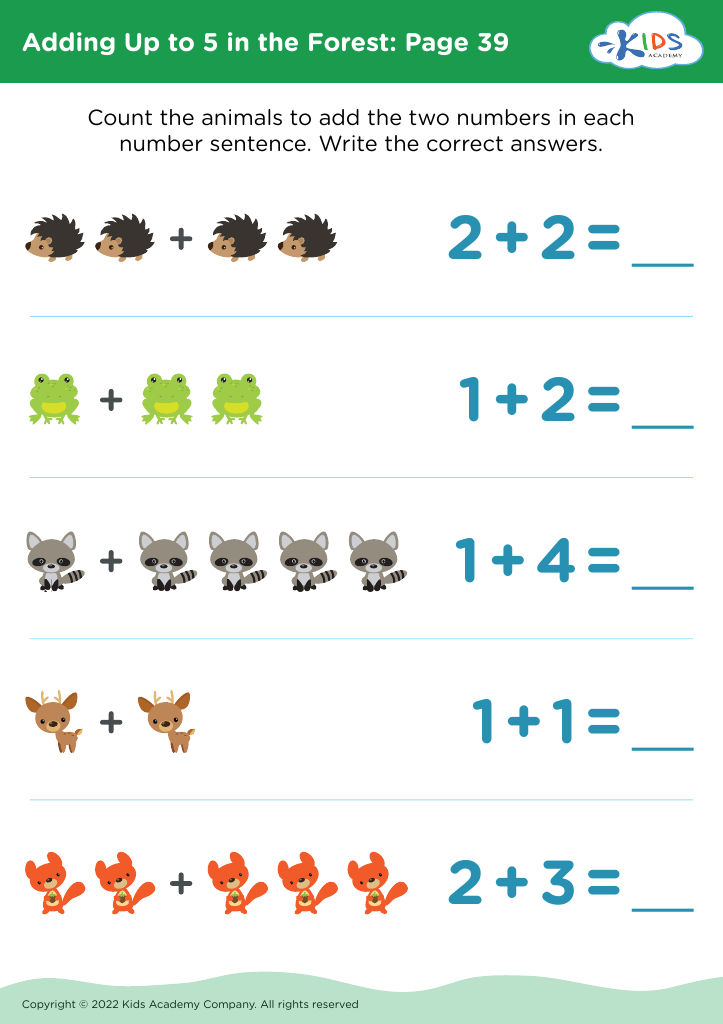
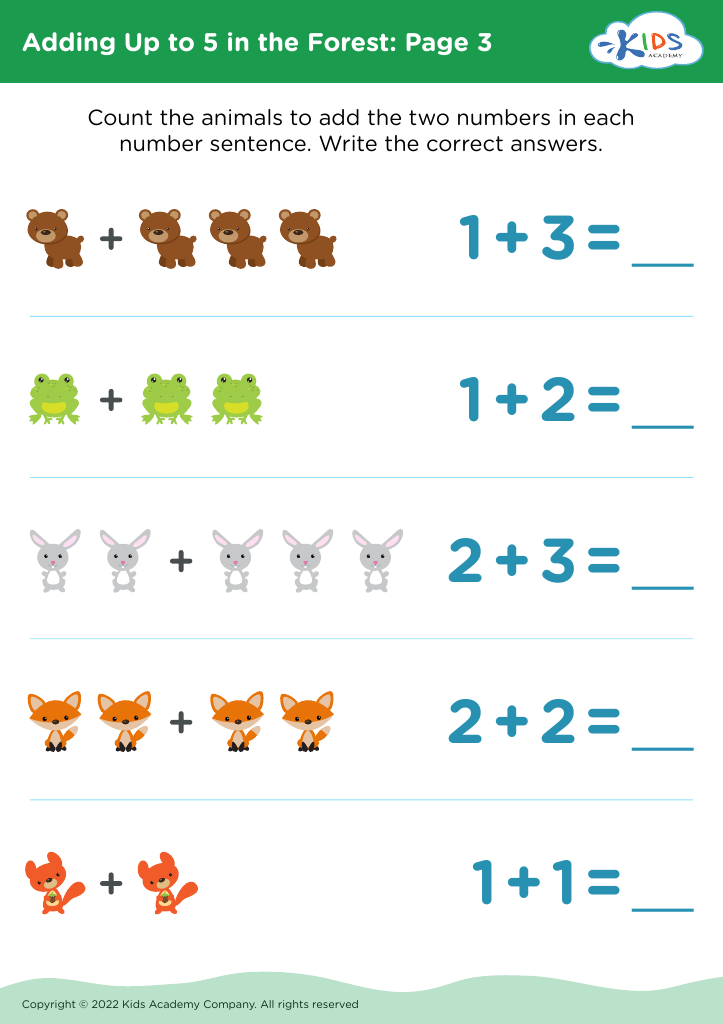
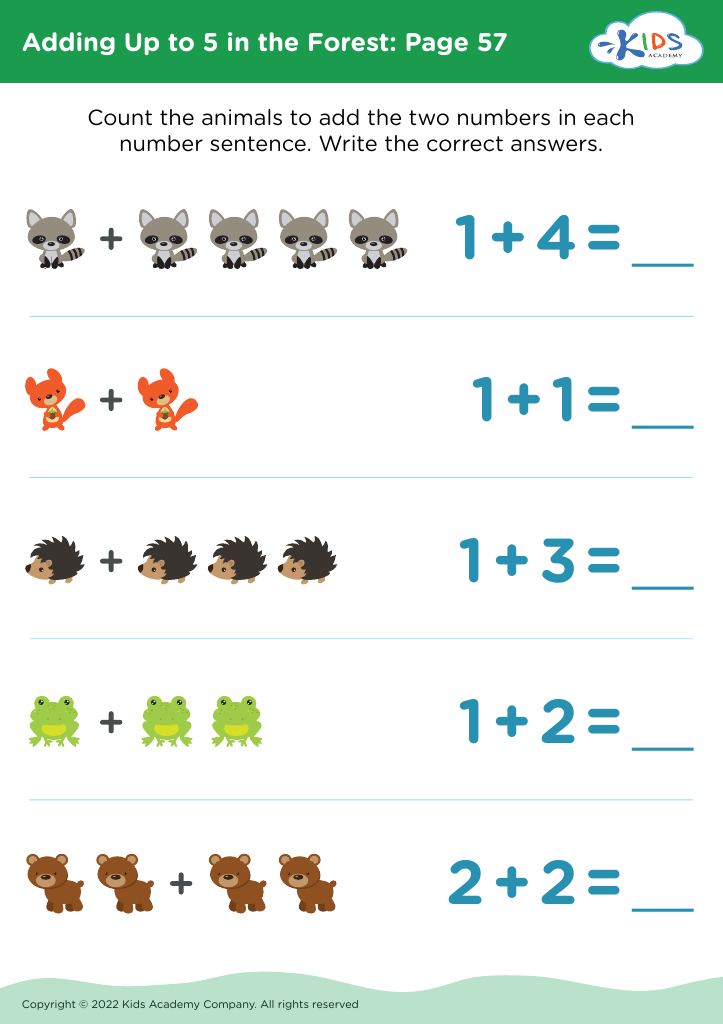
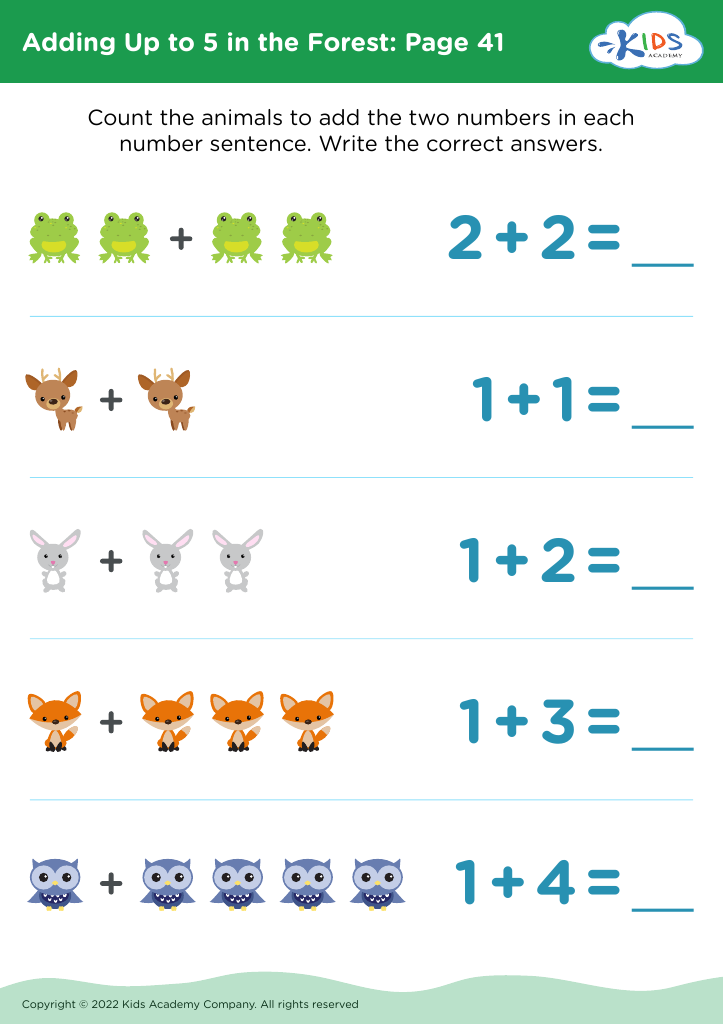



Basic addition skills are foundational for young learners, particularly those aged 3-7. Developing these skills through playful and engaging activities like "Adding in the Forest" combines learning with the natural world, fostering both cognitive and motor skills. When children learn to add in a meaningful context, they can visualize concepts, making it easier to grasp numerical relationships.
Furthermore, strong addition skills set the stage for future mathematical proficiency. Early numeracy is closely linked to later academic success, and mastering these skills can help reduce anxiety surrounding math. Parents and teachers should care because fostering a positive attitude towards math at an early age can sustain a child's enthusiasm and confidence in learning.
Additionally, incorporating nature into learning activities promotes physical health and curiosity. Outdoor settings stimulate children's senses and encourage exploration, which can make learning more memorable. By making basic addition relatable and fun, children are more likely to engage, participate, and retain information. Ultimately, prioritizing early addition skills through activities like "Adding in the Forest" enables children to build a strong mathematical foundation while enjoying interactive, hands-on experiences in a rich learning environment. This holistic approach to education can significantly impact their lifelong relationship with learning and mathematics.