Fine Motor Skills Adding in the Forest Worksheets for Ages 3-7
5 filtered results
-
From - To
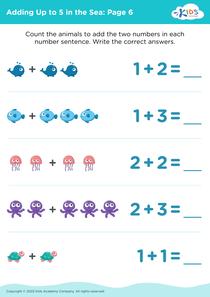
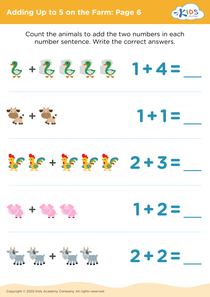
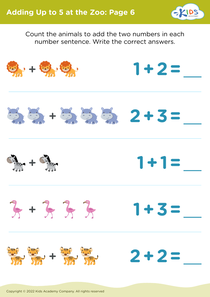
Enhance your child's fine motor skills with our "Fine Motor Skills Adding in the Forest Worksheets" designed for ages 3-7. These engaging, forest-themed worksheets help young learners develop hand-eye coordination while mastering basic addition. Each activity captivates children's imagination as they count woodland creatures, trace numbers, and solve fun math puzzles. Perfect for preschoolers and early elementary students, our worksheets encourage precise control of small muscles essential for writing and daily tasks. Explore our collection and make learning math an exciting adventure through the enchanting forest! Ideal for home or classroom use, these worksheets foster both fine motor and mathematical skills.
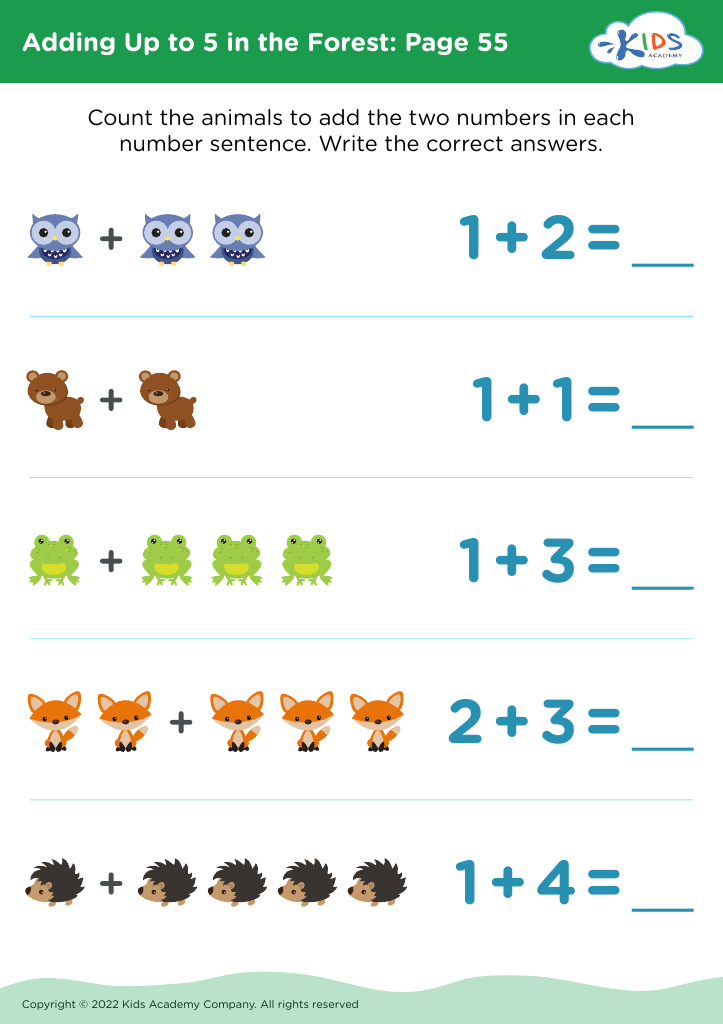
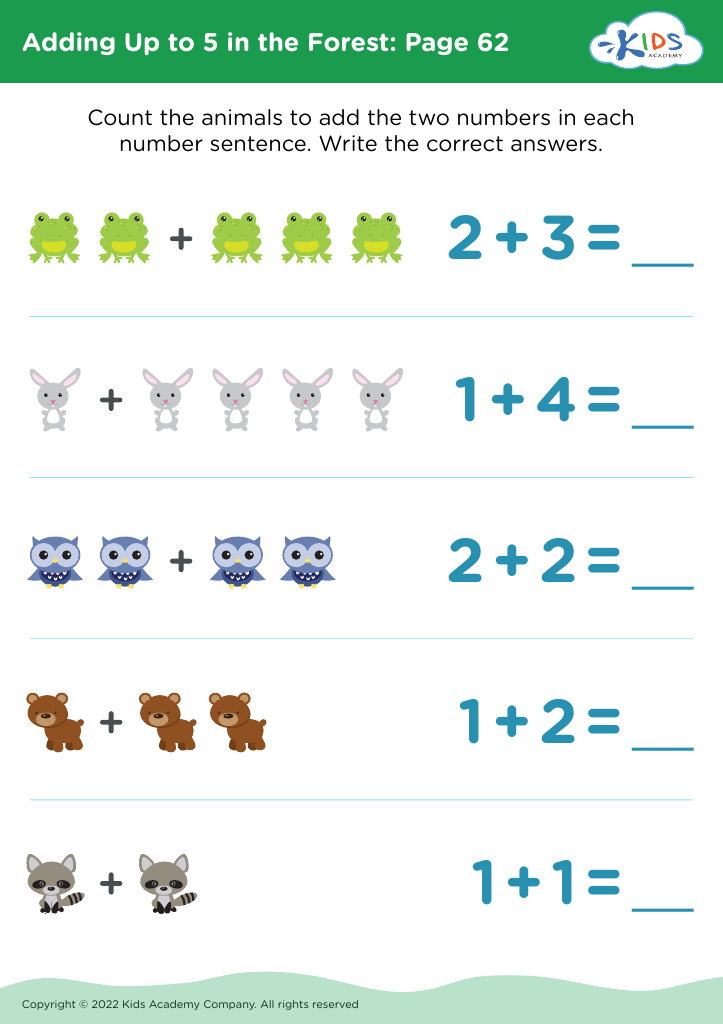
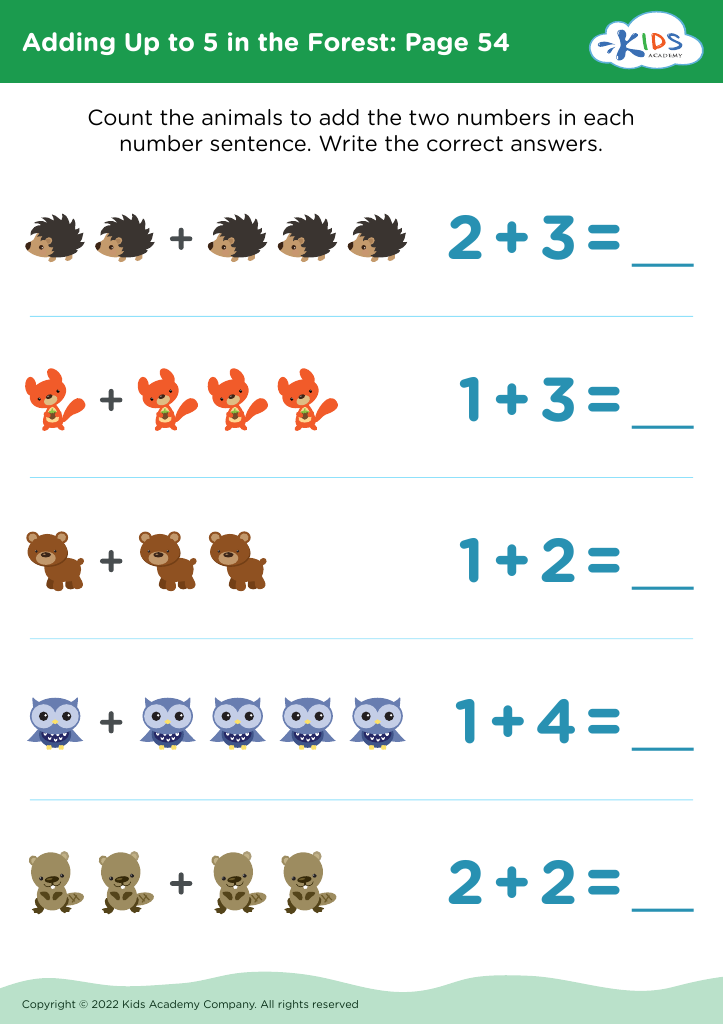
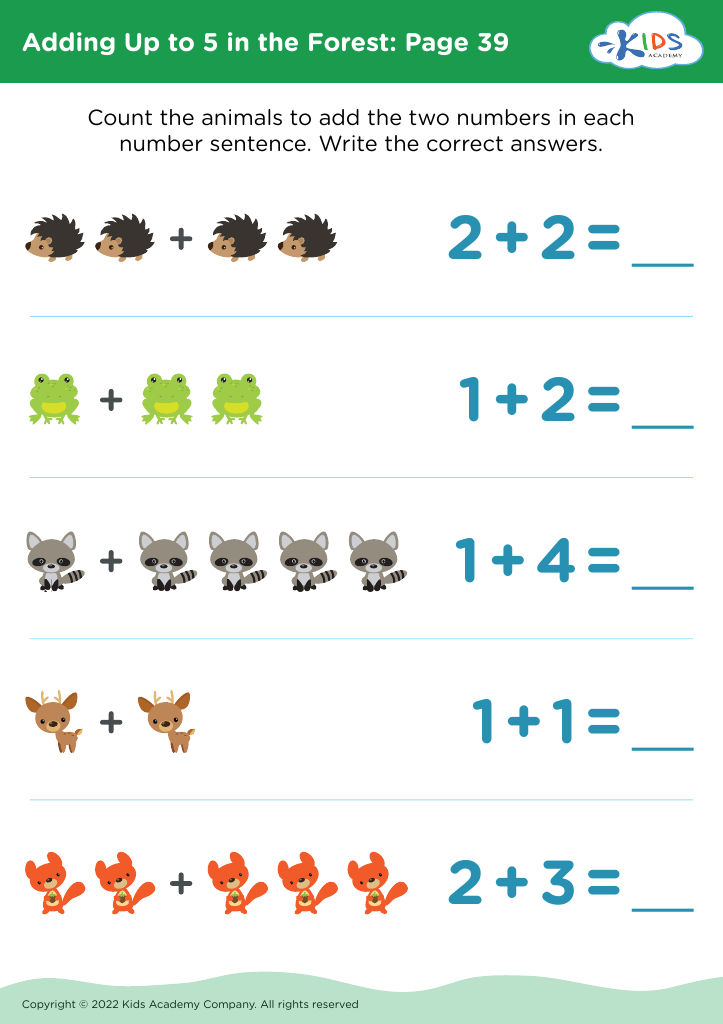
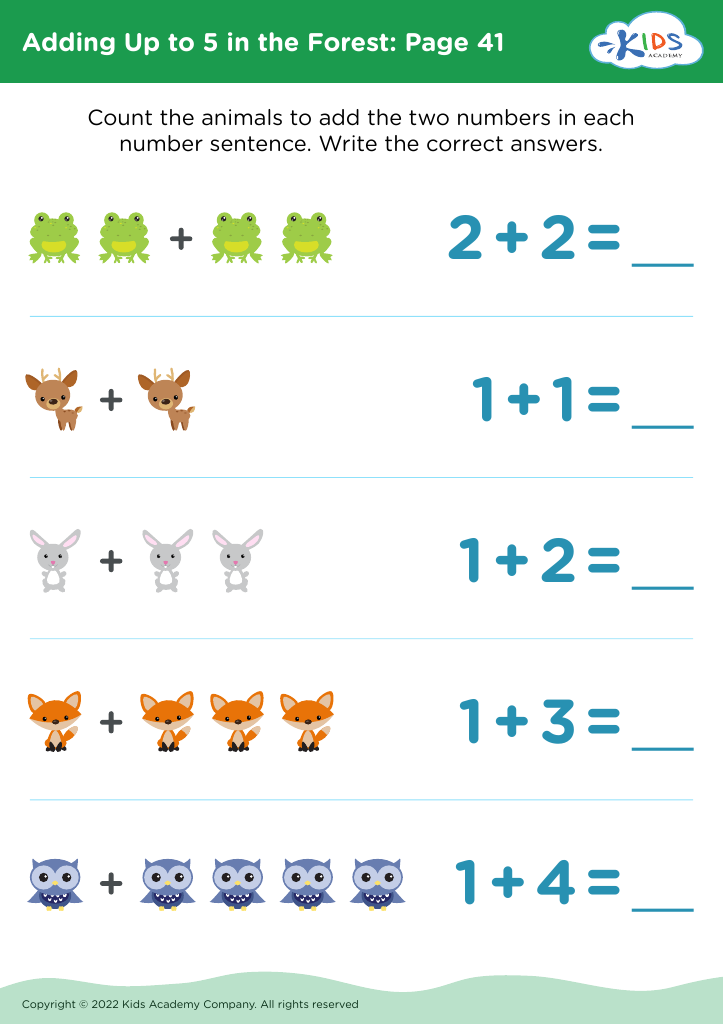



Parents and teachers should care about fine motor skills development in young children, ages 3-7, because these skills are foundational for their academic and daily life success. The "Fine Motor Skills Adding in the Forest" activity provides an engaging way for children to develop these crucial abilities. Fine motor skills involve the coordination of small muscles in the hands and fingers, which are essential for tasks like writing, cutting, buttoning, and tying shoelaces. Strengthening these skills fosters independence and confidence.
Additionally, integrating a forest theme enhances this learning by connecting children with nature, promoting creativity, and making the activities more enjoyable and meaningful. Hands-on, nature-based activities can stimulate sensory experiences and enhance cognitive development. Handling small objects, such as leaves, sticks, or pebbles for counting and sorting exercises, helps improve dexterity and hand-eye coordination.
Children in this age range are in a critical period of development, and fine motor skills directly impact their ability to grasp pencils, make markings, and eventually write letters and numbers. By focusing on fine motor skills through engaging, naturalistic settings, parents and teachers ensure children are building strong, adaptable foundations for future educational tasks and everyday functions, promoting overall growth and learning.