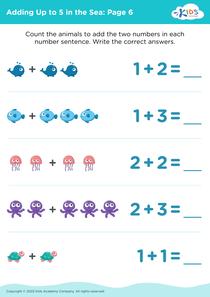
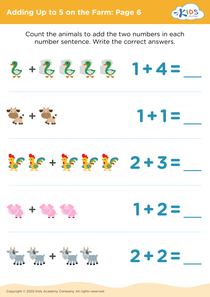
Fine motor skills (writing) Adding in the Forest Worksheets for Ages 3-7
3 filtered results
-
From - To
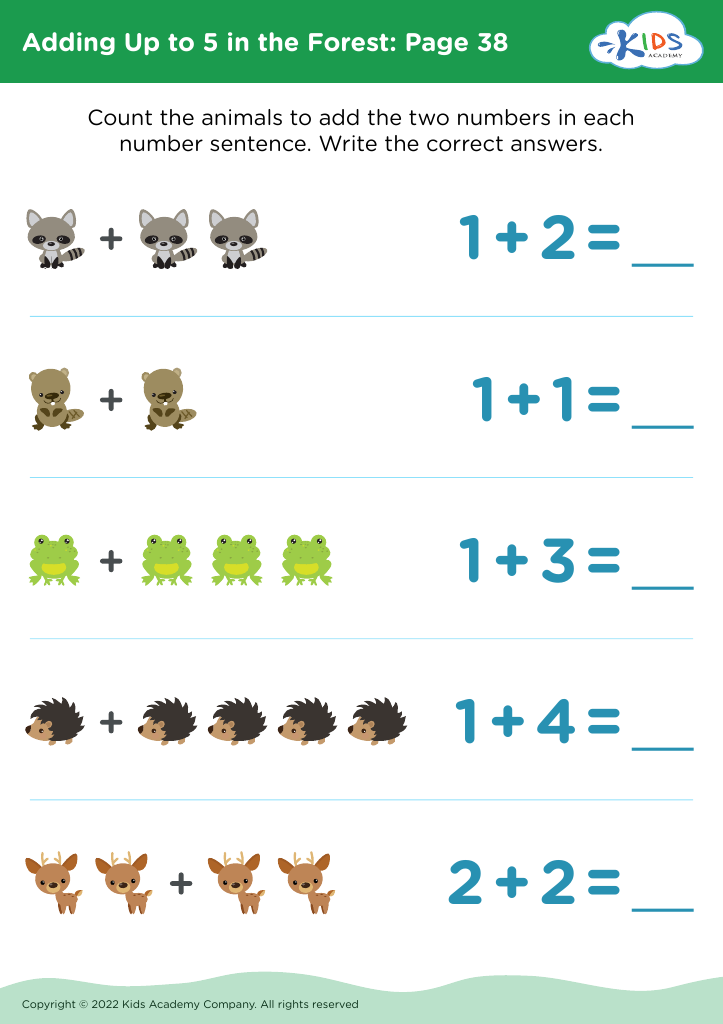
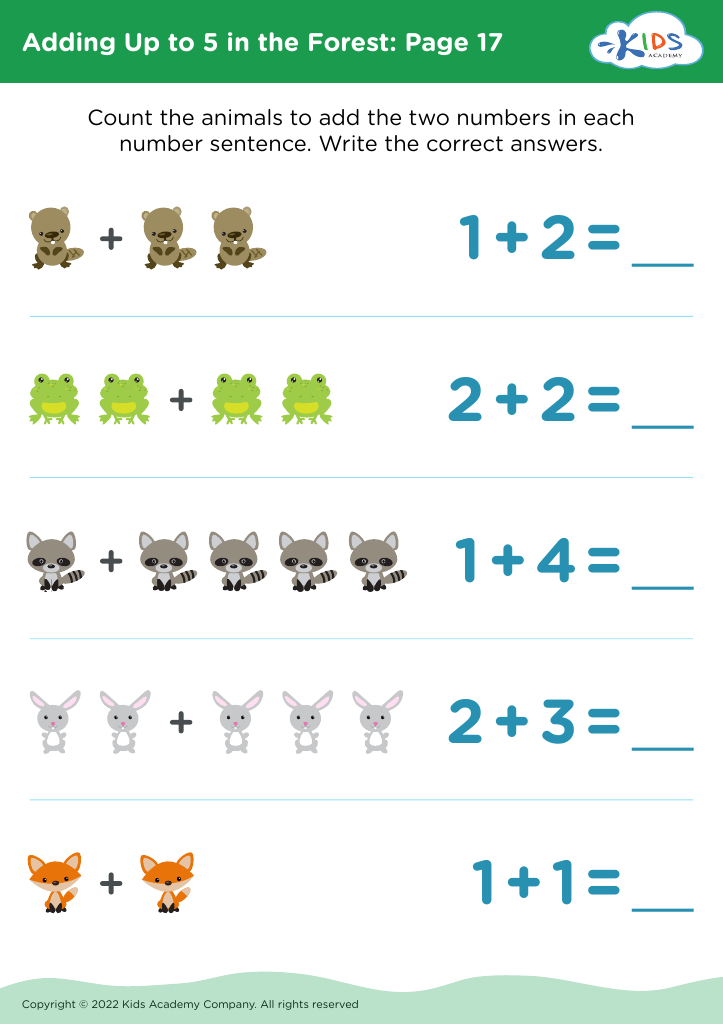
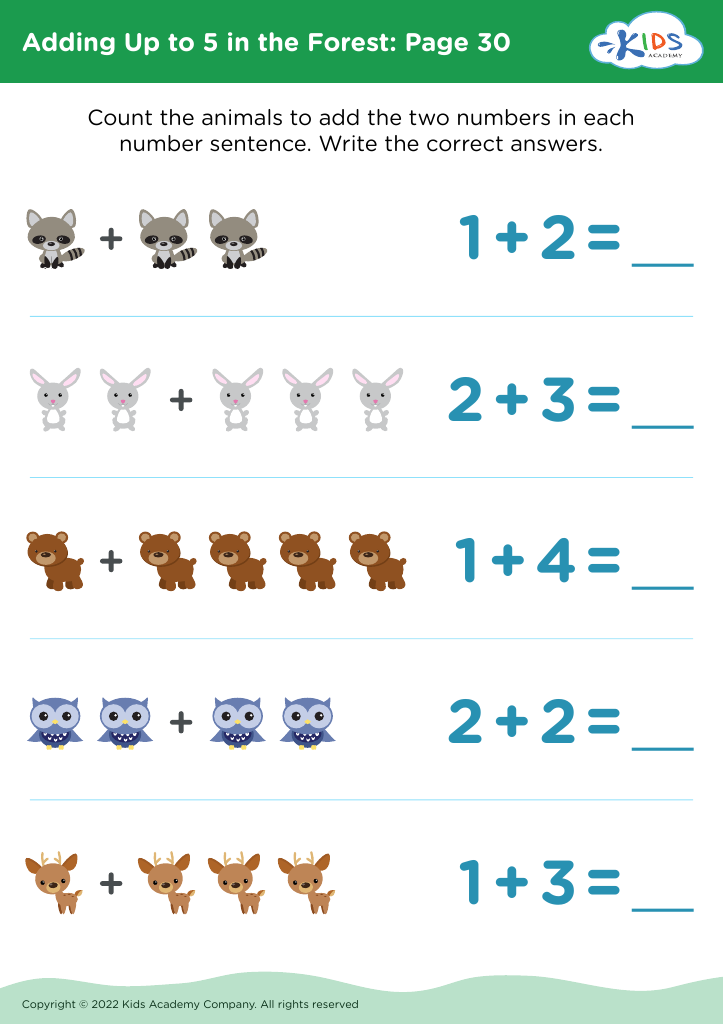
Discover our "Adding in the Forest Worksheets" designed for children aged 3-7, focusing on fine motor skills through writing activities! These engaging worksheets combine math and handwriting practice, providing young learners with a fun way to enhance their fine motor development. As children trace numbers and complete addition problems set in a delightful forest theme, they will improve their hand control and coordination while building foundational math skills. Perfect for home or classroom use, our resources support early learning goals and inspire a love for learning in a playful, interactive environment. Unlock your child's potential with our thoughtfully crafted worksheets today!



Fine motor skills are essential for young children's overall development, especially in writing and other tasks that require dexterity and coordination. For children aged 3-7, developing fine motor skills is crucial as they lay the foundation for future academic success. These skills enable children to manipulate pencils, markers, and other tools effectively, supporting their ability to express thoughts on paper.
Incorporating activities outdoors, such as exploring forest environments, can significantly enhance fine motor development. Nature offers numerous opportunities for children to engage their hands and fingers—whether it’s picking up pinecones, transferring sticks, or creating art with leaves. Such activities not only strengthen their grip and hand-eye coordination but also inspire creativity and imaginative play.
Moreover, parents and teachers should care about fine motor skills as they are closely linked to self-esteem and independence. When children can successfully complete tasks like writing their names or crafting simple drawings, they gain confidence in their abilities. Supportive adults can foster these skills through intentional play, encouraging exploration in a forest setting, and providing engaging materials that nurture this critical aspect of development. Emphasizing fine motor skills prepares children not just for academic challenges but also for lifelong skills in communication and problem-solving.