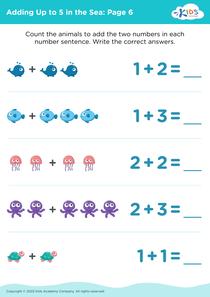
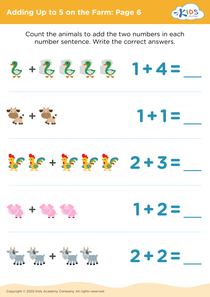
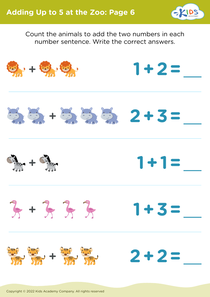
Problem Solving Adding in the Forest Worksheets for Ages 3-7
3 filtered results
-
From - To
Discover the joy of learning with our "Problem Solving Adding in the Forest Worksheets" designed for children ages 3-7. These interactive worksheets introduce basic addition concepts through engaging forest-themed activities that capture young imaginations. Perfect for early learners, each task encourages critical thinking and creative problem-solving skills. By incorporating playful visuals and relatable scenarios, children will grasp essential math skills while having fun. Ideal for both classroom settings and at-home practice, our worksheets support cognitive development and foster a love for learning. Help your child thrive in math with these delightful resources that make adding both enjoyable and educational!
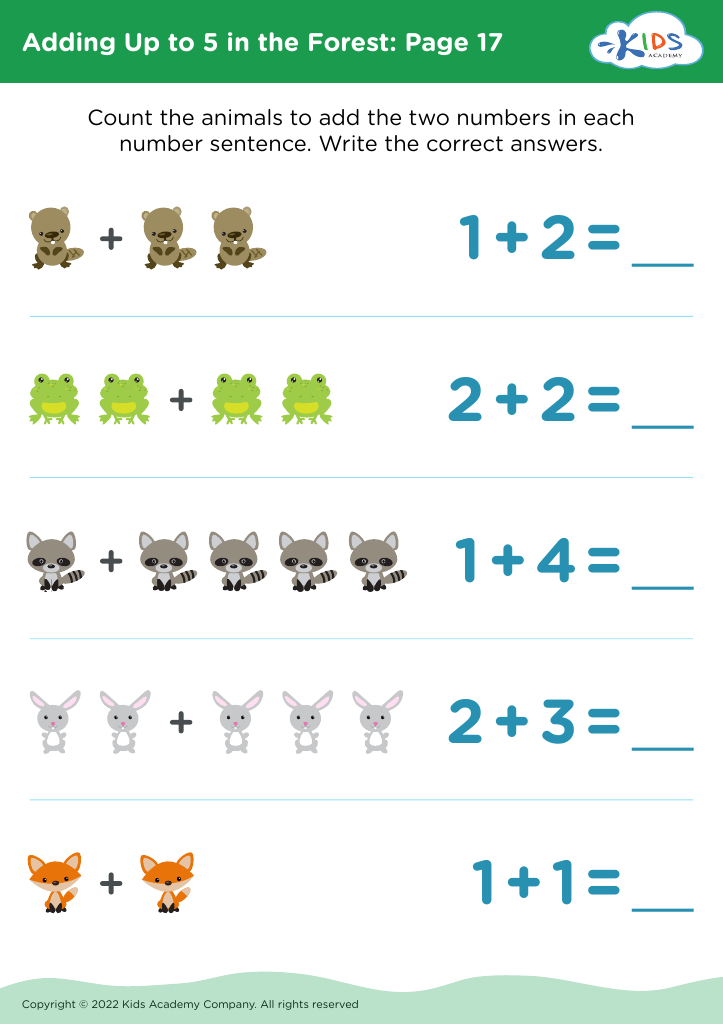
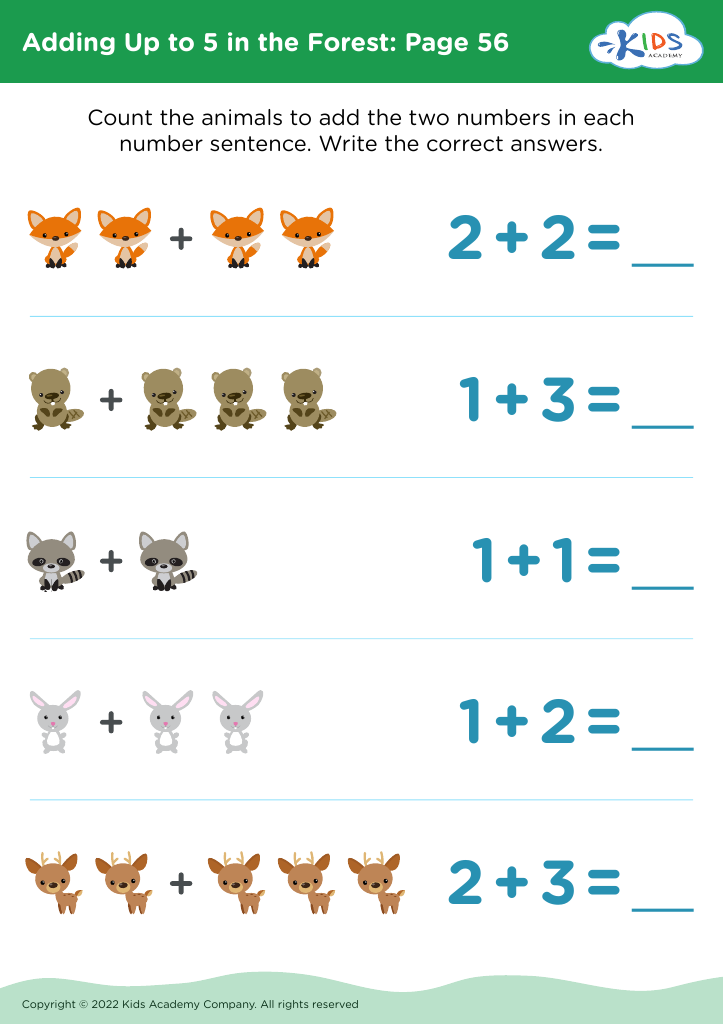
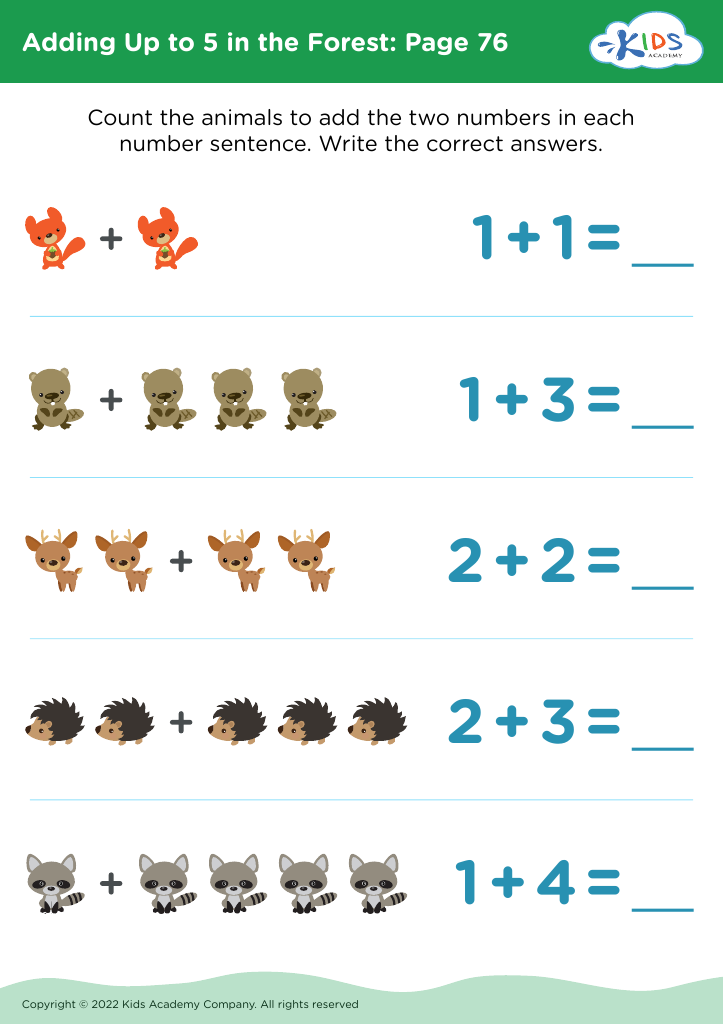



Problem Solving Adding in the Forest is a vital learning approach for young children aged 3-7, as it combines crucial mathematical concepts with engaging, real-world contexts. At this age, children's cognitive and social skills are rapidly developing. By incorporating nature into problem-solving activities, both parents and teachers can create a rich, interactive learning environment.
Inviting children to explore addition through playful scenarios, such as counting forest animals, collecting leaves, or identifying grouped objects, makes math tangible and fun. This method fosters not only numerical understanding but also critical thinking and decision-making skills. Furthermore, it encourages curiosity about the natural world, promoting an ethos of exploration and respect for the environment.
Parents and teachers should care because early childhood experiences form the foundation for future learning. By merging math with a hands-on, experiential approach, children are more likely to develop a positive attitude towards learning. This not only supports their academic growth but also enhances their social skills by encouraging teamwork in group activities. Overall, engaging young learners through Problem Solving Adding in the Forest nurtures a love for learning that can last a lifetime.