Counting practice Adding up to 100 Misc Worksheets for Ages 3-7
4 filtered results
-
From - To
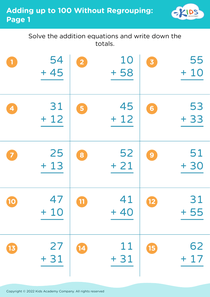
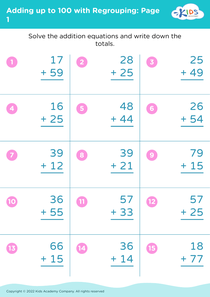
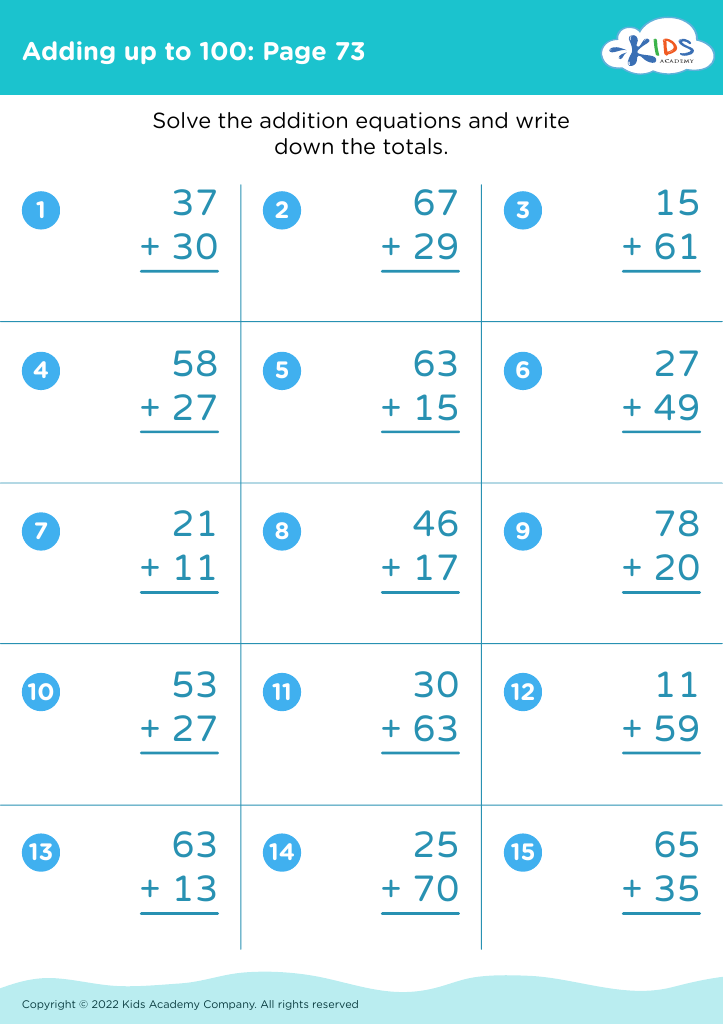
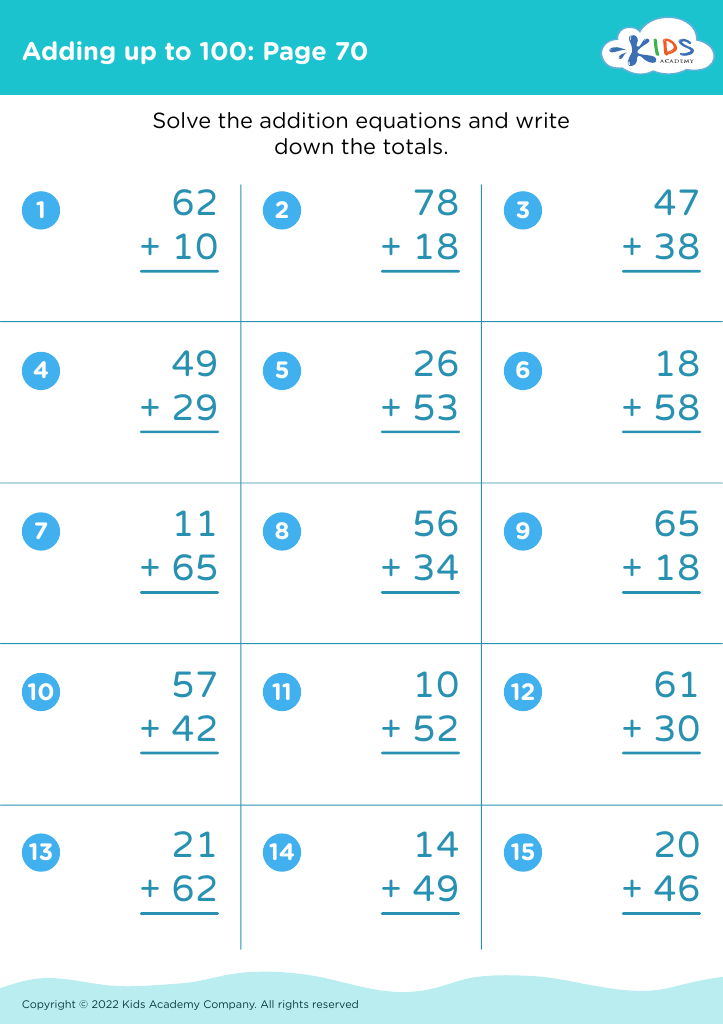
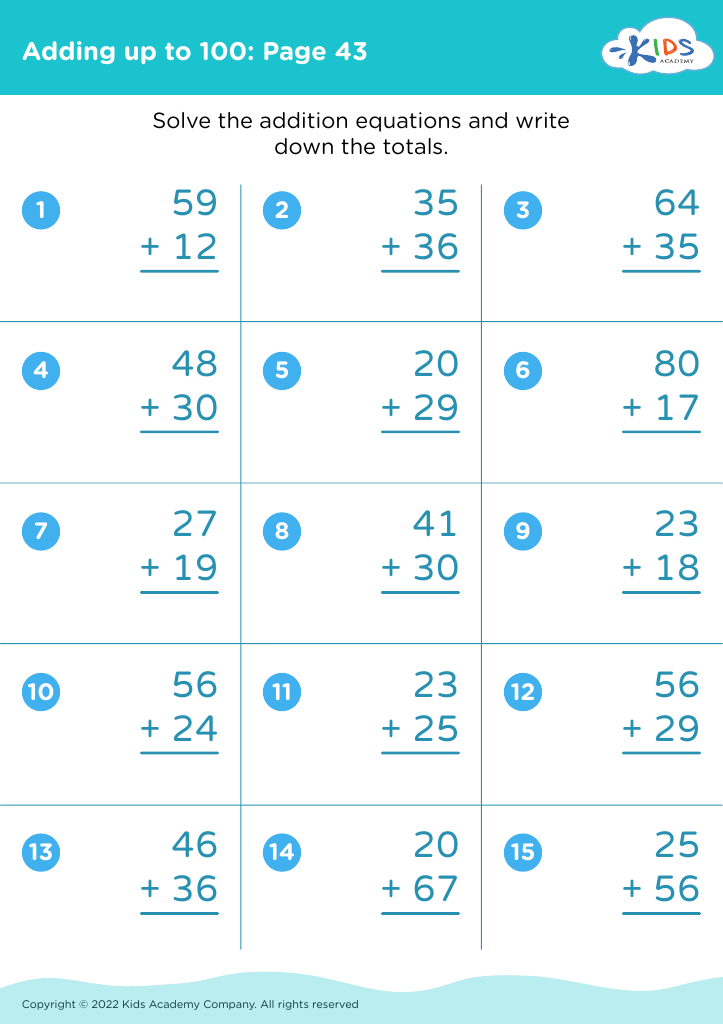
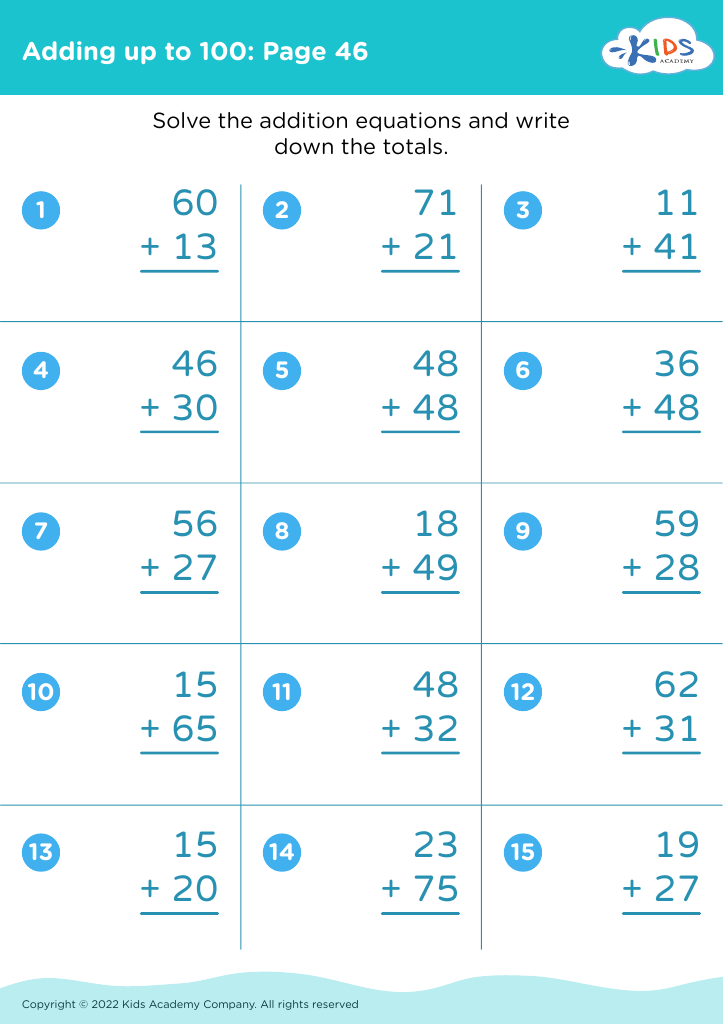
Discover engaging counting practice with our “Adding up to 100 Misc Worksheets” for ages 3-7. These fun, printable worksheets from Kids Academy are perfect for young learners to develop essential math skills. Children will enjoy the colorful activities that make learning addition an exciting adventure. Each worksheet is designed to strengthen counting and problem-solving abilities, ensuring a solid foundation in math. Ideal for both classroom and home use, our worksheets encourage kids to explore numbers and build confidence. Help your child master counting and addition with these interactive resources and transform their learning experience today!


Counting practice and learning to add up to 100 are foundational skills for children ages 3-7 for several significant reasons. Firstly, these basic math skills form the cornerstone of numeracy, crucial for everyday tasks and future academic success. Recognizing and understanding numbers help children make sense of their world, whether they're dividing snacks, counting toys, or tracking days on a calendar.
Developing counting skills aids in enhancing a child’s comprehension of number order, volume, and the relationships between numbers. Activities involving counting to 100 improve memory and attention spans, encourage logical thinking, and teach persistence—all critical cognitive skills.
Adding, particularly up to 100, introduces the concept of breaking down larger tasks into manageable steps. It nurtures problem-solving abilities and fosters a growth mindset as children learn that complex problems can be tackled incrementally. These exercises also help in developing fine motor skills when using objects or manipulatives for counting.
Furthermore, numeracy and early arithmetic are often tied to increased confidence in young learners. Success in mastering these skills boosts self-esteem and academic readiness, paving the way for more advanced math concepts and a positive attitude toward learning. Thus, dedicating time to counting and adding practice is an investment in a child’s holistic educational development.