Counting skills Adding up to 100 Misc Worksheets for Ages 3-7
7 filtered results
-
From - To
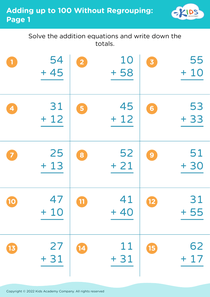
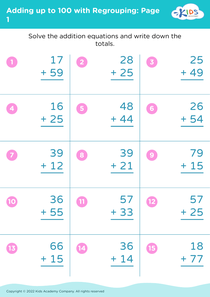
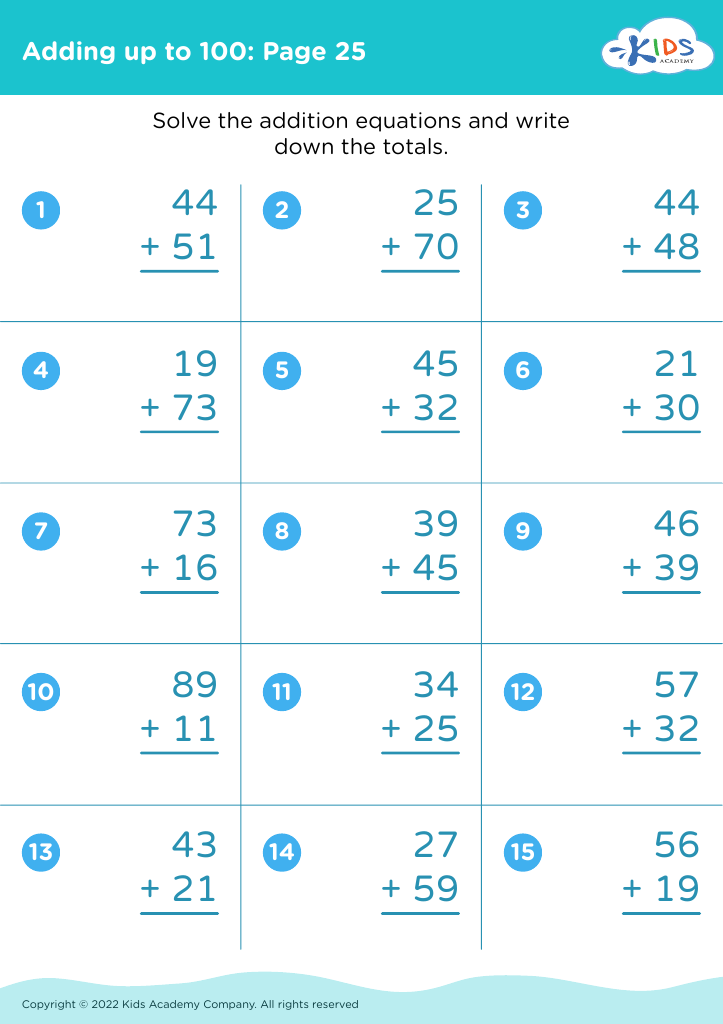
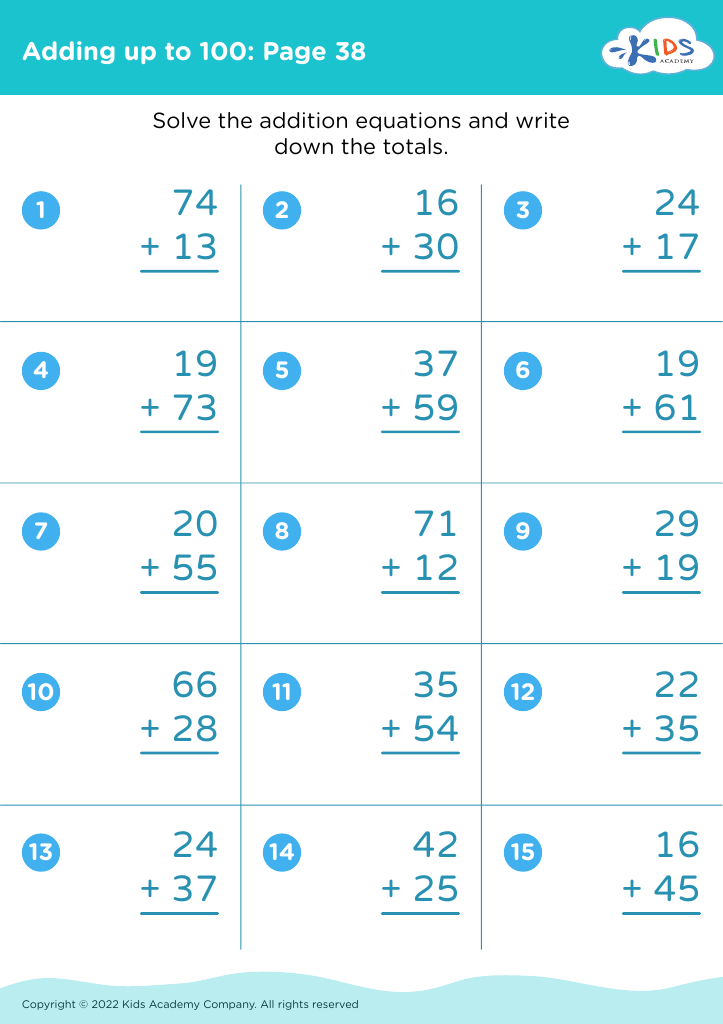
Discover an array of engaging and educational Counting Skills Adding up to 100 Misc Worksheets, perfect for ages 3-7! At Kids Academy, we understand the importance of building a strong math foundation early on. These well-designed worksheets help young learners practice addition, enhance their counting skills, and boost confidence as they progress. With colorful illustrations and a variety of activities, each worksheet caters to different learning styles, making math fun and easy to understand. Ideal for both classroom and home practice, these resources set the stage for future math success. Start enriching your child’s learning journey today with Kids Academy!
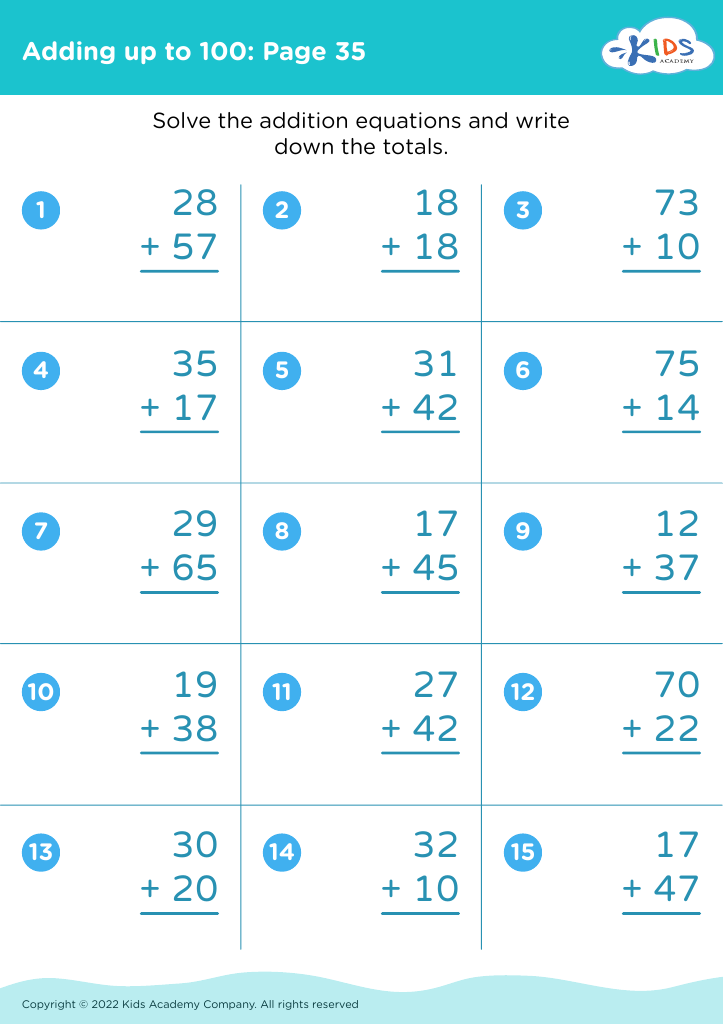
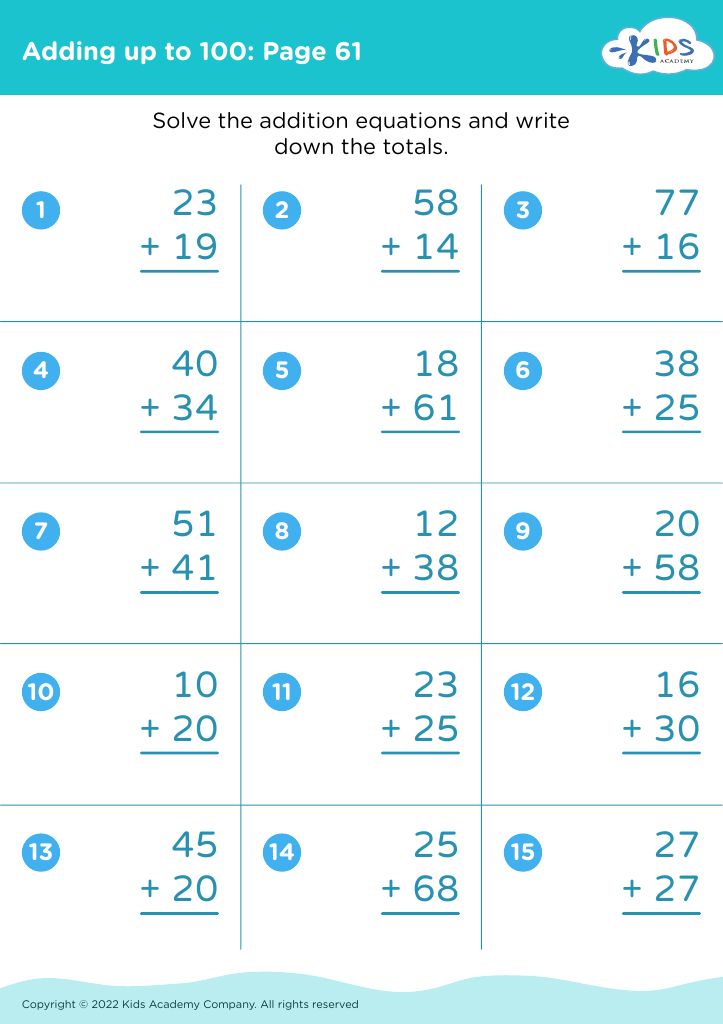
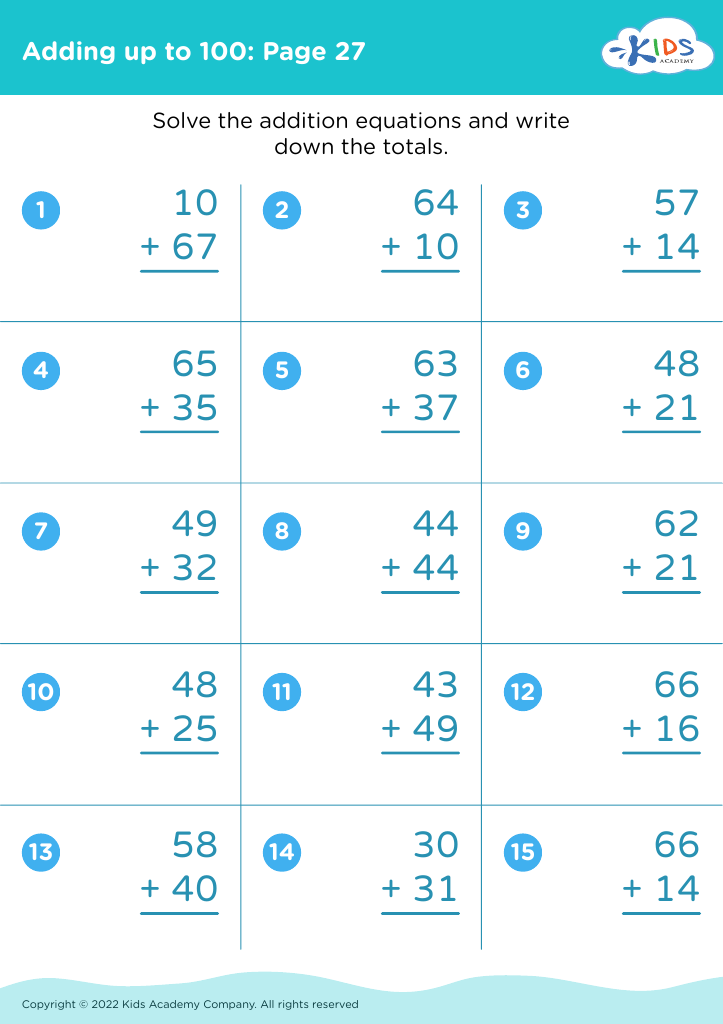
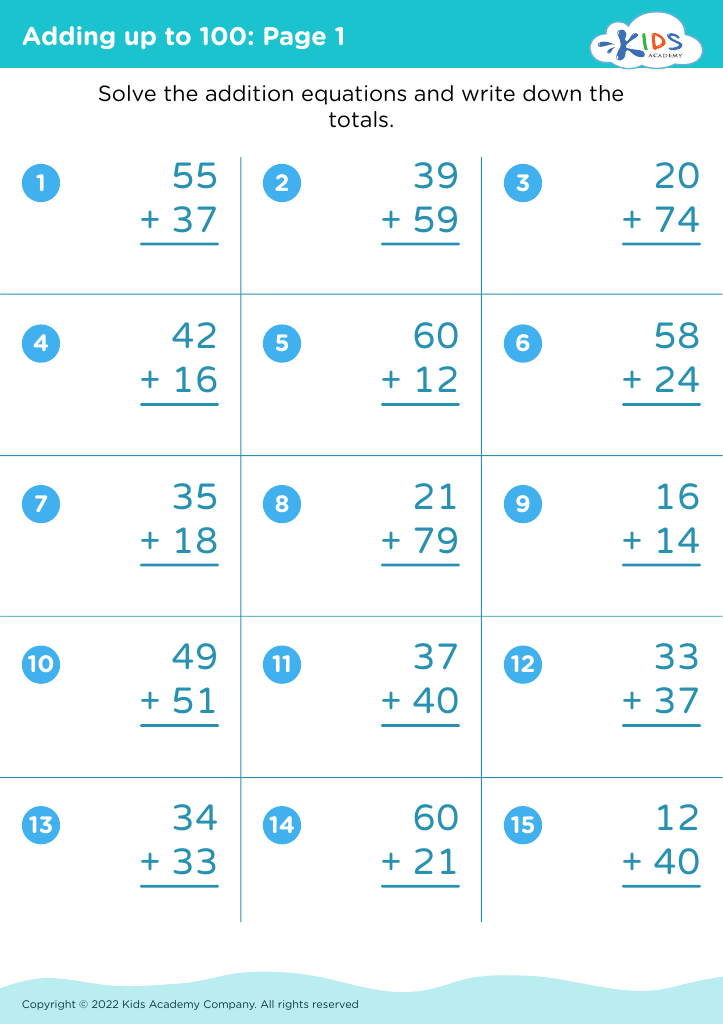
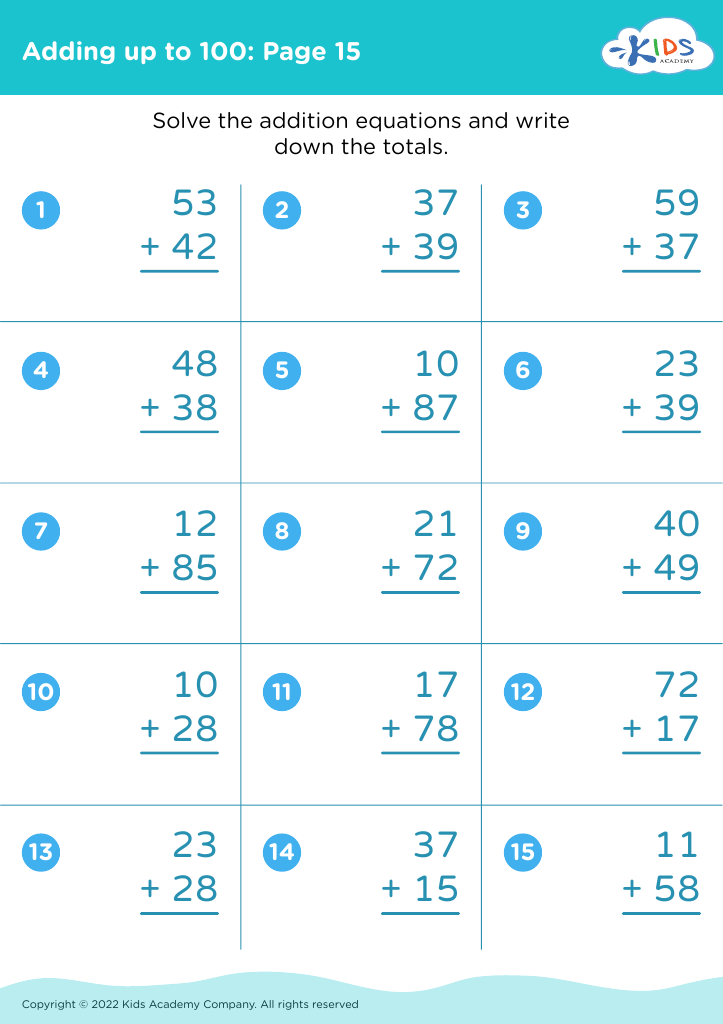


Counting skills for children aged 3-7 form a crucial foundation for numeracy, which is essential for their overall academic journey and everyday life. During these early years, when children's brains are rapidly developing, engaging in counting tasks up to 100 helps nurture cognitive skills like memory and attention. Early proficiency in counting facilitates a smoother transition to more complex mathematical concepts in later grades such as addition, subtraction, and multiplication.
Parents and teachers play a pivotal role in this developmental stage by making numbers relatable and fun. Integrating counting into daily routines builds confidence and transforms abstract concepts into tangible understanding. For instance, counting toys, steps, or fruits while playing or during household chores emphasizes real-life application of these skills.
Beyond pure math understanding, counting fosters problem-solving abilities and logical reasoning. As children practice counting sequentially, they not only grasp numerical order but also the concept of quantity. Their success in more intricate problem-solving scenarios at school can often be traced back to their early counting exercises.
Moreover, developing counting skills often improves fine motor skills when combined with physical activities like finger counting or using counters. This holistic development prepares them not just academically but aids in their overall growth, making early counting exercises incredibly worthwhile for young learners.